
Mobile Robot Chassis: The Cornerstone of Secondary Development for Makers and Labs
In the era of rapid development of intelligent robotics, mobile robot chassis have evolved from being mere "moving components" to the core foundation supporting innovation and exploration. For makers, laboratory researchers, and engineering enthusiasts, a chassis that supports flexible secondary development is not just a hardware carrier—it is a key tool to turn creative ideas into practical prototypes, and a bridge connecting theoretical research to real-world application. This article explores how mobile robot chassis empower secondary development, and why they have become an indispensable part of makers’ workshops and scientific research labs.
What is a Mobile Robot Chassis for Secondary Development?
A mobile robot chassis is the lower-level hardware platform that carries the robot’s movement system, including components such as wheels (or tracks), motors, drives, power supplies, and motion control modules. Unlike integrated commercial robots that have fixed functions and closed systems, a chassis designed for secondary development is characterized by openness, scalability, and customizability. It provides makers and labs with a "semi-finished" core platform—retaining the stable movement function while opening up interfaces, protocols, and hardware expansion spaces, allowing users to modify, upgrade, and extend its functions according to their specific needs.
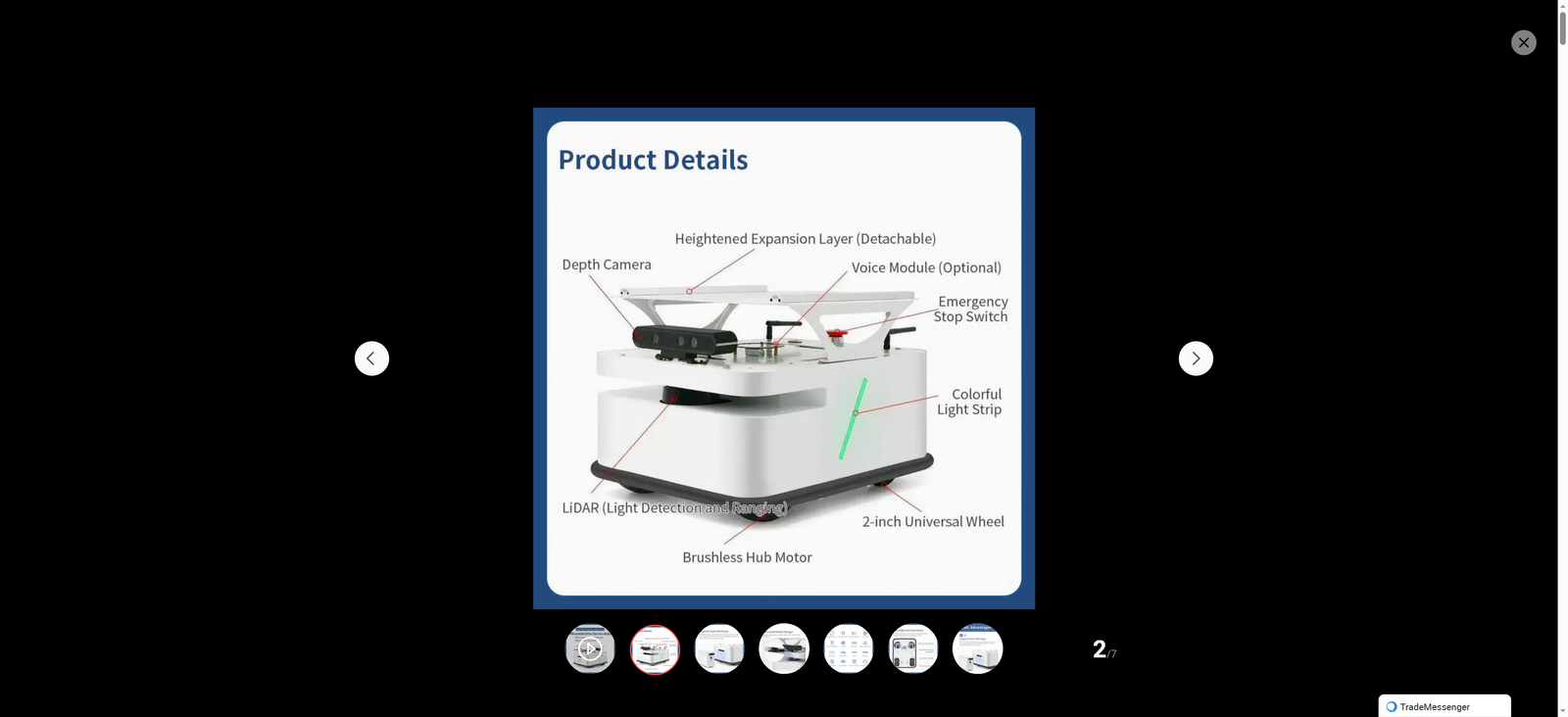
For example, a basic mobile chassis may only have simple forward, backward, left-turn, and right-turn functions. But through secondary development, makers can add sensors (such as lidar, cameras, and ultrasonic sensors) for environmental perception, integrate single-chip microcomputers or industrial control boards for intelligent decision-making, and even load custom mechanical arms for material handling or task execution. This openness ensures that the chassis can adapt to diverse application scenarios, from educational demonstrations to scientific research experiments and even small-scale commercial applications.
Why Makers and Labs Need Secondary Development-Friendly Chassis?
Makers and laboratory researchers have unique needs that are very different from ordinary users: they pursue innovation, emphasize customization, and often need to verify new algorithms, test new technologies, or realize personalized creative ideas. A closed, fixed-function robot chassis cannot meet these needs, while a secondary development-friendly chassis solves this pain point in three key aspects.
Cost-Efficiency and Time-Saving
Developing a mobile robot chassis from scratch requires in-depth expertise in mechanical design, motor control, power management, and motion planning. For individual makers or small labs, this process is not only time-consuming (often taking weeks or even months) but also costly—requiring the purchase of design software, processing materials, and debugging tools. By choosing a ready-made chassis that supports secondary development, users can skip the tedious low-level development links and focus their energy and resources on the core functional innovation they care about, significantly shortening the prototype development cycle and reducing R&D costs.
2. Flexibility to Adapt to Diverse Needs
The needs of makers and labs are highly personalized: one maker may want to develop a smart home patrol robot, another may focus on an educational robot for programming teaching, and a lab may need a chassis to test autonomous navigation algorithms. A secondary development-friendly chassis can adapt to these diverse needs through flexible expansion. For example, it can support the integration of different types of controllers (Arduino, Raspberry Pi, STM32, etc.), be compatible with various communication protocols (ROS, Bluetooth, Wi-Fi, CAN bus), and provide reserved mounting holes and interfaces for sensors and actuators. This flexibility allows the same chassis to be reused in multiple projects, improving resource utilization.
3. Lower Threshold for Innovation
For beginners in robotics, the threshold for independent chassis development is extremely high. A secondary development-friendly chassis often comes with complete technical documentation, sample code, and development tutorials, helping beginners quickly get started with robot development. For example, many chassis support the Robot Operating System (ROS), a popular open-source framework that provides a wealth of pre-written function packages for navigation, perception, and motion control. Users can directly call these function packages to realize complex functions without writing code from scratch, lowering the threshold for innovation and encouraging more makers to participate in robotics creation.
Key Features of a High-Quality Secondary Development Mobile Robot Chassis
Not all mobile robot chassis are suitable for secondary development. A high-quality chassis for makers and labs should have the following core features:
- Open Hardware Architecture: The chassis should open up key hardware interfaces (such as GPIO, UART, I2C, SPI) and provide detailed hardware specifications, allowing users to easily connect external sensors and actuators. At the same time, the mechanical structure should be modular, making it easy to disassemble, assemble, and modify.
- Compatible with Common Development Platforms: It should support mainstream controllers (Raspberry Pi, Arduino, STM32, Jetson Nano) and development frameworks (ROS, Python, C), ensuring that users can use the tools they are familiar with for secondary development without learning new technologies from scratch.
- Stable and Reliable Motion Performance: The basic movement function is the foundation of secondary development. The chassis should have stable speed control, accurate steering, and strong load capacity, ensuring that the added functional modules do not affect the robot’s movement stability.
- Complete Technical Support: Detailed user manuals, development guides, sample code, and after-sales technical support are essential, especially for beginners. This helps users solve problems encountered during development and improves the efficiency of secondary development.
- Scalability: The chassis should have reserved expansion spaces, such as mounting brackets for sensors, additional power interfaces, and extended mounting holes, allowing users to continuously upgrade and expand the robot’s functions as their needs change.
Application Scenarios of Secondary Development Chassis in Makers and Labs
With the above advantages, mobile robot chassis supporting secondary development have been widely used in makers’ creations and laboratory research, covering multiple fields:
Maker Creations and Competitions
In various robot competitions (such as robot soccer, autonomous navigation competitions, and smart car competitions), makers often use secondary development chassis to build their competition robots. For example, they can add lidar and image recognition modules to the chassis to realize autonomous obstacle avoidance and path planning, and customize the mechanical structure to complete specific competition tasks. The flexibility of the chassis allows makers to give full play to their creativity and gain an advantage in the competition.
2. Educational Robotics
In universities and vocational colleges, secondary development chassis are important teaching tools for robotics and related majors. Teachers can use the chassis to guide students to learn mechanical design, embedded programming, sensor integration, and autonomous navigation technologies. Students can also carry out innovative design projects based on the chassis, applying theoretical knowledge to practice and improving their practical operation and innovation capabilities.
3. Scientific Research Experiments
In scientific research labs, researchers use secondary development chassis to test new algorithms and technologies. For example, in the field of autonomous driving, labs can use the chassis to test new path planning and obstacle avoidance algorithms; in the field of human-robot interaction, they can integrate voice recognition and gesture control modules into the chassis to study the interaction mode between humans and robots. The openness and scalability of the chassis make it an ideal test platform for scientific research.
4. Small-Scale Commercial Applications
Some makers and small enterprises use secondary development chassis to develop small-scale commercial robots, such as indoor patrol robots, hotel delivery robots, and agricultural detection robots. Compared with developing a chassis from scratch, using a ready-made secondary development chassis can significantly reduce R&D costs and shorten the time to market, helping small enterprises and makers seize market opportunities.
The Future of Mobile Robot Chassis for Secondary Development
With the continuous development of robotics, artificial intelligence, and the Internet of Things, the demand for mobile robot chassis supporting secondary development will continue to grow. In the future, these chassis will become more intelligent, miniaturized, and low-cost. For example, they may integrate AI chips to realize more intelligent motion control and environmental perception; they may adopt more lightweight materials to reduce the overall weight and improve mobility; they may also provide more user-friendly development tools to further lower the threshold for secondary development.
At the same time, the integration of the chassis with emerging technologies (such as 5G, edge computing, and digital twins) will expand its application scenarios. For example, through 5G technology, the robot can realize remote control and data transmission; through digital twins, users can simulate the development and debugging process of the robot in a virtual environment, reducing the cost and risk of physical debugging.
Conclusion
Mobile robot chassis supporting secondary development are the cornerstone of innovation for makers and labs. They provide a cost-effective, flexible, and low-threshold development platform, helping users turn creative ideas into practical prototypes and promoting the development of robotics technology. Whether it is a maker pursuing personalized creation, a student learning robotics technology, or a researcher engaged in scientific research experiments, a high-quality secondary development chassis can bring unexpected convenience and support.
As robotics technology continues to advance, we can expect that mobile robot chassis will play an even more important role in the field of innovation, empowering more makers and labs to explore the unknown and create a smarter future.