
Handling Robot-Applicable Chassis: Universal Base Platform Trolley, Supported by Vision-Intelligent Navigation Technology
In the era of intelligent manufacturing and automated upgrading, mobile robots have become an indispensable core force in various industries, spanning logistics warehousing, commercial services, industrial production, and agricultural operations. At the heart of every high-performance mobile robot lies its chassis—the "feet" that determine mobility, stability, and adaptability. Among the diverse types of robot chassis, the universal base platform trolley stands out for its versatility and scalability, and when integrated with vision-intelligent navigation technology, it breaks through traditional operational limitations, unlocking a new realm of efficient, autonomous, and intelligent robot applications.
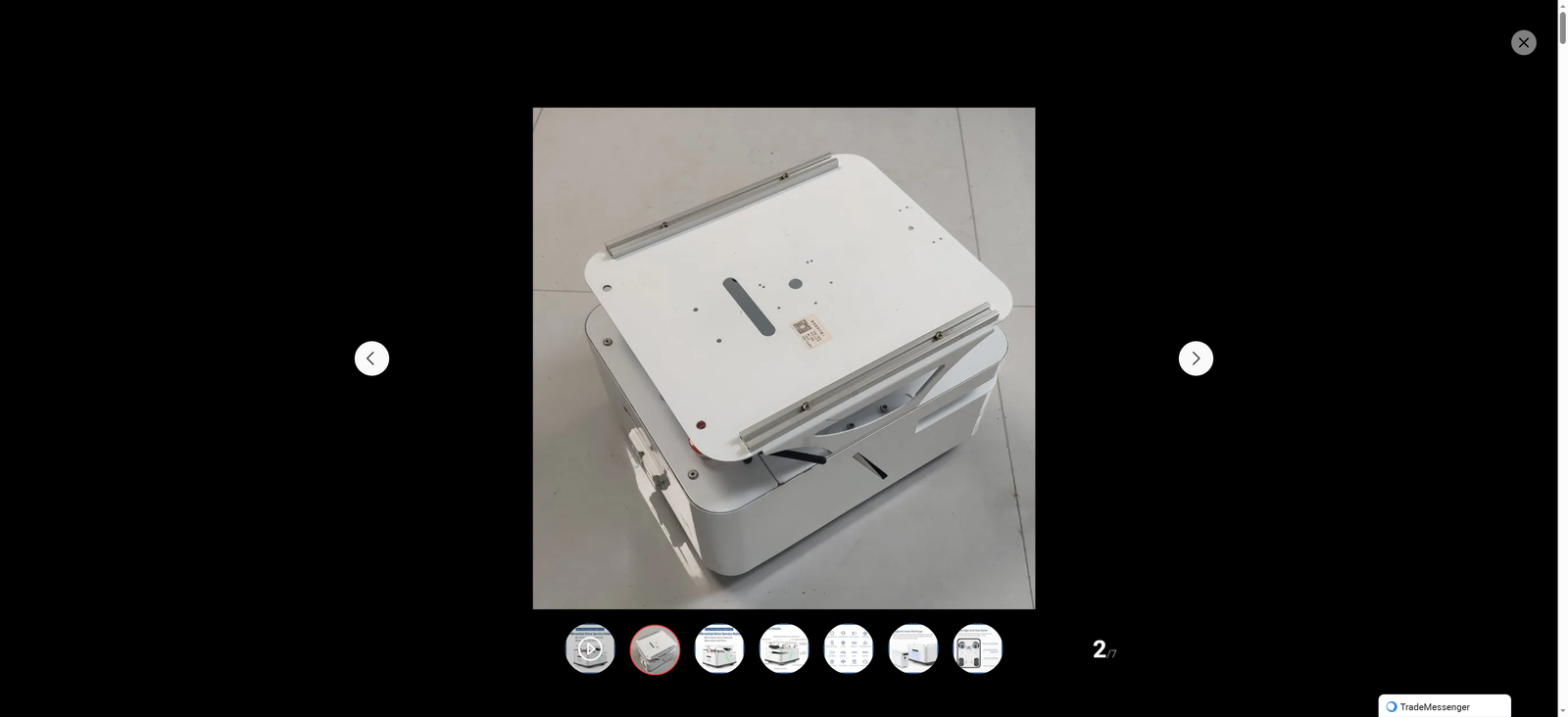
The robot-applicable chassis serves as the foundational carrier for all upper-layer functional modules of a robot, bearing loads, enabling movement, and supporting navigation. Unlike specialized chassis designed for single scenarios, the universal base platform trolley is engineered with a modular and open architecture, making it compatible with a wide range of robot types and operational requirements. Its core design concept revolves around "universality"—it features standardized hardware interfaces and flexible structural adjustments, allowing for easy integration of mechanical arms, sensors, storage bins, display screens, and other functional components. Whether it is a service robot in a shopping mall, a handling robot in a warehouse, a patrol robot in an office building, or an agricultural operation robot in a field, the universal base platform trolley can be customized and adapted to meet diverse task needs, significantly reducing the R&D cost and cycle of specialized robots.
The performance of the universal base platform trolley is further elevated by the integration of vision-intelligent navigation technology, which acts as the "eyes" and "brain" of the chassis, enabling autonomous perception, decision-making, and movement. Vision-intelligent navigation technology relies on high-definition cameras, 3D depth-sensing equipment, and advanced image processing algorithms—such as YOLOv11, OpenCV, and deep learning models—to capture real-time environmental information, identify landmarks, obstacles, and path features, and construct accurate environmental maps. Unlike traditional navigation methods (such as magnetic stripe navigation or QR code navigation) that require pre-deployed markers and extensive environmental modifications, vision-intelligent navigation achieves "free navigation" without relying on external auxiliary facilities, adapting flexibly to dynamic and complex environments.
The synergy between the universal base platform trolley and vision-intelligent navigation technology brings multiple core advantages to robot operation. Firstly, it enhances operational autonomy: the vision system continuously collects and analyzes environmental data, enabling the chassis to autonomously plan optimal paths, avoid sudden obstacles (such as pedestrians, goods, or uneven ground), and adjust movement speed and direction in real time. For example, in a crowded shopping mall, a guide robot based on this chassis can smoothly navigate through crowds, actively bypassing customers while maintaining a stable movement trajectory; in a warehouse with changing goods layouts, a handling robot can quickly adapt to new environments without manual reprogramming. Secondly, it improves operational efficiency: the universal base platform trolley, with its robust load-bearing capacity (ranging from tens to hundreds of kilograms, or even 500kg for industrial and agricultural models), can carry large volumes of goods or equipment, while vision-intelligent navigation eliminates the need for manual guidance, enabling 24-hour uninterrupted operation and significantly reducing labor costs. Thirdly, it boosts scalability and compatibility: the open architecture of the universal base platform trolley allows for seamless upgrades of the vision navigation system, such as integrating dual lidar vision solutions for higher precision, or adding multi-floor navigation capabilities through autonomous elevator control.
In practical applications, the combination of the universal base platform trolley and vision-intelligent navigation technology has been widely adopted across various industries, delivering tangible value. In the commercial sector, bank "lobby manager" robots based on universal chassis and vision navigation provide services such as intelligent queuing, product consultation, and autonomous patrol, reducing staff workload and enhancing customer experience; shopping mall guide robots use vision navigation to avoid magnetic interference and complex layouts, providing real-time navigation and promotion services to customers. In the industrial and logistics field, vision-navigated universal chassis trolleys are used as automatic handling forklifts or production line delivery robots, capable of cross-floor movement, narrow corridor navigation, and precise goods positioning, improving warehouse turnover efficiency and production line fluency. In agriculture, universal chassis trolleys equipped with vision navigation and specialized attachments perform tasks such as crop transportation, fertilizer spraying, and fruit picking, adapting to uneven field terrain and reducing manual labor intensity. Even in narrow scenarios such as convenience stores and inspection stations, compact universal chassis models with vision navigation can flexibly move through 55-60cm wide passages, expanding the scope of robot applications.
Looking ahead, with the continuous advancement of artificial intelligence, computer vision, and material science, the integration of the universal base platform trolley and vision-intelligent navigation technology will usher in further innovations. The global mobile robot chassis market is projected to grow at a CAGR of 9.5% from 2024 to 2031, with vision-navigated universal chassis becoming a key growth driver. Future developments will focus on three directions: improving navigation precision and environmental adaptability through multi-sensor fusion (combining vision, lidar, and inertial navigation) and advanced SLAM algorithms; enhancing chassis modularization to support faster functional upgrades and secondary development via open SDK interfaces; and reducing costs through technological maturity and large-scale production, making intelligent chassis more accessible to small and medium-sized enterprises. Additionally, multi-robot collaboration based on vision-navigated universal chassis will become more prevalent, enabling coordinated operations in complex scenarios such as large warehouses and industrial parks, further maximizing operational efficiency.
In conclusion, the robot-applicable universal base platform trolley, supported by vision-intelligent navigation technology, represents a critical innovation in the mobile robot industry. It addresses the pain points of specialized chassis—high cost, poor scalability, and limited adaptability—while leveraging the advantages of vision navigation to achieve autonomous, efficient, and flexible operation. As it continues to penetrate more industries and undergo technological upgrades, this integration will not only promote the intelligent transformation of various sectors but also lay a solid foundation for the widespread popularization of mobile robots in daily production and life, driving the arrival of a more intelligent and automated future.