
Automatic AMR AGV Service Mobile Robot Chassis with High Payload Capacity for 300kg Material Handling
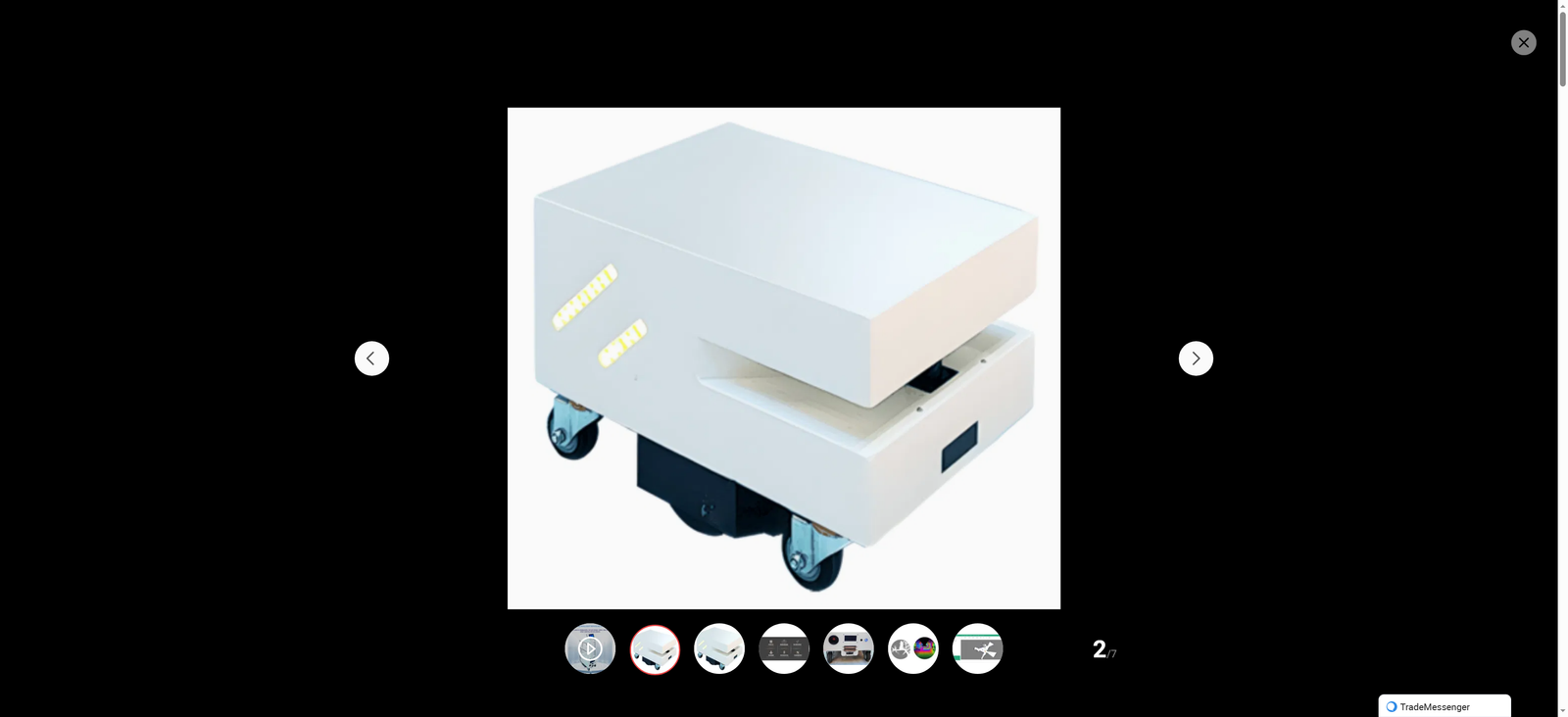
In the era of intelligent manufacturing and smart logistics, the demand for efficient, safe, and automated material handling solutions is soaring. As the core component of automatic mobile robots (AMR) and automated guided vehicles (AGV), the chassis directly determines the robot’s load-bearing capacity, mobility, and adaptability to complex scenarios. Among various types of robot chassis, the automatic AMR AGV service mobile robot chassis with a high payload capacity capable of bearing 300kg of material has emerged as a key pillar, bridging the gap between light-duty and heavy-duty material handling and empowering industries to achieve higher operational efficiency and cost savings.
The 300kg payload capacity of this robot chassis is not just a numerical indicator but a result of sophisticated mechanical design and engineering optimization, addressing the long-standing need for medium-duty material handling in diverse industrial and commercial settings. Unlike light-load chassis that are limited to small parts or documents, and heavy-load chassis that are bulky and costly, this 300kg payload chassis achieves a perfect balance between load-bearing performance, structural compactness, and operational flexibility. It is specifically engineered to transport medium-weight materials such as industrial components, warehouse pallets, medical supplies, and commercial goods, making it a versatile solution for multiple sectors.
At the heart of this automatic AMR AGV chassis lies a suite of advanced technologies that ensure reliable and efficient operation. In terms of navigation and positioning, most models are equipped with cutting-edge SLAM 2.0 autonomous positioning and navigation systems, which eliminate the need for manual code pasting or additional auxiliary facilities, enabling high-precision positioning with an error margin as low as ±10mm. The integration of multi-sensor fusion technology—combining lidar sensors, depth cameras, IMU, and anti-drop sensors—enhances environmental perception, allowing the chassis to achieve 360° intelligent obstacle avoidance, autonomous path planning, and smooth movement even in dynamic or narrow environments such as factory aisles, hospital corridors, or warehouse racks. This level of automation reduces the need for human intervention, minimizing operational errors and improving workplace safety.
Mechanical stability and durability are critical for a high-payload chassis, and this model excels in both aspects. The frame is typically constructed with integrated welded成型 technology, using high-strength metal materials that are lightweight yet robust, capable of withstanding the pressure of 300kg loads while ensuring long-term operational reliability. The chassis adopts a modular design, integrating core hardware such as high-power density hub motors, precision planetary reducers, and electromagnetic parking brakes into a compact structure—some models feature a low profile of only 265mm, allowing them to navigate under racks or trolleys to maximize workspace utilization. Additionally, the drive system often uses differential drive or front-rear Ackerman steering configurations, enhancing maneuverability and enabling in-place rotation, small-radius turns, and smooth acceleration even on uneven or wet surfaces.
Flexibility and scalability are another key advantages of this 300kg payload AMR AGV chassis. It features an open SDK platform with rich API interfaces, supporting secondary development and customization to meet diverse robot development needs of different industries. The chassis is designed with multiple mechanical installation interfaces and extended I/O, CAN, and power supply interfaces, allowing easy integration with upper-layer mechanisms such as manipulators, conveyor belts,顶升 devices, or cargo platforms. This means it can be adapted for various service scenarios—from automated material transport in manufacturing workshops and warehousing logistics to item delivery in hospitals, hotels, and KTVs, as well as environmental monitoring and scientific research applications.
Energy efficiency and uninterrupted operation are also prioritized in the design of this chassis. Most models are equipped with 48V lithium iron phosphate batteries with large capacities (ranging from 25Ah to 40Ah), supporting both manual and automatic charging—including forward and reverse docking charging and hot-swappable battery designs for quick energy replenishment. The built-in battery management system (BMS) precisely monitors battery voltage, current, and temperature, ensuring safe and efficient charging, extending battery life to over 1500 cycles, and enabling 24/7 uninterrupted operation with minimal maintenance. This continuous operational capability is crucial for meeting the high-demand material handling needs of modern industries.
From a market perspective, the automatic AMR AGV service mobile robot chassis with 300kg payload capacity is well-positioned to benefit from the rapid growth of the global mobile robot chassis market. According to industry reports, the global AGV mobile robot chassis market was valued at USD 2.279 billion in 2024 and is projected to reach USD 3.630 billion by 2031 with a CAGR of 7.7%, while the broader mobile robot chassis market is expected to grow from USD 1.6 billion in 2023 to USD 4.5 billion by 2032 with a CAGR of 11.5%. This growth is driven by the increasing adoption of automation in manufacturing, logistics, and healthcare, rising labor costs, and the need for enhanced operational efficiency and safety—all factors that boost demand for versatile, high-payload robot chassis.
In conclusion, the automatic AMR AGV service mobile robot chassis with high payload capacity for 300kg material handling represents a pivotal innovation in the field of automated material handling. Its unique combination of high load-bearing performance, precise automation, compact design, flexibility, and energy efficiency makes it an ideal solution for bridging medium-duty handling gaps across industries. As technology continues to advance—with improvements in sensor fusion, AI navigation, and battery technology—this type of chassis will further evolve, supporting more intelligent and efficient material handling workflows, reducing operational costs, and driving the transformation of smart manufacturing and logistics worldwide. Whether for industrial automation, warehouse management, or commercial services, this 300kg payload chassis is set to become an indispensable tool for businesses seeking to embrace the future of automation.