
Restaurant Food Dishes Delivery Robot and Waiter Serving Robot: Reshaping the Future of Catering Service
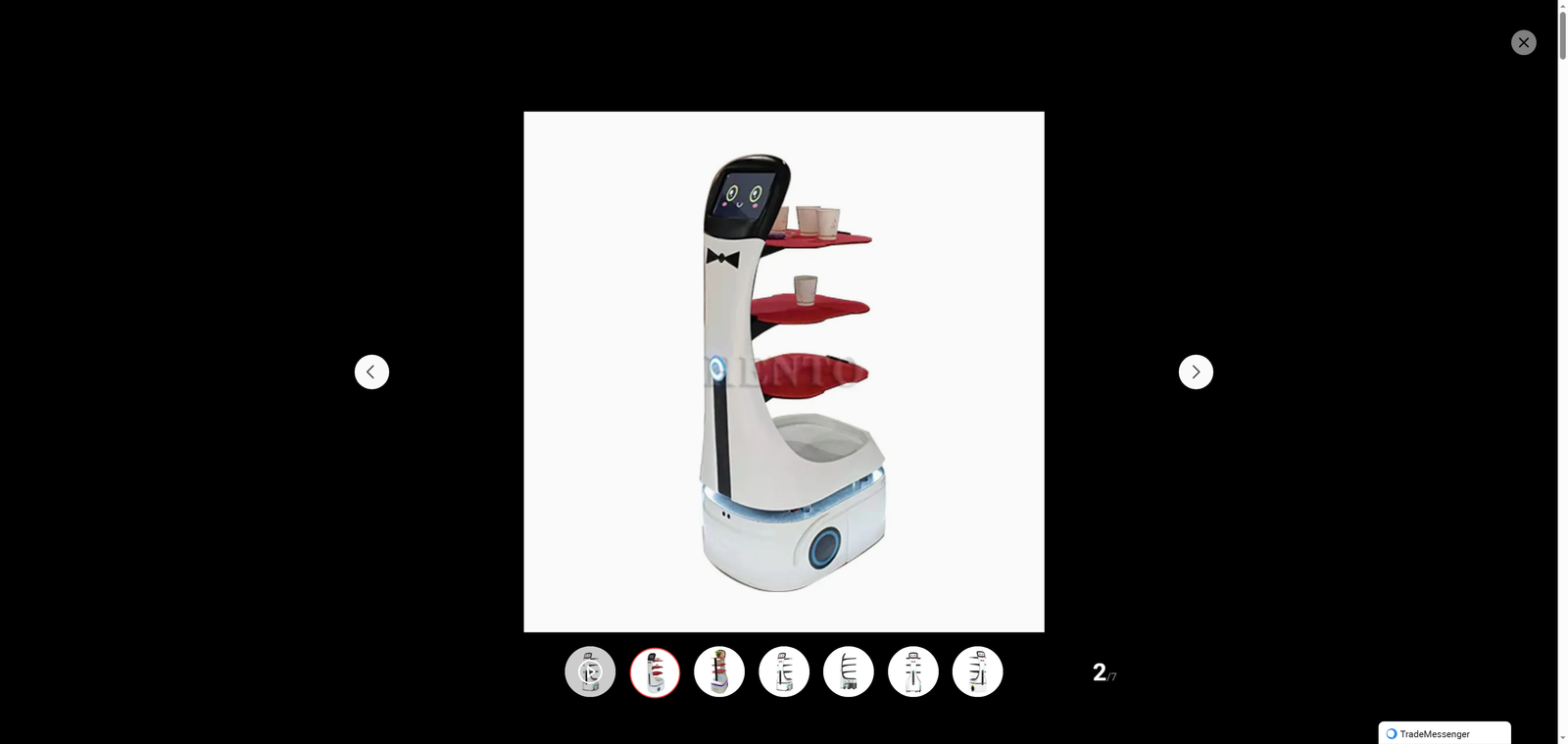
In the fast-paced modern era, the catering industry is undergoing a profound transformation driven by technological innovation. Among the various technological upgrades, restaurant food dishes delivery robots and waiter serving robots have emerged as prominent game-changers, breaking the limitations of traditional manual service and injecting new vitality into the dining experience. These intelligent robots are no longer just novel decorations; they have become reliable assistants for catering operators, integrating seamlessly into daily operations to optimize efficiency, reduce costs, and elevate customer satisfaction.
Restaurant food dishes delivery robots, as the name suggests, are specially designed to take on the core task of delivering food from the kitchen to diners’ tables. Unlike traditional human servers who may be exhausted by repeated back-and-forth trips, these robots can operate continuously for long hours without rest, fatigue, or emotional fluctuations. Equipped with advanced technologies such as SLAM navigation, dynamic obstacle avoidance, and multi-sensor fusion, they can navigate flexibly in complex restaurant environments—whether it is a crowded dining hall, narrow aisles, or suddenly moving customers and staff, they can quickly respond and avoid collisions, ensuring the safe and stable delivery of dishes . Many models support single-point and multi-point delivery, meaning they can deliver food to multiple tables in one trip, greatly improving delivery efficiency. For example, in a global chain restaurant, a single food delivery robot can complete 150 deliveries a day, transporting 400 to 600 dishes over nearly 12 hours, which is equivalent to the workload of 2 to 3 human servers .
Beyond basic delivery, modern food dishes delivery robots are equipped with more intelligent functions to meet diverse operational needs. They can be seamlessly connected to the restaurant’s order system, enabling real-time order tracking, so both staff and customers can check the delivery progress at any time, enhancing service transparency . Some robots also have a wrong-take reminder function to prevent customers or staff from taking the wrong dishes, ensuring delivery accuracy. When the meal is delivered, they can send voice prompts to remind diners to take their food, and after delivery, they can automatically return to the kitchen to pick up new dishes or collect used tableware. This not only reduces the workload of kitchen staff but also accelerates table turnover—for instance, in a large theme park restaurant with daily customer traffic exceeding 1,000, a single robot can recover 2,000 to 3,000 dirty plates a day, increasing tableware recovery efficiency by 300% . For catering operators, this translates to significant cost savings: a single delivery robot can save 8,000 to 12,000 yuan in labor costs per month, alleviating the pressure of rising labor costs in the catering industry .
Complementing food delivery robots, waiter serving robots undertake a broader range of service tasks, acting as all-round "intelligent attendants" in restaurants. Their functions extend far beyond food delivery, covering greeting customers, leading seats, promoting dishes, and even interacting with diners. At the restaurant entrance, these robots can automatically greet customers with warm voices, display menus, and introduce popular activities, creating a welcoming atmosphere . By integrating with the restaurant’s ERP system, they can efficiently manage table availability and guide customers to their seats quickly, reducing customer waiting time and improving operational efficiency .
In terms of customer interaction and marketing, waiter serving robots show unique advantages. They can move around the restaurant to promote signature dishes and promotional activities, increasing the exposure of featured products . In the waiting area, they can distribute snacks to ease customers’ anxiety, enhancing customer stickiness . Some robots are also capable of singing, dancing, and voice interaction, which not only attracts young customers and children but also adds fun to the dining experience. For example, a large Chinese chain restaurant deployed a waiter serving robot at the entrance, which completed an average of 220 interactions per day, including 140 dance performances, successfully attracting a large number of family customers and increasing sales . For restaurant employees, these robots reduce the burden of repetitive and physical work, such as carrying heavy dishes and cleaning tableware, allowing them to focus more on providing high-quality personalized services, such as explaining dish ingredients and adjusting seasoning according to customer preferences, thereby improving job satisfaction and reducing staff turnover .
The wide application of restaurant food dishes delivery robots and waiter serving robots is not an accidental trend but the result of the joint effect of multiple factors. Against the backdrop of rising global labor costs and labor shortages in the catering industry, these robots have become an effective solution for operators to reduce costs and increase efficiency . The post-pandemic era has also strengthened consumers’ preference for contactless services, and intelligent robots can minimize direct human contact, ensuring dining safety and hygiene . At the same time, the continuous progress of artificial intelligence, machine vision, and other technologies, as well as the declining cost of core components, have made these robots more affordable and reliable, enabling not only large chain restaurants but also small and medium-sized catering stores to deploy them .
Looking to the future, restaurant food dishes delivery robots and waiter serving robots will move towards more intelligent, personalized, and integrated development. They will be able to better understand customer needs through big data analysis, such as remembering regular customers’ dining preferences and providing customized recommendations . The integration of multi-machine collaboration will be further optimized, enabling multiple robots to allocate tasks intelligently according to real-time restaurant conditions, achieving more efficient operation . They will also be deeply integrated with other intelligent systems in restaurants, such as intelligent ordering systems and kitchen automation equipment, forming a complete intelligent catering service chain . It is worth noting that the popularization of these robots does not mean replacing human beings; instead, they will form a complementary relationship with human servers, combining the efficiency and standardization of machines with the warmth and flexibility of humans to create a better dining experience .
In conclusion, restaurant food dishes delivery robots and waiter serving robots have revolutionized the traditional catering service model with their efficient, stable, and intelligent advantages. They not only help catering operators solve the pain points of high labor costs and labor shortages but also bring a more convenient, interesting, and safe dining experience to customers. As technology continues to innovate, these intelligent robots will play an increasingly important role in the catering industry, leading the industry into a new era of intelligence and high-quality development.