
Intelligent Technology Empowers Hospital Services: The Integrated Application of Remote Monitoring, AI Medicine Security, and Delivery Robots
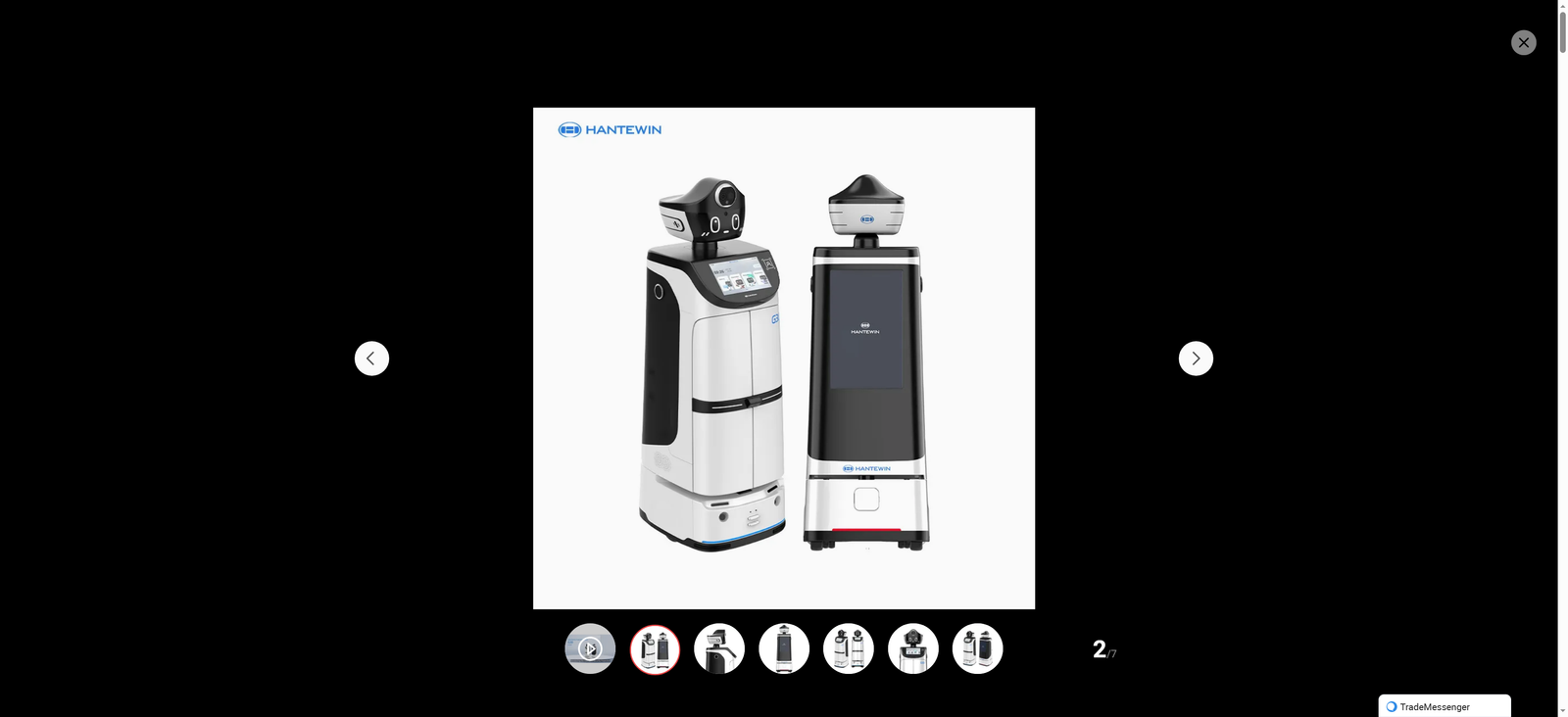
In the digital era, the integration of artificial intelligence (AI) and intelligent equipment is reshaping the pattern of medical services, injecting new vitality into the modernization of hospitals. Among them, Remote Monitoring systems, Artificial Intelligence (AI) Medicine Security Patrol Guards, and Hospital Delivery Robots have emerged as key pillars, breaking through the limitations of traditional medical services in efficiency, safety, and coverage. Their collaborative operation not only optimizes the workflow of hospitals but also improves the quality of medical care and patient experience, opening a new chapter of intelligent medical services.
Remote Monitoring technology has become an indispensable part of modern hospital management and clinical care, building an "invisible guard" for patients’ health and hospital safety. Unlike traditional on-site monitoring, remote monitoring systems integrate advanced sensors, Internet of Things (IoT) technology, and data transmission modules to realize real-time collection, analysis, and feedback of key information in various scenarios of the hospital. In the clinical ward, for example, remote monitoring devices can track patients’ vital signs (such as heart rate, blood pressure, and blood oxygen saturation) continuously, without the need for medical staff to make rounds repeatedly. Once abnormal data is detected, the system will immediately send an alarm to the medical workbench, enabling doctors and nurses to respond quickly and take targeted treatment measures, which is particularly crucial for critically ill patients and elderly patients who need long-term care. In addition, remote monitoring also plays an important role in hospital environmental safety: it can monitor the temperature, humidity, air quality of the ward, operating room, and medicine storage room in real time, ensure that the medical environment meets the professional standards, and avoid potential risks caused by environmental factors.
Artificial Intelligence (AI) Medicine Security Patrol Guards have innovated the mode of hospital medicine security management, upgrading from "passive inspection" to "active prevention" and ensuring the safety of medical supplies at all links. Medicine security is a vital part of hospital work, involving the storage, transportation, and management of drugs, medical devices, and other supplies, which is directly related to the effect of clinical treatment and patients’ life safety. Traditional medicine security relies on manual patrols, which is not only time-consuming and labor-intensive but also prone to omissions due to human factors, such as expired drugs, wrong storage conditions, or theft of valuable medical supplies. The emergence of AI medicine security patrol guards has solved these pain points effectively.
Equipped with high-definition cameras, AI image recognition algorithms, and autonomous navigation systems, AI medicine security patrol guards can perform 24-hour uninterrupted patrols in medicine warehouses, pharmacy windows, and operating room supply areas. During the patrol process, the AI system can quickly identify the information of drugs and medical devices through image recognition—such as checking whether the drug labels are clear, whether the expiration date is valid, and whether the storage location is correct. At the same time, it can also monitor the behavior of staff and visitors, detect abnormal behaviors (such as unauthorized access to medicine warehouses) in real time, and send alarm signals to the security department. In addition, AI medicine security patrol guards can record patrol data in real time, form a digital patrol report, and provide data support for hospital management to optimize the medicine security management system and improve management efficiency.
Hospital Delivery Robots have become an important force in optimizing hospital logistics services, solving the problem of inefficient manual delivery and reducing the workload of medical staff. In hospitals, a large number of logistics delivery tasks need to be completed every day, such as the delivery of drugs, test samples, medical consumables, meals, and medical records. Traditional manual delivery is not only inefficient but also takes up a lot of medical staff’s energy, making them unable to focus more on clinical care work. Hospital Delivery Robots, relying on AI autonomous navigation and path planning technology, can flexibly navigate in the complex environment of hospitals, avoid obstacles such as people and medical equipment, and accurately deliver various items to the designated location.
These delivery robots have strong adaptability and can complete delivery tasks in different scenarios, such as wards, laboratories, pharmacies, and operating rooms. For example, in the process of drug delivery, the robot can receive the delivery order from the pharmacy through the hospital information system, take the drugs according to the order, and deliver them to the designated ward and bed, reducing the error rate of manual drug delivery; in the delivery of test samples, the robot can quickly deliver the samples from the ward to the laboratory, shorten the sample transportation time, and improve the efficiency of test results. In addition, hospital delivery robots can work 24 hours a day without rest, greatly improving the delivery efficiency and reducing the logistics cost of the hospital. At the same time, by replacing manual delivery, the contact between staff and patients can be reduced appropriately, which helps to prevent the cross-infection of diseases, especially in the context of public health emergencies.
The integrated application of Remote Monitoring, AI Medicine Security Patrol Guards, and Hospital Delivery Robots has realized the synergy of "monitoring, security, and logistics" in hospitals, promoting the transformation and upgrading of hospital services. Remote monitoring provides real-time data support for the operation of the hospital, AI medicine security patrol guards ensure the safety of medical supplies, and hospital delivery robots optimize the logistics efficiency—all three form a closed loop of intelligent services, making the operation of the hospital more efficient, safe, and standardized. For medical staff, these intelligent devices reduce their tedious and repetitive work, allowing them to devote more energy to clinical diagnosis and treatment and patient care, improving work efficiency and job satisfaction. For patients, remote monitoring ensures the timeliness of medical care, AI medicine security ensures the safety of drugs used, and fast delivery services improve the comfort of hospitalization, enhancing patients’ trust in the hospital.
With the continuous progress of AI technology and IoT technology, the application of intelligent devices in hospitals will be more in-depth and comprehensive. In the future, Remote Monitoring systems may be combined with AI diagnosis technology to realize early warning and preliminary diagnosis of diseases; AI Medicine Security Patrol Guards may have more intelligent identification capabilities, realizing full-chain traceability of medical supplies; Hospital Delivery Robots may be integrated with more functions, such as patient guidance and information consultation. It is undeniable that intelligent technology is changing the way of medical services, and the combination of Remote Monitoring, AI Medicine Security Patrol Guards, and Hospital Delivery Robots will continue to empower hospital development, build a more intelligent, efficient, and safe medical environment, and bring better medical services to the public.