
New Product Food Delivery Customization Robot Waiters: Reshaping the Future of Catering Service
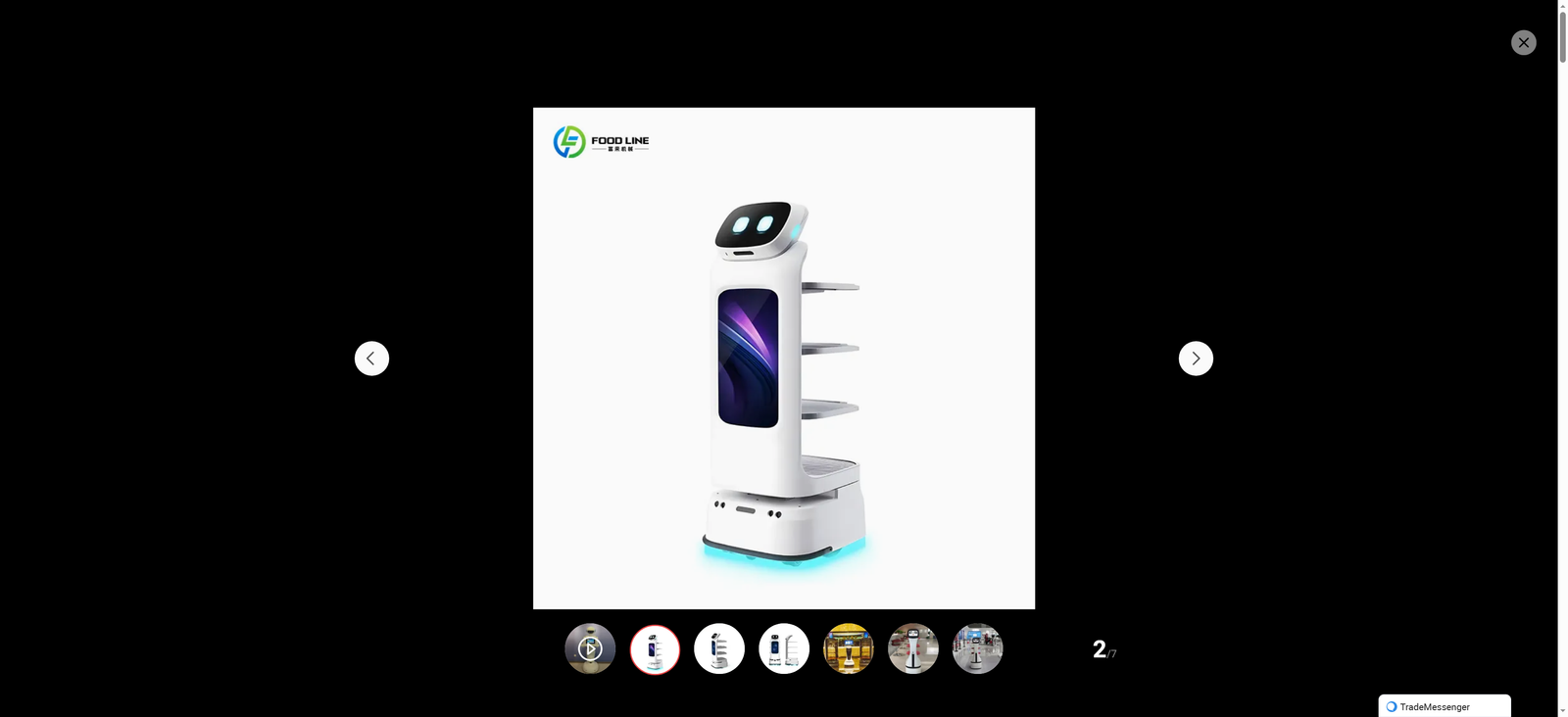
In an era where intelligence and personalization dominate consumer demand, the catering industry is undergoing a profound transformation driven by technological innovation. The launch of the new product — food delivery customization robot waiters — marks a key breakthrough in bridging the gap between efficient service and personalized experience, redefining the operational mode of catering businesses and the dining experience of consumers. These intelligent robots are no longer just simple "food transporters"; they integrate advanced technologies to provide customized solutions tailored to different scenarios, becoming a new engine for the high-quality development of the catering industry.
The birth of food delivery customization robot waiters is closely linked to the pain points of the current catering industry and the upgrading of consumer needs. With the continuous rise of labor costs and the frequent shortage of catering practitioners, traditional manual delivery faces challenges such as low efficiency, high error rates, and uneven service quality during peak dining hours. At the same time, modern consumers are no longer satisfied with basic dining needs; they pursue more efficient, hygienic, and personalized services, and the novelty of intelligent interaction has also become an important factor affecting their dining choices. Against this backdrop, food delivery customization robot waiters have emerged as the times require, combining the advantages of intelligence, customization, and efficiency to provide a win-win solution for catering operators and consumers.
The core competitiveness of the new food delivery customization robot waiters lies in their "customization" capability, which is supported by advanced technological integration. Equipped with high-precision navigation systems such as laser radar and SLAM algorithm, these robots can achieve centimeter-level positioning accuracy, flexibly navigate in complex dining environments, automatically avoid obstacles, and pass through narrow aisles as narrow as 55 cm without the need for pasting QR codes, ensuring that food is delivered to the designated table accurately and quickly. What distinguishes them from ordinary delivery robots is their customizable functional modules, which can be adjusted according to the size of the catering venue, the type of cuisine, and consumer needs. For example, in hot pot restaurants, they can be customized with high-temperature resistant food compartments and adjustable partitions to avoid food mixing; in dessert shops, they can be equipped with cold storage modules to maintain the freshness of desserts; in large chain restaurants or theme parks, they can support multi-machine collaboration through an autonomous scheduling system, realizing simultaneous delivery to multiple tables and efficient recycling of tableware, greatly improving operational efficiency.
In addition to functional customization, the robot waiters also support personalized service customization to enhance the consumer experience. They are equipped with voice interaction modules and high-definition displays, which can be customized with different voices, languages, and interaction modes according to the positioning of the catering brand. For example, children's restaurants can set up cartoon voice and interactive games to attract children's attention; high-end restaurants can adopt elegant voice prompts and display the origin and production method of dishes to enhance the sense of ritual dining. Some high-end models can even be connected to the restaurant's order system to realize real-time order tracking, allowing consumers to check the delivery progress at any time, and provide wrong-taking reminders to avoid the mistake of taking the wrong dishes, improving service transparency and accuracy. For catering operators, the robot waiters can also be customized with data statistics functions to record the frequency of food orders, delivery time, and consumer feedback, providing valuable data support for optimizing menu design and adjusting operational strategies.
The application of food delivery customization robot waiters has brought significant practical value to catering operators. Firstly, it effectively reduces labor costs: a single robot can work continuously for nearly 12 hours a day, delivering 400-600 plates of food, which is equivalent to the workload of 2-3 human waiters, and does not require salaries, training, or vacation, helping operators save 8,000-12,000 yuan in labor costs per month per robot. Secondly, it improves service efficiency and quality: the robots can operate stably 24 hours a day, avoiding the fatigue and emotional fluctuations of manual service, ensuring consistent service quality, especially during peak dining hours, which can effectively alleviate the pressure of insufficient manpower and reduce consumer waiting time, improving the turnover rate by more than 30% in some benchmark customer cases. Thirdly, it enhances the brand image: the introduction of intelligent robot waiters can add a sense of technology and novelty to the restaurant, attract more tech-savvy consumers and young people to visit, and become a "traffic star" for the restaurant to attract customers, helping to shape a distinctive brand image.
From the perspective of industry development, food delivery customization robot waiters are not only a new product, but also a symbol of the transformation and upgrading of the catering industry towards intelligence and refinement. With the continuous breakthrough of core component technologies such as sensors, servo systems, and AI chips, the cost of robot waiters is expected to decrease significantly — the average manufacturing cost is expected to drop from 50,000 yuan per unit in 2024 to 28,000 yuan per unit in 2030, which will drive their accelerated popularization in small and medium-sized catering stores. At the same time, supported by national policies such as the Ministry of Industry and Information Technology's "Robot Application Action Implementation Plan", which proposes that the density of service robots will double by 2025 compared with 2020, the application scenarios of food delivery customization robot waiters will become more extensive, gradually expanding from restaurants to hotels, hospitals, nursing homes, office buildings, and campuses, covering more diversified food delivery needs such as patient meals, elderly meals, and office meals.
Of course, the popularization of food delivery customization robot waiters also faces certain challenges. For example, the initial investment cost is relatively high for some small and medium-sized catering operators; the maintenance and after-sales service system needs to be further improved; and there are still technical bottlenecks in adapting to more complex and changeable dining environments (currently 83% of the equipment still needs to be deployed in a specific environment). However, with the continuous advancement of technology, the continuous expansion of the market, and the gradual improvement of the industrial chain, these challenges will be gradually solved. It is predicted that by 2030, China's food delivery robots will complete the transformation from auxiliary tools to smart catering infrastructure, and through the group intelligent collaboration system empowered by AI large models, they will realize in-depth coupling with unmanned kitchens and smart supply chains, and ultimately reshape the value creation logic of the catering service industry.
In conclusion, the launch of the new product food delivery customization robot waiters is a major innovation in the catering service industry, which not only solves the pain points of traditional catering operations, but also meets the personalized needs of modern consumers. With their customizable functions, intelligent interaction, and efficient service, they are gradually changing the way people dine and the way catering businesses operate. As technology continues to iterate and the market demand continues to upgrade, food delivery customization robot waiters will surely play a more important role in the future catering industry, leading the catering industry into a new era of intelligence and personalization, and bringing a better dining experience to people's lives.