
The Era of Intelligent Mobility: How AI Delivery Robots Transform Medical, Restaurant, Hotel and Office Scenes
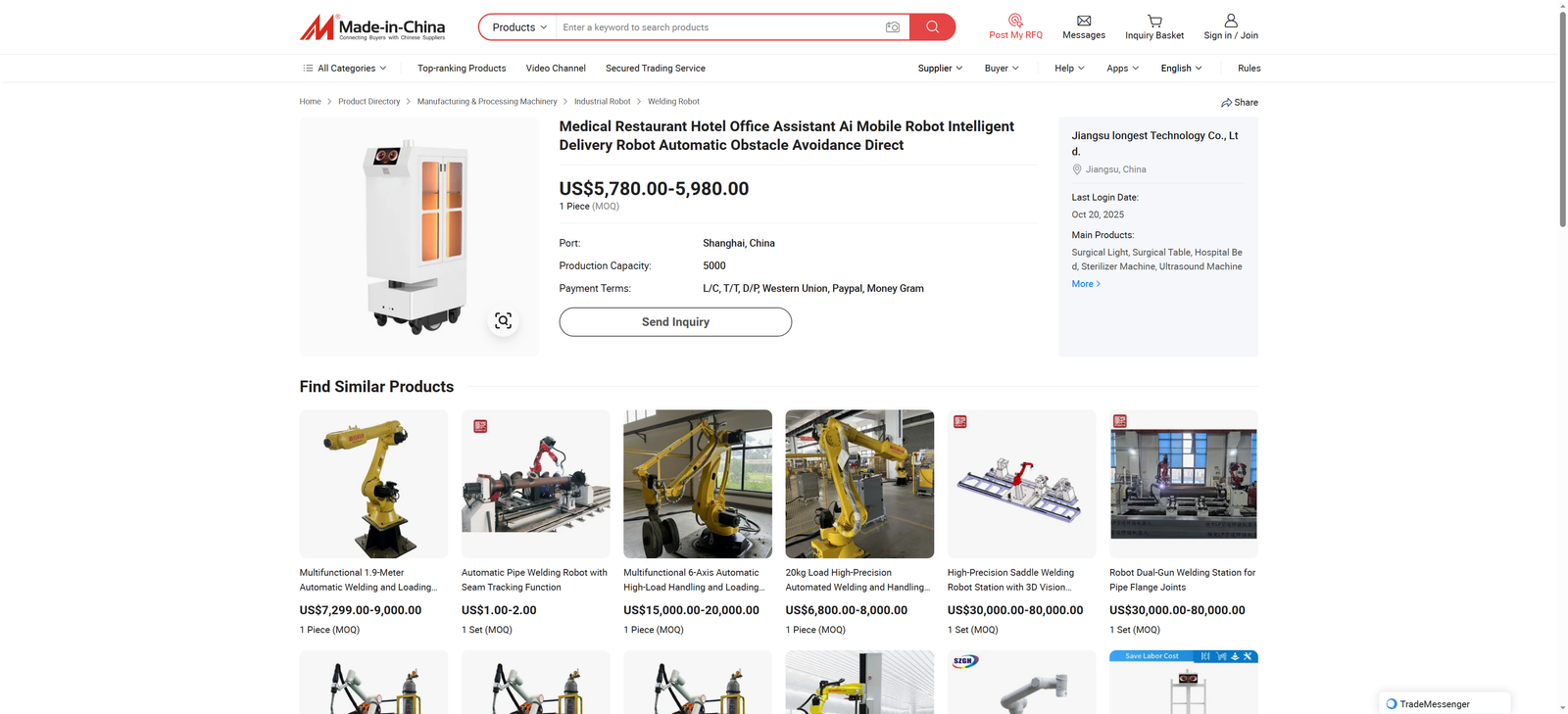
With the rapid integration of artificial intelligence, robotics and Internet of Things technologies, intelligent mobile robots have stepped out of the laboratory and become an indispensable part of modern society. Among them, the AI mobile robot with intelligent delivery and automatic obstacle avoidance functions has gradually penetrated into medical institutions, restaurants, hotels and office buildings—four core scenarios closely related to people’s work and life. These robots are no longer just cold machines; they are efficient assistants that optimize service processes, reduce labor costs and improve user experience, redefining the way of work and service in various industries.
In the medical field, the application of intelligent delivery robots has solved many long-standing pain points of traditional logistics. Medical institutions have strict requirements for the timeliness, accuracy and sterility of material delivery, and manual delivery is often restricted by factors such as heavy workload, human error and cross-infection risks. The medical AI delivery robot, equipped with high-precision automatic obstacle avoidance technology, can flexibly navigate through crowded corridors, elevators and ward areas, avoiding collisions with medical staff, patients and medical equipment. It is mainly used to deliver drugs, test samples, medical consumables, bed sheets and quilts, as well as meals for inpatients. For example, in large general hospitals, robots can complete the delivery of emergency drugs from the pharmacy to the emergency department in a few minutes, which is faster and more reliable than manual delivery; in isolation wards, robots can replace medical staff to complete material delivery, effectively reducing the risk of cross-infection and lightening the workload of medical personnel. With the support of AI algorithms, the robot can also record delivery information in real time, realize traceability management of medical materials, and further improve the standardization of medical logistics.
The restaurant industry is another important application scenario for intelligent delivery robots, where they have become a “new benchmark” for efficient service. In busy restaurants, cafes and food courts, waiters often face the pressure of taking orders, delivering food and cleaning tables at the same time, which easily leads to slow delivery speed and wrong delivery. The restaurant intelligent delivery robot can perfectly solve this problem: after the customer orders, the robot receives the order information through the system connection, takes the food from the kitchen accurately, and delivers it to the designated table through the pre-set route. Its automatic obstacle avoidance function allows it to flexibly bypass diners, chairs and other obstacles, even in narrow dining spaces, it can move smoothly without affecting the dining experience of customers. In addition, some high-end restaurants also use AI mobile robots as greeting assistants, which can guide customers to their seats, introduce dishes and answer simple dining questions, adding a sense of technology and fun to the dining scene. The application of delivery robots not only improves the efficiency of food delivery, reduces the labor cost of restaurants, but also brings a new and interesting dining experience to customers, becoming a new highlight of restaurant operation.
In the hotel industry, intelligent delivery robots are gradually becoming a “new standard” for high-quality service, helping hotels improve service efficiency and customer satisfaction. For hotel guests, the need to get items such as water, towels, toothbrushes or take-outs late at night often requires calling the front desk, which is not only time-consuming but also may affect the rest of the service staff. The hotel AI delivery robot can solve this problem 24 hours a day: guests only need to place an order through the room phone or WeChat mini-program, and the robot will take the items, navigate to the designated room accurately, and notify the guest to pick up the items through voice broadcast. The robot’s automatic obstacle avoidance technology ensures that it can safely pass through hotel corridors, elevators and public areas, without damaging the hotel’s decoration or affecting other guests. At the same time, the robot can also be used to deliver room cards, promotional materials and other items, reducing the workload of the front desk and housekeeping staff, and allowing them to focus more on providing personalized services for guests. For hotels, the introduction of intelligent delivery robots not only enhances the sense of technology and competitiveness of the hotel, but also reduces long-term labor costs, achieving a win-win situation for guests and hotels.
In the office scene, intelligent delivery robots have become an efficient assistant for office workers, optimizing the internal logistics of the office and improving work efficiency. In large office buildings or enterprise parks, the delivery of documents, express delivery, office supplies and meals often requires special personnel to be responsible, which is not only inefficient but also a waste of human resources. The office AI mobile robot can take on this task: it can deliver documents between different departments accurately and quickly, avoid the delay caused by manual delivery; it can also distribute express delivery and office supplies to each employee’s position, saving employees the time of picking up items; during the lunch break, it can deliver meals ordered by employees to the office, allowing employees to focus more on their work. The robot’s automatic obstacle avoidance function can adapt to the complex office environment, such as avoiding office chairs, computers, water dispensers and other obstacles, and even automatically take elevators to complete cross-floor delivery with the support of the building’s intelligent system. In addition, the AI robot can also be connected to the enterprise’s internal management system to record delivery information in real time, facilitating the management and statistics of internal logistics.
The wide application of intelligent delivery robots in medical, restaurant, hotel and office scenes is inseparable from the continuous upgrading of core technologies such as automatic obstacle avoidance and AI intelligence. The automatic obstacle avoidance function of the robot is mainly realized through sensors such as lidar, cameras and ultrasonic waves, which can detect obstacles around in real time, calculate the optimal avoidance route quickly, and ensure the safety and smoothness of delivery. The AI intelligent system enables the robot to learn and adapt to different scenarios continuously, optimize navigation routes, improve delivery accuracy, and even interact with humans through voice, realizing more humanized services. With the continuous development of technology, the functions of intelligent delivery robots will become more and more powerful, and their application scenarios will become more and more extensive. They will not only replace manual labor in more repetitive and tedious logistics tasks but also combine with other technologies to create more intelligent and humanized service modes.
In conclusion, the AI mobile robot with intelligent delivery and automatic obstacle avoidance functions is quietly changing the way of service and work in medical, restaurant, hotel and office industries. It solves the pain points of traditional logistics, improves service efficiency, reduces labor costs, and brings a more convenient and intelligent experience to people’s work and life. As technology continues to innovate, intelligent delivery robots will play a more important role in the future, promoting the upgrading and development of various industries towards intelligence and efficiency, and opening a new era of intelligent mobility.