
Low Maintenance & Tool-Free Delivery Robots: Redefine Efficient Operations for Businesses
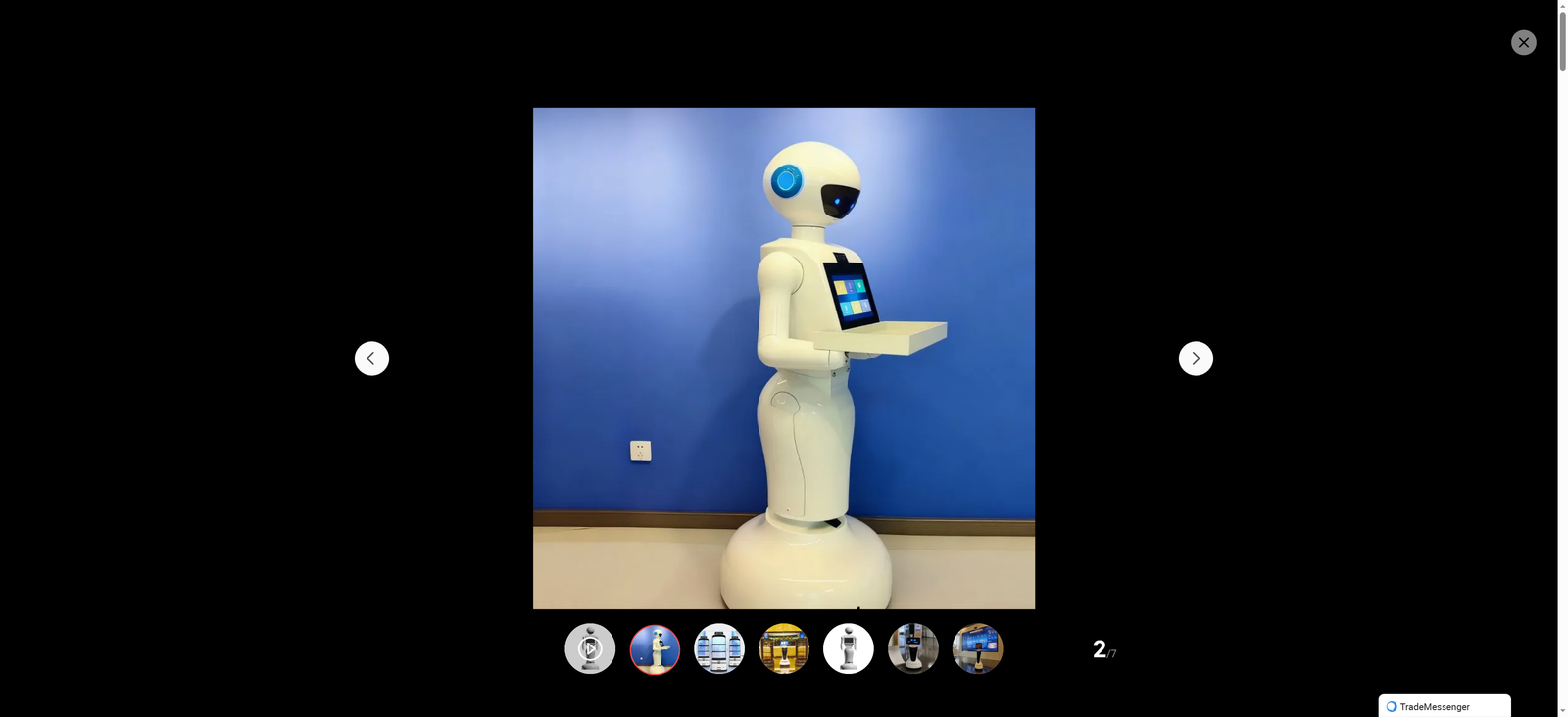
In the era of intelligent automation, delivery robots have become a core driver for businesses to optimize workflows, especially in scenarios like logistics warehouses, commercial parks, hospitals, and catering venues. However, high maintenance costs, complex operation procedures, and professional technical requirements have long plagued managers, limiting the large-scale application of delivery robots. Against this backdrop, delivery robots featuring low maintenance design and tool-free operation have emerged as game-changers, breaking through operational bottlenecks and bringing sustainable efficiency gains to businesses.
Low Maintenance Design: Minimize Operational Costs, Maximize Equipment Uptime
For businesses, the true value of delivery robots lies not only in initial efficiency improvement but also in long-term cost control and stable operation. Traditional delivery robots often require frequent professional maintenance due to complex component structures, with costs including spare parts replacement, technical personnel on-site service, and downtime losses—factors that significantly erode the return on investment (ROI) of robotic systems.
The low maintenance design of modern delivery robots fundamentally addresses these pain points through multiple technical optimizations. Firstly, modular hardware architecture is adopted, where core components such as batteries, sensors, and drive modules are independently integrated. This design avoids overall system shutdown caused by single-component failures and allows for quick replacement of faulty modules without disassembling the entire machine. Unlike traditional robots that require 2-3 hours of professional maintenance for component failures, modular robots can resume operation within 15 minutes, reducing downtime losses by over 80% <superscript:2].
Secondly, wear-resistant and durable material selection extends equipment lifespan. Key moving parts such as rollers and tracks are made of high-strength composite materials, which can withstand 24/7 high-load operation in complex environments like warehouses and corridors. Data shows that such robots have an average service life of 3-5 years, with annual maintenance costs accounting for only 5%-6% of the initial investment—far lower than the 15%-20% of traditional models <superscript:6]. Meanwhile, self-monitoring software is embedded in the system to proactively alert to potential issues such as battery decay and sensor dust accumulation, enabling preventive maintenance that reduces failure rates by 65%<superscript:2].
In terms of energy management, low-maintenance delivery robots are equipped with high-capacity lithium batteries with intelligent charging technology. They can automatically return to charging stations when power is low, supporting 8 hours of continuous operation on a single charge with a daily electricity cost of only $0.5-$1 <superscript:6]. Compared to traditional manual delivery with an annual cost of over $10,000 per person, the long-term operational cost advantage of low-maintenance robots is extremely obvious <superscript:3].
Tool-Free Operation: Lower Thresholds, Realize Rapid Deployment
The complexity of deployment and operation is another major obstacle to the popularization of delivery robots. Many traditional models require professional technicians to complete mapping, debugging, and daily maintenance with special tools, resulting in high training costs and slow response to operational problems—especially for small and medium-sized businesses lacking professional technical teams.
Delivery robots with tool-free design break down these barriers by simplifying every link from deployment to daily operation. In terms of deployment, one-click mapping and intelligent sharing functions allow a single robot to complete environmental mapping independently, and the map can be shared with the entire fleet in real time. Without the need for PC debugging or special tool assistance, the robot can be fully deployed within 1 day, which is 90% faster than traditional models that take 1-2 weeks <superscript:4]. This rapid deployment capability is particularly critical for businesses with dynamic operational needs, such as temporary logistics warehouses and event venues.
In daily operation and maintenance, all routine tasks can be completed by ordinary staff without professional tools. For example, surface cleaning only requires a dry cloth to wipe; roller and track debris can be removed by hand or with a simple brush; battery replacement adopts a plug-and-play design, eliminating the need for wiring or tool disassembly <superscript:2]. The 14-inch large touch screen provides an intuitive operation interface, supporting functions such as task scheduling, path adjustment, and fault inquiry with simple clicks—no professional programming skills required <superscript:4].
Even in complex scenarios requiring multi-robot collaboration, tool-free operation ensures operational efficiency. The robot fleet can autonomously complete path planning and obstacle avoidance through intelligent scheduling algorithms, and staff can summon robots or adjust tasks via mobile terminals without additional tool support. This user-friendly design not only reduces training costs by 50% but also enables businesses to flexibly adjust the number of robots according to operational peaks, maximizing resource utilization <superscript:6].
Multi-Scenario Application: Create Value for Diverse Industries
The combination of low maintenance and tool-free design makes delivery robots adaptable to a wide range of commercial scenarios, bringing tangible benefits to different industries. In logistics warehouses, they can stably transport goods with a load capacity of up to 150kg, reducing labor intensity by 80% and improving handling efficiency by 2-3 times <superscript:4]; in hospitals, they can safely deliver drugs and samples, avoiding cross-infection risks while reducing the workload of medical staff; in commercial parks and catering venues, they realize 24-hour uninterrupted delivery, increasing order fulfillment rates by over 20% <superscript:3].
A case study of a technology park shows that after introducing 80 low-maintenance, tool-free delivery robots, the annual operational cost was reduced by 25%, and the ROI was achieved within 1.5-3 years <superscript:5]. The robots maintained 99% uptime through simple daily maintenance by ordinary staff, effectively solving the problems of high manual delivery costs and frequent staff turnover. For e-commerce enterprises, this type of robot also avoids the high cost of lidar technology by adopting AIPassive sensor navigation, further reducing initial investment while ensuring operational stability <superscript:1].
Conclusion: The Future of Delivery Automation Lies in "Simple & Stable"
In the competitive commercial environment, efficiency improvement and cost control are the core demands of businesses. Low maintenance and tool-free delivery robots, with their advantages of stable operation, low cost, simple operation, and rapid deployment, are gradually replacing traditional models as the preferred choice for intelligent delivery. They not only lower the threshold for businesses to adopt robotic technology but also create sustainable operational value through long-term cost savings and efficiency gains.
As technology continues to evolve, delivery robots will further optimize in terms of maintenance convenience and operational intelligence. For businesses seeking digital transformation, choosing a delivery robot with low maintenance and tool-free design is not just an investment in equipment, but a strategic layout to enhance core competitiveness in the intelligent era.