
Intelligent Hotel Humanoid Robot for Delivery: Transforming Hospitality with Tech Innovation
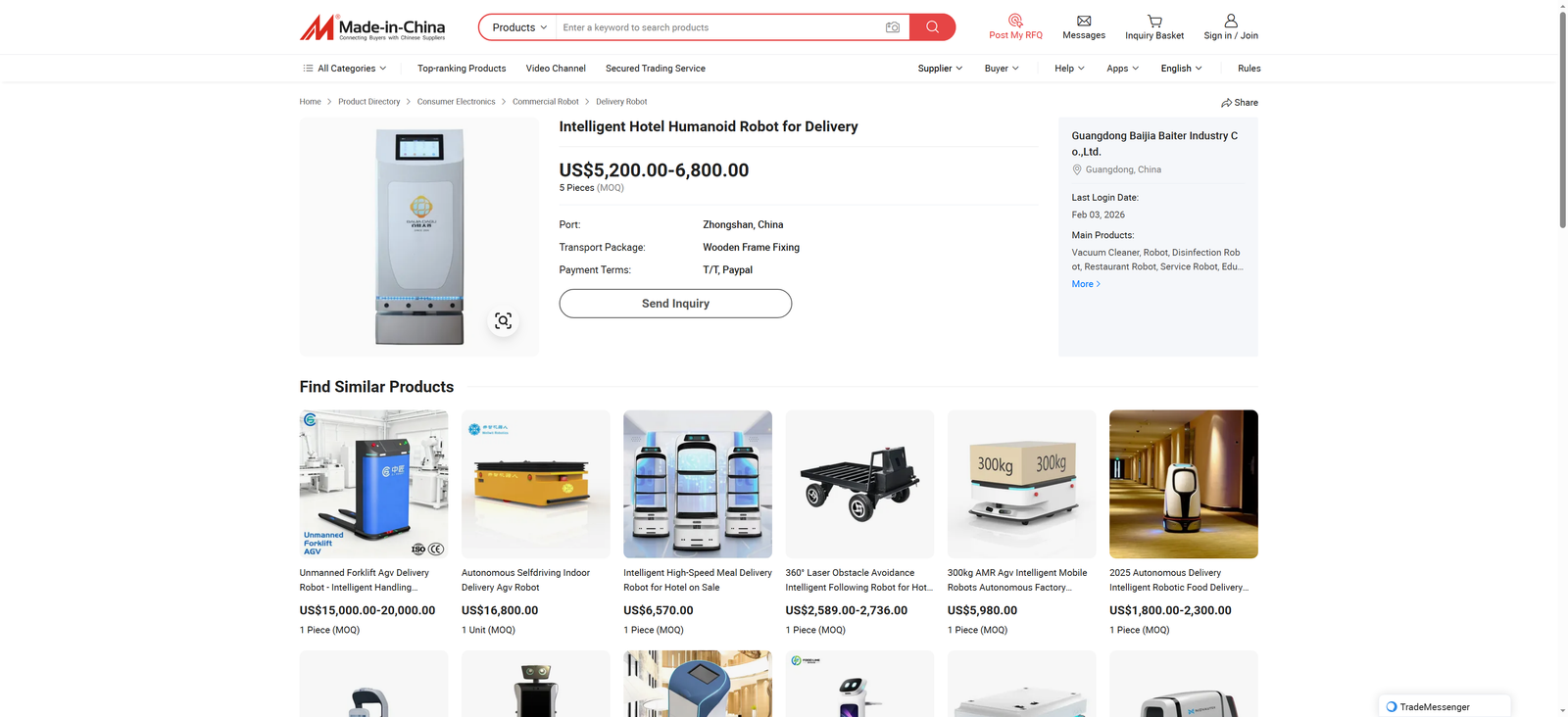
In the era of digital transformation, the hospitality industry is undergoing a profound revolution driven by technological advancement. Among the various innovations reshaping hotel services, the intelligent hotel humanoid robot for delivery has emerged as a game-changer, bridging the gap between efficiency, convenience, and personalized experience. Unlike traditional delivery robots with single-function designs, humanoid delivery robots combine the flexibility of human movements with cutting-edge intelligent technology, redefining the standards of hotel logistics and guest services.
The rise of intelligent hotel humanoid delivery robots is closely linked to the evolving needs of both hotels and their guests. For hotels, the long-standing challenges of rising labor costs, labor shortages, and inconsistent service quality have become increasingly prominent. Statistics show that labor costs account for 30% to 50% of hotel operating expenses in many developed economies, and the industry faces persistent staffing gaps due to population aging and young people’s reluctance to take repetitive service jobs. For guests, post-pandemic awareness of hygiene, demand for 24/7 service, and expectations for personalized, contactless interactions have pushed hotels to seek more efficient and flexible service solutions. Humanoid delivery robots perfectly address these pain points, offering a win-win solution for operational optimization and guest experience enhancement.
At the core of intelligent hotel humanoid delivery robots lies a suite of advanced technologies that enable them to adapt seamlessly to complex hotel environments. Equipped with multi-sensor fusion systems, including ultrasonic radar, depth cameras, and laser radar, these robots achieve 360° all-round stereo perception, allowing them to detect static and dynamic obstacles in real-time and update optimal delivery routes accordingly. Their movement capabilities are equally impressive—many adopt hybrid chassis designs that combine the flexibility of humanoid upper bodies with the stability of wheeled bases, enabling them to climb 10° carpets, cross 25mm obstacles, and move freely in narrow corridors as small as 55cm wide. Most notably, integrated with self-developed elevator control systems, they can independently take elevators, realizing cross-floor delivery without manual intervention, which greatly expands their service scope.
The application scenarios of intelligent hotel humanoid delivery robots are diverse and comprehensive, covering almost all aspects of hotel logistics and guest services. The most common use case is room delivery: guests can place orders with a single scan of a QR code, specifying the delivery location, and the robot will promptly pick up items such as food, drinks, toiletries, and laundry, then deliver them accurately to the designated room. During delivery, the robot can broadcast arrival notifications and support password or phone verification to ensure the safety and privacy of items. In addition to room delivery, these robots also excel in public area services—during off-peak delivery hours, they can perform cruise broadcasting tasks, using their built-in large screens to display hotel promotions, event information, or safety reminders, turning into mobile marketing tools. Some high-end models even integrate entertainment interaction functions, supporting 20 voice types (such as childlike voices, male voices, and female voices), voice conversations, and photo-taking, creating a more engaging and personalized experience for guests.
The practical value brought by intelligent hotel humanoid delivery robots is tangible and far-reaching. For hotels, these robots significantly reduce operational costs and improve service efficiency: a single robot can complete 1,826 tasks per month, accumulating 9,130 minutes of delivery time and saving 152.1 hours of human service time monthly. They operate 24 hours a day, 365 days a year, eliminating the need for rest breaks, vacations, or training, and ensuring consistent service quality regardless of peak or off-peak hours. For large-scale hotels or office buildings, multi-robot collaboration is supported, which further improves delivery and guidance efficiency, avoiding congestion and optimizing work order scheduling. For guests, the robots offer unparalleled convenience—they no longer need to wait for hotel staff to deliver items, especially late at night, and can enjoy contactless services that reduce unnecessary interactions, enhancing both safety and comfort.
The integration of intelligent hotel humanoid delivery robots also represents a major step forward in the intelligence upgrade of the hospitality industry. A typical example is the cooperation between Keenon Intelligence and Shangri-La Group: Keenon’s humanoid service robot XMAN-R1, together with specialized delivery robots, has been deployed in Shanghai Hongqiao Shangri-La Traders Hotel, creating the world’s first smart hotel with "general-purpose specialized" robot collaboration. This practice not only showcases the hotel’s technological image but also sets a benchmark for the industry, proving that humanoid robots can seamlessly integrate into hotel operations and elevate service standards. With the continuous advancement of technologies such as Visual-Language-Action (VLA) models and dexterous manipulators, future humanoid delivery robots will become more intelligent and flexible—they will be able to handle more complex tasks such as sorting luggage, arranging items, and even assisting guests with simple check-in procedures, further blurring the line between human and robot services.
Of course, the popularization of intelligent hotel humanoid delivery robots also faces certain challenges. The initial deployment cost is relatively high, which may be a barrier for small and medium-sized hotels. In addition, there are issues such as public acceptance—some guests, especially the elderly, may feel unfamiliar or uncomfortable interacting with robots. However, with the continuous decline in hardware costs, the improvement of robot intelligence, and the gradual adaptation of the public to intelligent services, these challenges are expected to be gradually resolved.
In conclusion, the intelligent hotel humanoid robot for delivery is not just a technological novelty, but a core driving force for the transformation and upgrading of the hospitality industry. It combines efficiency, convenience, and innovation to help hotels reduce costs, improve services, and gain a competitive edge in the fierce market competition. At the same time, it brings guests a more intelligent, personalized, and comfortable stay experience, redefining the connotation of modern hotel services. As technology continues to evolve, we can expect these humanoid delivery robots to play an even more important role in the hospitality industry, creating a more intelligent and humanized future for hotels and guests alike.