
Intelligent Hotel Food Delivery Robot with Elevator Integration and Multi-Floor Support: Redefine Hotel Service Efficiency
In the era of smart hospitality, the demand for efficient, contactless, and high-quality services is reshaping the operational model of hotels. Labor shortages, rising人力 costs, and the growing pursuit of personalized experiences have become core challenges for hoteliers. Against this backdrop, intelligent hotel food delivery robots equipped with elevator integration and multi-floor support capabilities have emerged as a game-changer, transforming the end-to-end delivery service and building a new benchmark for smart hotel operations.
Seamless Elevator Integration: Break Through Floor Barriers for Uninterrupted Delivery
The biggest bottleneck for traditional delivery robots in multi-story hotels lies in elevator access—relying on manual assistance to call elevators or select floors severely limits delivery efficiency. The intelligent food delivery robot solves this pain point through advanced IoT interconnection technology and flexible elevator control solutions, realizing seamless collaboration with elevators.
Equipped with dual options of cloud-based and hardware-based elevator control, the robot is fully compatible with mainstream elevator brands such as KONE and OTIS without the need for large-scale elevator modifications, enabling quick deployment at low cost. When the robot reaches the elevator hall, it automatically calls the elevator via wireless communication technology, completes floor selection through intelligent interaction with the elevator control system, and autonomously enters and exits the elevator upon arrival. This full-process automated elevator interaction eliminates manual intervention, allowing the robot to smoothly traverse multiple floors and turn vertical transportation into a natural part of the delivery process.
The stability of elevator integration is further guaranteed by multi-sensor fusion technology. The robot can accurately identify elevator door status, avoid collisions with passengers entering and exiting, and adjust its movement speed in real time to ensure safe and efficient elevator rides. Whether it is peak meal hours or late-night delivery needs, the robot can reliably complete cross-floor tasks, maintaining 24/7 uninterrupted service capabilities.
Multi-Floor Support: Efficient Deployment and Intelligent Scheduling for Large-Scale Operations
For mid-to-high-end hotels with dozens of floors and hundreds of rooms, multi-floor delivery efficiency directly affects customer satisfaction and operational costs. The intelligent food delivery robot is tailored for such scenarios with powerful multi-floor adaptation and scheduling capabilities.
In terms of map construction, the robot supports quick replication of multi-floor maps, which significantly reduces deployment time compared with traditional manual mapping. After completing the mapping of one floor, the system can automatically replicate and adjust the map for other floors, enabling the robot to quickly adapt to the entire hotel layout. This efficient deployment capability is particularly suitable for chain hotels and large-scale hospitality venues, helping to accelerate the overall smart transformation process.
In terms of task scheduling, the robot is supported by a cloud-based intelligent management platform, which realizes global optimal scheduling of multi-machine collaboration. The platform can dynamically assign delivery tasks according to the robot's real-time position, remaining power, and order priority, allowing multiple robots to operate simultaneously across different floors. For example, during peak meal hours, the robot can complete multi-order concurrent delivery—loading meals for multiple rooms in one trip, continuously delivering across floors without returning to the starting point repeatedly. This mode shortens the average delivery time per order from 8-10 minutes to 3-5 minutes, doubling delivery efficiency while reducing the risk of order backlogs and delivery delays.
Comprehensive Advantages: Empowering Hotels to Reduce Costs, Increase Efficiency, and Upgrade Services
Beyond elevator integration and multi-floor support, the intelligent hotel food delivery robot creates multiple value points for hotels through a series of humanized designs and intelligent functions, achieving a win-win situation for operational efficiency and customer experience.
In terms of cost control, the robot can replace manual delivery for 24 hours, reducing the daily labor hours of hotel staff by 8 hours on average and saving 20,000-40,000 yuan in annual labor costs per unit. It also avoids delivery errors, food spills, and other losses caused by human fatigue, further optimizing operational costs.
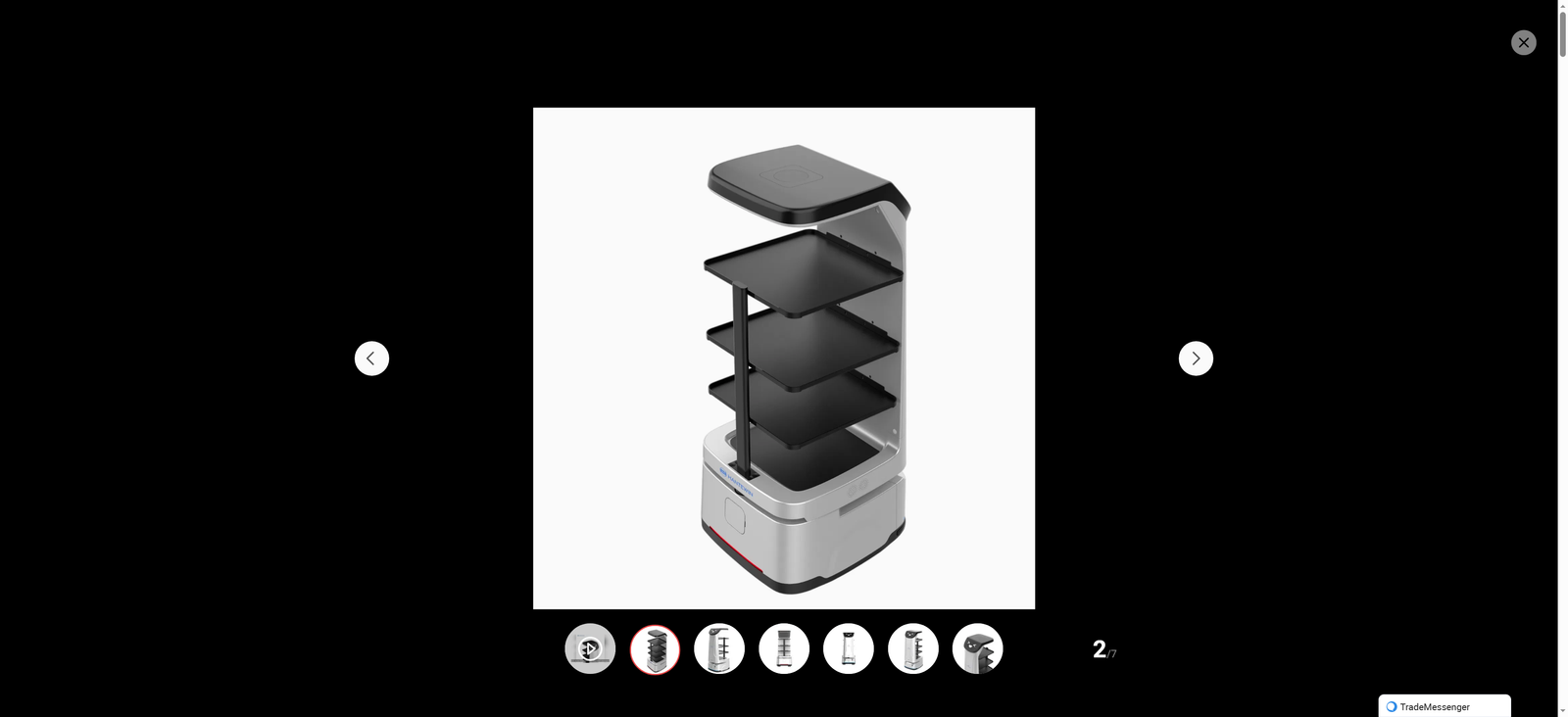
In terms of service quality, the robot is equipped with a modular adjustable cabin, which can be flexibly configured into 2-4 compartments (or even 9 compartments for dedicated scenarios) to meet the delivery needs of different foods and items—from large takeaways such as 10-inch pizzas and family buckets to hotel supplies like bathrobes and towels. The cabin is also equipped with a ventilation system to keep food fresh and free from odors, while multiple cabin opening verification methods (password, mobile phone number tail, NFC) ensure the safety of items during delivery.
In terms of brand building, the robot's sleek and elegant design integrates with the hotel's decorative style, and supports personalized appearance customization to create a unique brand memory point. According to Ctrip data, hotel reviews mentioning "robots" have an average score of 4.98, becoming a key factor in improving the hotel's OTA rating and brand influence. Meanwhile, the contactless delivery service provided by the robot meets consumers' health needs and enhances the sense of safety during their stay.
Industry Practice: Proven Value in Large-Scale Hotel Applications
At present, such intelligent delivery robots have been widely adopted by well-known hotel groups including Marriott, InterContinental, Huazhu, and BTG Homeinns. Operational data shows that the average delivery success rate of the robot reaches 99.82%, with more than 71 daily deliveries per unit and an average daily travel distance of 1.9 kilometers. A five-star hotel operation director said that after introducing the robot, the average response time to customer needs was shortened from 15 minutes to 3 minutes, and the negative review rate dropped by 45%, allowing staff to be freed from repetitive labor and focus on high-value services such as customer consultation and experience optimization.
Conclusion: Accelerate the Transformation of Smart Hotels
The intelligent hotel food delivery robot with elevator integration and multi-floor support is not just a tool for automated delivery, but a core part of the hotel's digital operation ecosystem. By breaking through floor barriers, optimizing delivery efficiency, and reducing operational costs, it helps hotels solve long-standing pain points and achieve a qualitative leap in service quality. In the wave of smart hospitality, this technology will become a must-have for hotels to enhance their core competitiveness, creating a more efficient, convenient, and humanized travel experience for guests while empowering hoteliers to achieve sustainable development.