
Intelligent Delivery Robots: Revolutionizing Autonomous Service in Modern Logistics
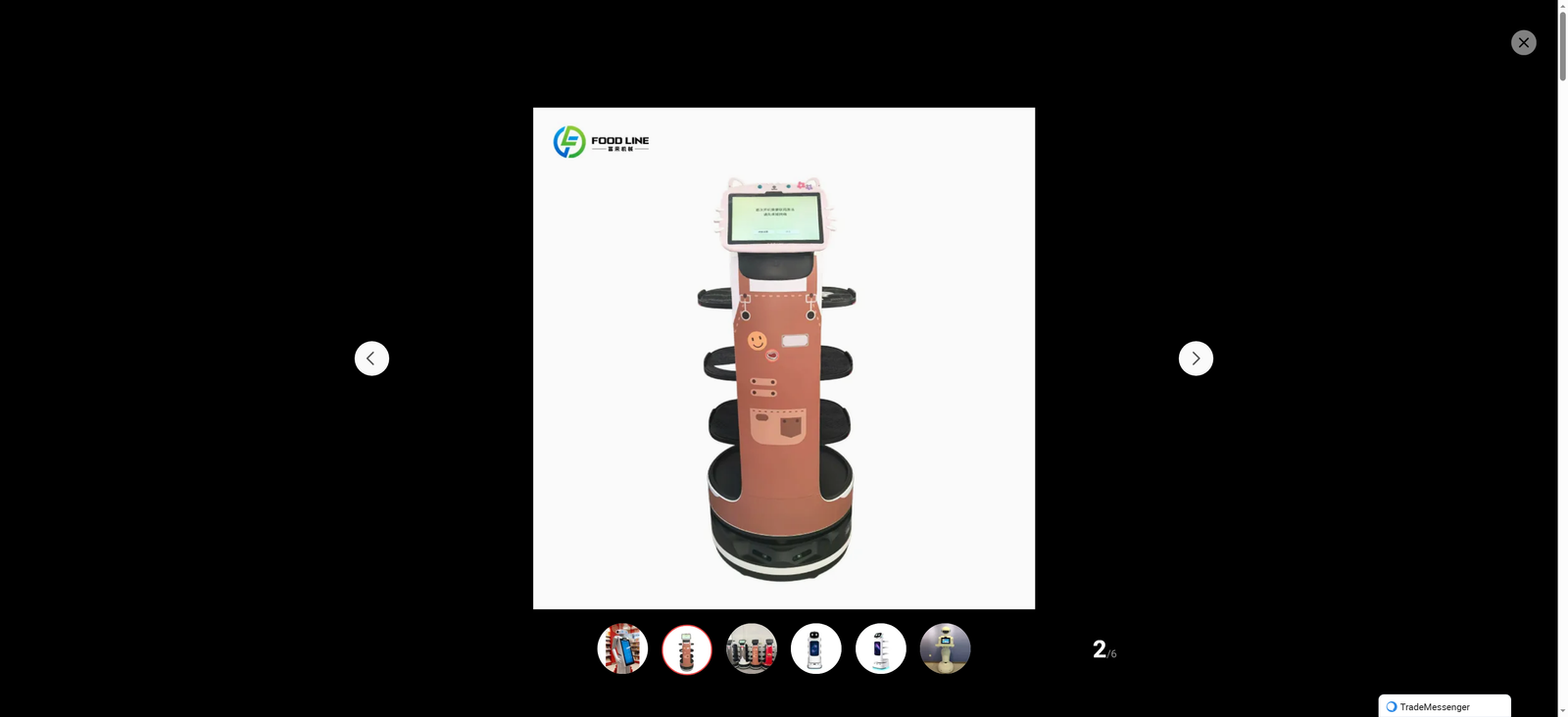
In the era of digital transformation, intelligent delivery robots and autonomous service robots have emerged as core drivers of logistics automation, redefining efficiency, safety, and service quality across industries. These advanced autonomous systems integrate cutting-edge AI, navigation, and sensing technologies to realize end-to-end unmanned delivery, breaking through the limitations of traditional manual operations and opening up a new chapter of smart service.
Core Technologies: The Foundation of Autonomous Delivery Excellence
The stable and efficient operation of intelligent delivery robots relies on the seamless integration of multiple core technologies, laying a solid foundation for their autonomous service capabilities.
Navigation and positioning technology is the core of intelligent delivery. Most advanced robots adopt laser radar visual fusion SLAM technology, achieving centimeter-level positioning accuracy even in complex dynamic environments. Equipped with 12 high-definition cameras and a 360-degree环视 system, they can perceive obstacles within 120 meters, including glass, reflective surfaces, and moving people, and realize predictive obstacle avoidance and real-time path optimization.
In terms of intelligent control, the robots are equipped with vehicle-grade computing platforms with up to 254 Tops of computing power, enabling multi-modal pre-fusion perception and L4-level autonomous driving capabilities in indoor, park, and road scenarios. The intelligent scheduling system supports multi-robot collaborative operations, allowing hundreds of robots to work in coordination in large-scale scenarios such as warehouses and factories, significantly improving overall logistics efficiency.
Battery life and safety performance are also key to practical application. With high-capacity lithium batteries, the robots can work continuously for 8-12 hours on a single charge and automatically return to the charging station when power is low. The IP68 protection level ensures stable operation in harsh environments such as dust, water, and extreme temperatures (0-40℃), while closed pallets and UV disinfection functions meet the hygiene requirements of medical and food industries.
Diversified Application Scenarios: Empowering Multiple Industries
Intelligent delivery robots, with their flexible adaptability, have been widely applied in various fields, bringing transformative changes to the operation modes of different industries.
In the catering and hotel industry, robots have become efficient assistants for daily operations. In chain restaurants and hot pot restaurants, a single robot can deliver up to 500 dishes per day, equivalent to the workload of 2-3 waiters, effectively alleviating the labor shortage during peak hours. In hotels and office buildings, they are responsible for room meal delivery and meeting refreshment distribution, enhancing service efficiency and technological sense while reducing labor costs.
The medical and elderly care fields have also benefited greatly from autonomous delivery robots. In hospitals, they can safely deliver drugs, medical supplies, and meals to wards with precise positioning, reducing cross-infection risks through contactless service. In nursing homes, they provide daily item delivery services for the elderly, lightening the burden on caregivers and improving the quality of care.
In the logistics and express delivery industry, intelligent delivery robots are promoting a new round of efficiency improvement. The新石器 (Xinshiqi) X3 unmanned delivery vehicle can deliver 2,000 parcels per day, reducing single-parcel costs by 50%. By conducting night delivery from 9 PM to 6 AM, it further optimizes logistics timeliness and meets the increasing demand for e-commerce distribution. In large warehouses, they collaborate with automated sorting systems to realize seamless connection between sorting and delivery, creating an integrated intelligent logistics chain.
In industrial production scenarios, composite delivery robots integrated with collaborative robotic arms have become a new trend. Brands like 艾利特 (ELITE ROBOT) have launched solutions that combine mobility and precision operation, enabling robots to not only deliver materials but also complete assembly, screwing, and precision loading/unloading at the destination, breaking the barrier between logistics and production and realizing fully unmanned workstations.
Market Advantages and Future Trends
Compared with traditional manual delivery, intelligent delivery robots have obvious competitive advantages, becoming an inevitable choice for enterprises to achieve cost reduction and efficiency improvement. In the long run, their ROI is significantly higher than continuous labor costs, as they can operate 24/7 with stable performance, avoiding human errors and labor turnover risks. The contactless service feature also meets the health and safety needs of the post-pandemic era, gaining widespread recognition in various industries.
Looking ahead, the intelligent delivery robot industry is ushering in a new stage of rapid development driven by technological innovation and policy support. The market scale is expected to maintain a growth rate of over 30% in 2026, with continuous expansion in application scenarios. Technologically, the deep integration of AI, IoT, and big data will make robots more intelligent, enabling them to learn and adapt to complex environments independently. The integration of 5G technology will further enhance remote control and multi-robot collaboration capabilities.
In terms of market competition, enterprises are focusing on technological differentiation and scenario-based innovation. While international brands excel in large-scale cluster scheduling, local brands have obvious advantages in cost-effectiveness and flexible customization. Composite robots that integrate "mobility operation" are becoming a new competitive focus, meeting the increasingly diverse needs of enterprises for intelligent logistics.
Conclusion
Intelligent delivery robots and autonomous service robots are not only tools for logistics automation but also important symbols of industrial upgrading. With their advanced technology, diversified applications, and significant cost-saving effects, they are reshaping the competitive landscape of various industries. For enterprises seeking high-efficiency, low-cost, and intelligent operation solutions, deploying intelligent delivery robots is a strategic investment to seize future development opportunities. As technology continues to iterate and application scenarios expand, these robots will play an even more important role in the global smart logistics ecosystem, creating greater value for society and enterprises.