
Humanoid Delivery with Intelligent Obstacle Avoidance-Lele Delivery Robot
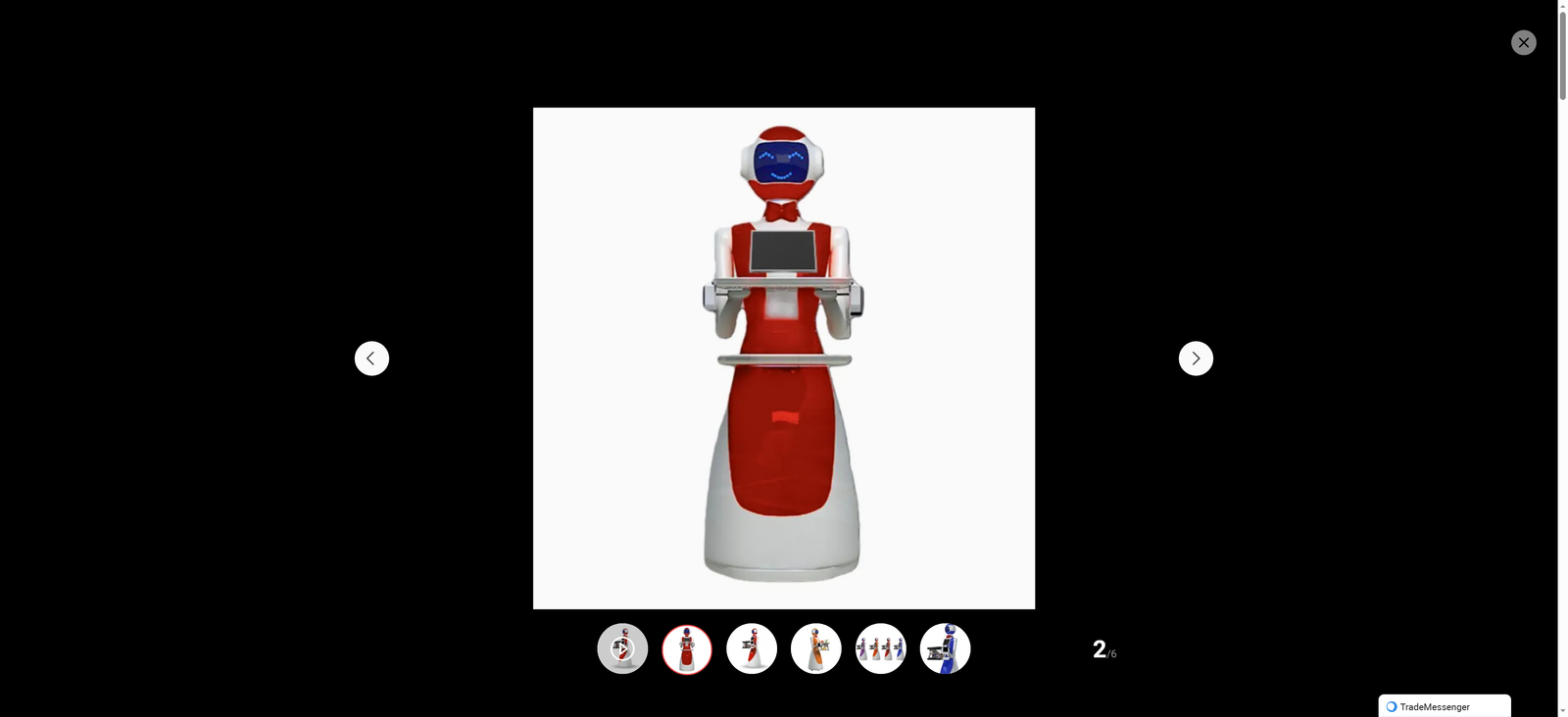
In the era of rapid development of intelligent logistics, humanoid delivery robots have emerged as a key force transforming the efficiency and experience of end-to-end delivery. Among them, the Lele Delivery Robot, with its core advantages of humanoid design and intelligent obstacle avoidance technology, has broken through the limitations of traditional delivery equipment, bringing a more flexible, safe and efficient solution to various delivery scenarios such as restaurants, hotels, office buildings and pedestrian areas. It integrates advanced robotics, artificial intelligence and environmental perception technologies, redefining the new paradigm of intelligent delivery.
As a typical representative of humanoid delivery robots, Lele is designed to simulate human body structure and movement logic, which gives it unique adaptability in complex delivery environments. With a height of 160cm and a weight of 30kg, the robot adopts a lightweight and sturdy structure made of plastic, glass fiber and metal steel plate, ensuring both flexibility and load-bearing capacity—the maximum load limit reaches 30kg, which is fully capable of meeting daily delivery needs of food, documents, small commodities and other items . Unlike traditional wheeled delivery robots with single movement modes, Lele combines humanoid bionic design with wheeled chassis, realizing smooth movement in narrow spaces while maintaining the flexibility of human-like operation, which allows it to pass through narrow aisles as narrow as 55cm and adapt to various complex terrain conditions in delivery scenarios .
The core competitiveness of Lele Delivery Robot lies in its advanced intelligent obstacle avoidance system, which is built on multi-sensor fusion technology and high-precision algorithm support, forming a full-dimensional and real-time environmental perception and avoidance capability. The robot is equipped with laser radar, 3D RGBD cameras and fisheye cameras, which work together to achieve 3D omnidirectional obstacle detection, upgrading from traditional 2D plane perception to full-body 3D environmental exploration . The obstacle detection frequency is as high as 5400 times per minute, the front detection angle reaches 192.64°, and the front obstacle detection range exceeds 10 meters, enabling it to quickly identify various obstacles such as pedestrians, furniture, low-lying obstacles and overhanging objects in the environment . When encountering obstacles, Lele can respond in as short as 0.5 seconds, automatically stop, plan an optimal bypass route in real time, and resume delivery after safely avoiding the obstacles, effectively avoiding collision accidents and ensuring the safety of people and goods during delivery .
Behind the efficient operation of Lele’s intelligent obstacle avoidance system is the strong support of core technologies. The robot adopts a dual SLAM solution integrating laser SLAM and visual SLAM, which can accurately build 3D environmental maps and realize autonomous and precise navigation, adapting to various indoor and outdoor semi-open scenarios without the need for pasting QR codes for positioning, which not only ensures navigation accuracy but also does not damage the beauty of the scene . At the same time, it is equipped with an advanced AI decision-making system based on large model technology, which can realize real-time analysis and decision-making of environmental information, decompose delivery tasks, and even realize multi-robot collaborative operation through a decentralized ad hoc network communication scheme . This means that in scenarios with multiple Lele robots operating at the same time, they can communicate directly, avoid mutual interference, and improve overall delivery efficiency .
In terms of practical application and user experience, Lele Delivery Robot has been fully optimized to meet the diverse needs of different scenarios. It supports multiple operation modes such as touch control, remote control and voice control, and is equipped with a multi-modal interaction system—different working states trigger different light interactions, and a haptic feedback system and dozens of original smart expressions make human-robot interaction more natural and friendly . The robot is equipped with a 24V15Ah polymer lithium battery, which can achieve 9 hours of continuous operation on a single charge, and supports both automatic charging and manual charging, as well as quick battery replacement technology, which can realize 24-hour uninterrupted delivery to meet the high-intensity delivery needs of commercial scenarios . In addition, its modular quick-disassembly structure and infrared tray sensor make tray replacement more convenient and improve delivery efficiency, while the closed cabin design ensures the safety and cleanliness of delivered items .
In terms of technical support and scalability, Lele Delivery Robot has obvious advantages. As a product of an independent R&D manufacturer with years of technical accumulation and multiple patents, it supports secondary development, which can be customized according to the specific needs of different industries such as catering, hotels, hospitals and libraries . For example, in catering scenarios, it can automatically broadcast the meal pickup information after arriving at the destination; in hotel scenarios, it can realize cross-floor delivery by linking with elevators and door control systems; in medical scenarios, it can safely transport medical samples with adaptive force control operation . This strong scalability enables Lele to break through the limitations of single-scenario application and become a versatile intelligent delivery assistant.
Looking to the future, with the continuous progress of bionic technology, solid-state battery technology and artificial intelligence technology, Lele Delivery Robot will usher in further upgrades . The application of bionic skin technology will make its interaction more human-like; the popularization of solid-state battery technology will further improve its battery life and safety; the deep integration of large model technology will enhance its autonomous learning and decision-making capabilities, enabling it to adapt to more complex and changeable delivery environments . As an important practice of humanoid intelligent delivery, Lele Delivery Robot not only solves the pain points of high labor costs and low delivery efficiency in traditional delivery, but also promotes the transformation and upgrading of the intelligent logistics industry .
In conclusion, the Lele Delivery Robot, with its humanoid design, advanced intelligent obstacle avoidance technology, excellent practical performance and strong scalability, has become a benchmark product in the field of humanoid delivery robots. It perfectly combines technology and practicality, bringing efficient, safe and convenient delivery services to various industries, and injecting new vitality into the development of intelligent logistics. With the continuous deepening of intelligent transformation, Lele will surely play a more important role in the future delivery market, helping to build a more intelligent, efficient and convenient urban logistics system.