
The New Era of Hotel Service: How Delivery Robots Are Redefining Catering Service Standards
With the rapid development of intelligent technology, the hotel and catering industry is undergoing a profound transformation. Among them, hotel waiter robots, food-delivery serving robots, commercial delivery robots, and scout drink delivery waiter robots have gradually become the new "core force" in hotel services. These intelligent robots are no longer just novel decorations; they are integrating into every link of hotel catering services with efficient, stable and humanized performance, opening a new chapter of intelligent service.
Hotel waiter robots, as the representative of intelligent service equipment in the hotel industry, are designed to meet the core needs of food and drink delivery. Different from traditional manual service, these robots have the characteristics of 24-hour uninterrupted work, zero error in delivery and standardized service. Whether it is a high-end five-star hotel or a cost-effective business hotel, introducing waiter robots can effectively solve the pain points of insufficient manual staff during peak hours, slow delivery speed and easy order mixing. Imagine that when guests finish ordering in the hotel restaurant, they only need to wait for a few minutes, and a cute and intelligent robot will accurately send the dishes and drinks to the table. The whole process is smooth and orderly, which not only improves the dining efficiency but also brings guests a novel and interesting service experience.
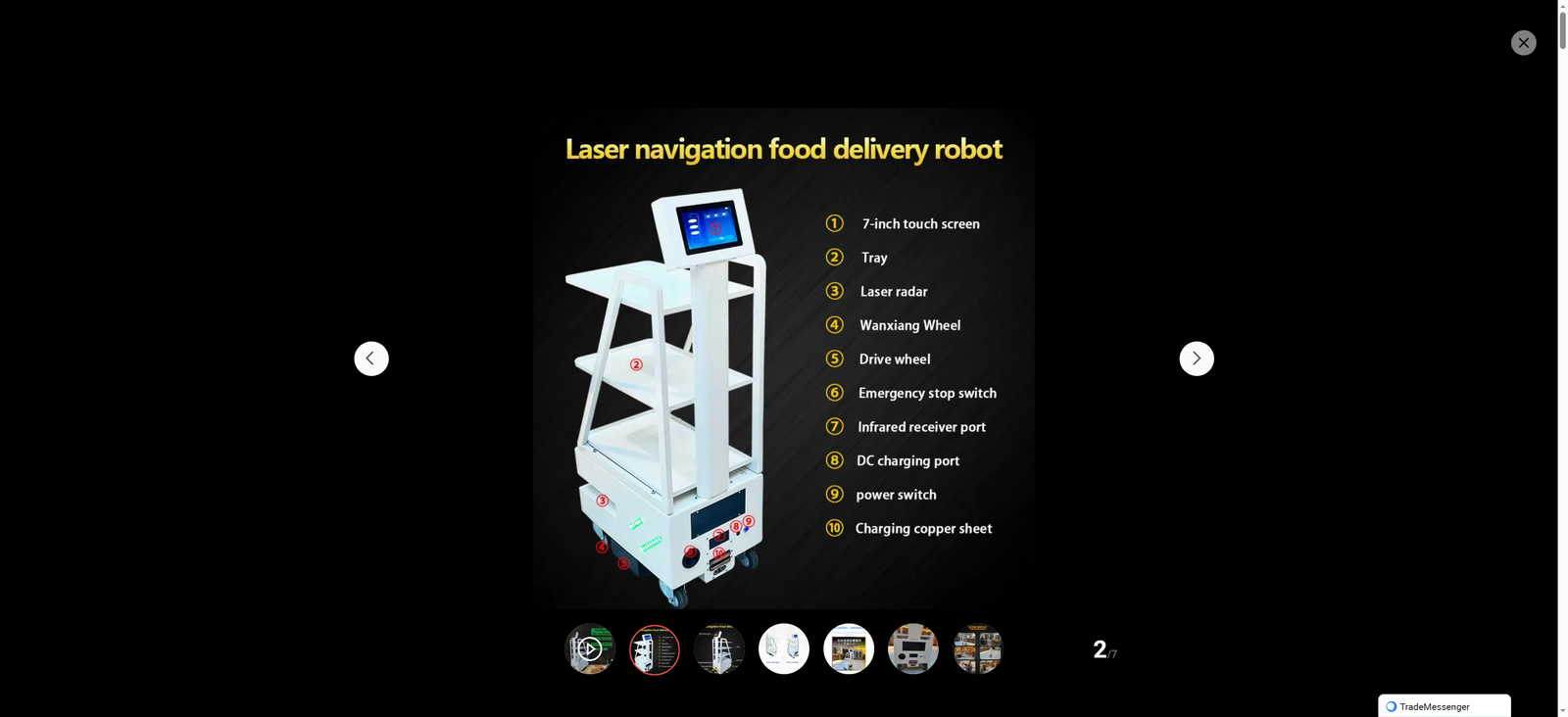
Food-delivery serving commercial delivery robots have more comprehensive functions and stronger adaptability, which are well suited to the commercial operation needs of hotels. These robots are usually equipped with advanced navigation and positioning systems, which can flexibly avoid obstacles in complex hotel environments such as corridors, dining halls and elevators, and accurately reach the designated delivery location. In terms of load capacity, commercial delivery robots can carry multiple plates of dishes or a large number of drinks at one time, which greatly reduces the number of trips for service staff. At the same time, the robot's body is made of food-grade materials, which is easy to clean and disinfect, and can effectively ensure food safety and hygiene, which is particularly important in the context of paying more and more attention to public health.
The scout drink delivery waiter robot, as a more refined type of hotel service robot, focuses on the professional needs of drink delivery. In hotels, bars, lounges and other scenes, guests often need to order various drinks such as coffee, juice and cocktails. The scout drink delivery robot can not only accurately deliver drinks according to the order but also keep the drinks at the appropriate temperature through the built-in constant temperature device. For example, iced drinks can maintain a cool taste during delivery, and hot drinks can keep warm, ensuring that guests can enjoy the best taste of drinks. In addition, some high-end scout robots are also equipped with voice interaction functions, which can answer simple questions from guests, guide guests to their seats, and further enhance the humanized service level of the hotel.
The popularization and application of hotel waiter robots and delivery robots are not only changing the service mode of the hotel industry but also promoting the upgrading and transformation of the industry. On the one hand, robots can take on a large number of repetitive and tedious service tasks, allowing manual service staff to focus more on providing high-quality personalized services, such as greeting guests, introducing dishes and solving special needs of guests, so as to improve the overall service quality and guest satisfaction of the hotel. On the other hand, the data collected by robots during operation, such as guest ordering preferences, peak dining hours and delivery efficiency, can provide valuable reference for hotel management, help hotels optimize menu settings, adjust staffing and improve operational efficiency, so as to achieve cost reduction and efficiency increase.
Of course, the development of hotel service robots still faces some challenges, such as the high initial investment cost, the need for regular maintenance and updates, and the need to further improve the adaptability to complex scenarios. However, with the continuous progress of technology and the gradual reduction of production costs, these problems will be gradually solved. It is foreseeable that in the near future, hotel waiter robots, food-delivery serving robots and other intelligent equipment will become standard configurations in more hotels, and the hotel service industry will enter a new era of coexistence and win-win between humans and robots.
In conclusion, hotel waiter robot, food-delivery serving commercial delivery robot and scout drink delivery waiter robot are important symbols of the intelligent transformation of the hotel industry. They are changing the service ecology of the hotel industry with efficient, safe and humanized advantages, bringing a better experience to guests and injecting new vitality into the development of the industry. With the deep integration of intelligent technology and the hotel industry, we have reason to believe that the future hotel service will be more intelligent, high-quality and personalized, and create more surprises for people's travel and dining life.