
Hot Sale Robot Waiter: Revolutionizing Service in Restaurants and Hotels
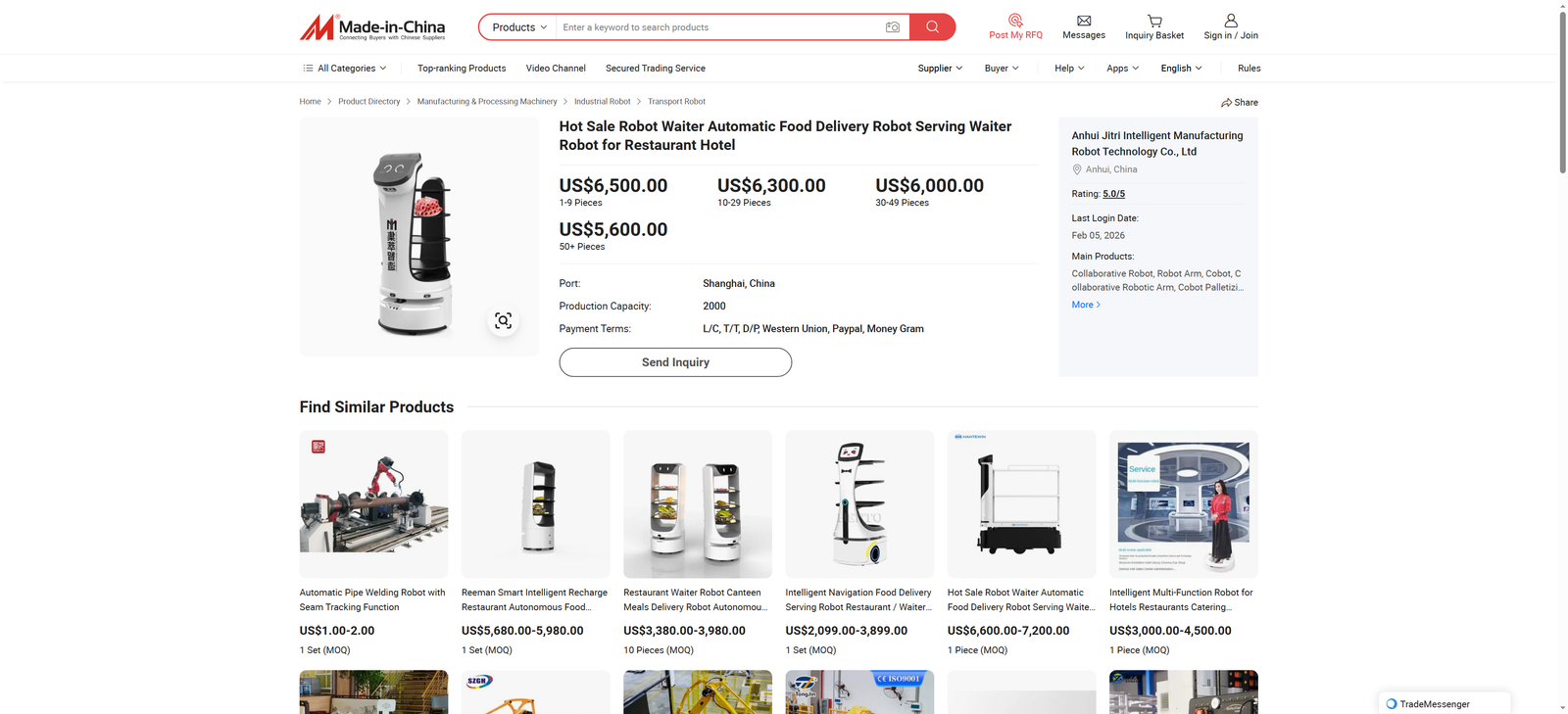
In the fast-paced world of hospitality and food service, efficiency, cost-effectiveness, and customer experience are the cornerstones of success. As the industry grapples with labor shortages, rising operational costs, and evolving consumer expectations, the hot sale robot waiter has emerged as a game-changing solution. This automatic food delivery robot and serving waiter robot is transforming the way restaurants and hotels operate, blending cutting-edge technology with seamless service to redefine the guest experience.
The hot sale robot waiter is not just a novelty—it is a practical, high-performance tool designed specifically for the unique demands of restaurants, hotels, cafes, and other hospitality venues. Engineered to handle the repetitive, time-consuming tasks that often burden human staff, these robots allow businesses to redirect their workforce to more personalized, high-value interactions, all while boosting efficiency and reducing costs.
At the core of this innovation is the automatic food delivery capability, which eliminates the need for servers to spend hours walking back and forth between kitchens, dining areas, and hotel rooms. Equipped with advanced AI navigation, dynamic obstacle avoidance, and precision control, the robot waiter glides smoothly through crowded spaces, narrow corridors, and busy dining rooms, ensuring timely and safe delivery of food, beverages, and even room service orders[1[3[5]. Unlike human staff, these robots never tire, never take breaks, and never make delivery errors due to fatigue—operating reliably for up to 16 hours a day, depending on the model[1[3].
Beyond automatic food delivery, the serving waiter robot offers a range of versatile functions that cater to the diverse needs of restaurants and hotels. Many models feature smart greeting and领位 capabilities, welcoming guests at the entrance with AI voice prompts, displaying menus, and guiding them to their seats[1[3[5]. They can also assist with table bussing, efficiently collecting used dishes and returning them to the kitchen to boost table turnover rates—a critical factor for maximizing revenue during peak hours[1[3]. Some advanced versions even support multi-point delivery, handling orders for multiple tables in a single trip, and multi-robot collaboration, where multiple units work together seamlessly to manage high-volume service demands[1[3].
For business owners, the hot sale robot waiter delivers tangible financial benefits that make it a worthwhile investment. Labor costs are one of the biggest expenses in the hospitality industry, and these robots significantly reduce reliance on manual labor. A single robot waiter can handle the workload of 2-3 human servers, delivering 400-600 dishes per day and saving businesses 8,000-12,000 yuan in monthly labor costs on average
Guests, too, reap the rewards of this technological advancement. The automatic food delivery robot ensures faster service, reducing wait times for meals and drinks— a key factor in customer satisfaction[1[3[5]. The r
The growing popularity of the hot sale robot waiter is reflected in the booming global market. The restaurant delivery robot market was valued at USD 13.9 billion in 2023 and is projected to reach USD 95.0 billion by 2032, growing at a robust CAGR of 23.84%[2]. Th
One notable example is the integration of robot waiters in large chain restaurants, where a single unit can deliver meals 150 times a day, operating for nearly 12 hours straight
Ease of use is another key advantage of the hot sale robot waiter. Designed with user-friendly interfaces, these robots can be programmed and operated with minimal training—even by staff with no technical experience. They integrate seamlessly with existing restaurant POS systems and hotel management software, ensuring smooth coordination with kitchen staff, front-of-house teams, and room service departments[1[3
As technology continues to advance, the capabilities of robot waiters are only expanding. Future models are expected to feature more advanced AI, allowing for natural language conversations with guests, personalized order recommendations, and even more precise navigation in complex environments[5]
In conclusion, the hot sale robot waiter—with its automatic food delivery and versatile serving capabilities—is more than just a technological trend. It is a strategic investment that helps restaurants and hotels reduce costs, boost efficiency, enhance customer satisfaction, and stay competitive in a challenging market. By taking over repetitive, labor-intensive tasks, these robots empower human staff to focus on what they do best: connecting with guests and delivering exceptional service. As the hospitality industry continues to evolve, the robot waiter is set to become a staple in venues around the world, revolutionizing the way we dine, stay, and experience service.