
Hot Commercial Hotel Service Automation: The Rise of Restaurant Food Delivery Robots
In the fast-paced landscape of commercial hospitality, efficiency, cost-effectiveness, and customer experience have become the core pillars of sustainable development. As the hotel industry shifts from labor-intensive to human-machine collaboration models, service automation has emerged as a transformative trend, with restaurant food delivery robots taking center stage in redefining on-site dining and room service standards. These intelligent machines are no longer experimental novelties; they have evolved into reliable, high-performance tools that address long-standing industry pain points while creating unique value for both hotels and their guests.
The widespread adoption of food delivery robots in commercial hotels is driven by pressing industry challenges that traditional service models struggle to solve. For years, hotels have grappled with the dilemma of balancing rising labor costs and growing service demands—from the surge in room service requests after the ban on主动 provision of "six small items" to the booming takeout orders in business travel scenarios. Staff shortages, high turnover rates, and inefficiencies during peak hours (such as check-in/check-out rushes and meal peaks) often lead to delayed deliveries, order errors, and compromised guest satisfaction. Additionally, the post-pandemic emphasis on contactless service has further accelerated the need for automated solutions that minimize human-to-human interaction while ensuring safety and hygiene. Food delivery robots perfectly address these pain points, offering a 24/7 operational model that complements human staff and elevates service consistency.
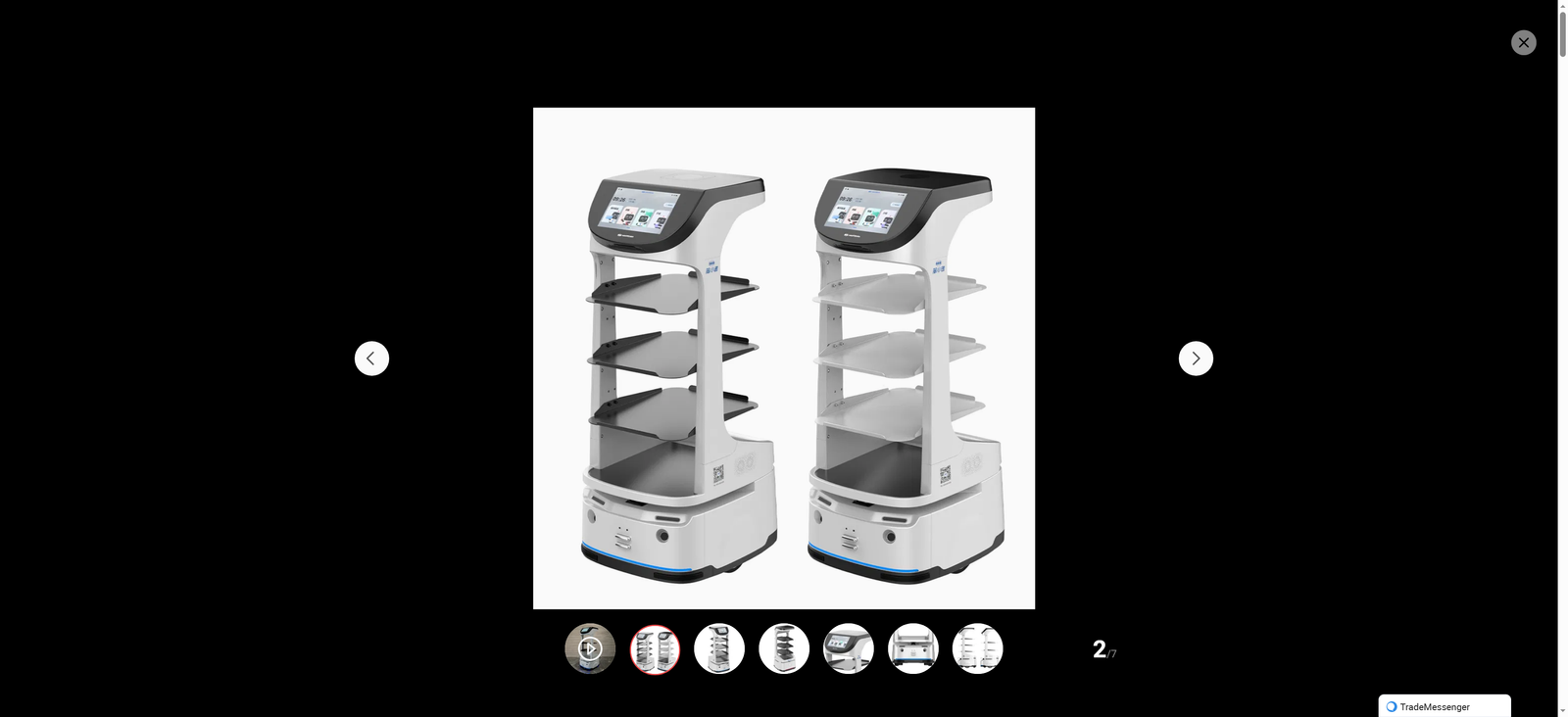
Today’s commercial hotel food delivery robots are equipped with cutting-edge technologies that enable seamless integration into complex hotel environments, far beyond the basic "delivery" function of early models. At the core of their performance is advanced navigation technology—most notably Simultaneous Localization and Mapping (SLAM), which allows robots to build real-time maps of hotel corridors, elevators, and dining areas while dynamically adjusting their paths to avoid obstacles such as guests, luggage carts, or cleaning equipment. Equipped with 360-degree laser radar, RGBD depth cameras, and adaptive suspension systems, these robots ensure stable and precise movement, preventing food spillage even when transporting large orders like 10-inch pizzas or family buckets. Many models also feature modular multi-compartment designs: dual-cabin robots with large storage capacity for meals and hotel amenities, and nine-cabin versions that support pre-storage of guest supplies, enabling batch delivery and reducing round-trip time significantly.
Beyond hardware excellence, intelligent scheduling and digital management systems enhance the value of these robots in hotel operations. Advanced solutions like the HDOS (Hospitality Digital Operation System) create an "AI brain group intelligence" collaborative network, allowing robots to coordinate with hotel management systems, guest apps, and human staff in real time. This means robots can handle multiple orders simultaneously, deliver to multiple rooms in one trip, and even trigger related service tasks—such as notifying housekeeping when delivering towels to a guest room. A data-driven management backend further optimizes operations: hotel managers can track robot status, monitor order progress, and analyze service data through visual dashboards, enabling refined management and data-driven decision-making. Practical operational data confirms their efficiency: top-performing robots can reduce delivery time from 8-10 minutes per order to 3-5 minutes, saving an average of 8 manual working hours per day and up to 40,000 yuan annually in labor costs.
For guests, food delivery robots deliver a more convenient, efficient, and engaging experience that aligns with modern expectations. The 24/7 availability ensures that late-night meal requests, urgent supply needs, or early-morning breakfast deliveries are met promptly, eliminating the frustration of long waits. Contactless delivery reduces health risks, a feature that remains highly valued by travelers post-pandemic. Moreover, the robots’ sleek, tech-savvy design—often customizable to match a hotel’s brand identity—and interactive capabilities (such as voice reminders and multi-language greetings) create memorable touchpoints. According to Ctrip data, hotel reviews mentioning "robots" account for 22% of total reviews in some cases, with an average score of 4.98, turning the robots into a unique brand asset that boosts OTA ratings and guest loyalty.
The integration of food delivery robots also reshapes the role of human staff in commercial hotels, shifting the focus from repetitive, low-value tasks to high-quality, personalized service. By automating meal and supply delivery, hotels can reallocate human resources to guest interactions, concierge services, and problem-solving—areas where human empathy and flexibility are irreplaceable. For example, front desk staff are no longer bogged down by delivering room service orders during peak hours, allowing them to focus on enhancing the check-in experience; housekeeping teams can prioritize cleaning quality instead of rushing to deliver amenities. This human-machine collaboration not only improves staff satisfaction and reduces turnover but also elevates the overall service quality, creating a win-win situation for hotels, employees, and guests.
Looking ahead, the market for commercial hotel food delivery robots is poised for steady growth, driven by ongoing technological innovation and rising industry demand. Market forecasts indicate that the global SLAM navigation hotel food delivery robot market will grow from USD 202 million in 2025 to USD 314 million in 2031, with a compound annual growth rate (CAGR) of 7.6%. Future advancements will focus on enhancing robot intelligence—integrating multi-modal large models to better understand guest preferences, enabling more natural human-robot interaction, and expanding capabilities to include tasks like tableware collection and food temperature monitoring. Additionally, as hotels pursue differentiated branding, customizable robot designs (matching interior decor, brand colors, or regional characteristics) will become more prevalent, turning robots into extensions of the hotel’s brand identity.
In conclusion, restaurant food delivery robots are not just a trend in commercial hotel service automation—they are a foundational component of the industry’s digital transformation. By addressing labor shortages, improving operational efficiency, enhancing guest experience, and enabling human-machine collaboration, these intelligent machines are redefining the standards of hotel hospitality. As technology continues to advance, their role will expand further, bridging the gap between efficiency and personalization, and helping commercial hotels thrive in an increasingly competitive market. For hotels looking to stay ahead of the curve, investing in food delivery robots is no longer an option but a strategic necessity to build sustainable competitive advantages in the era of service automation.