
High-Capacity, Fast-Charging, Long-Range Delivery Robots: Reshaping the Future of Smart Logistics
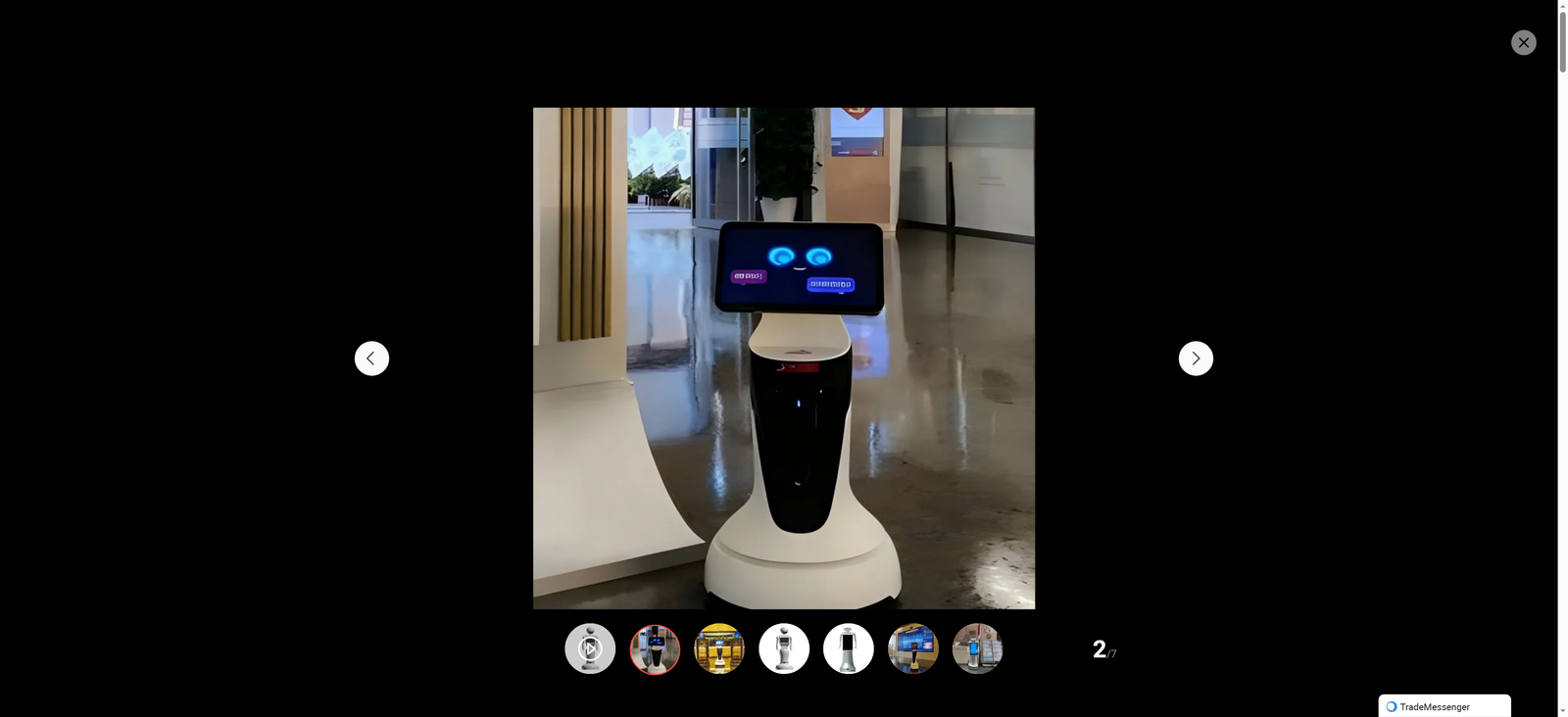
With the rapid expansion of e-commerce and the rising demand for efficient last-mile delivery, the logistics industry is undergoing a profound transformation. Among the innovative solutions, high-capacity, fast-charging, and long-range delivery robots have emerged as game-changers, addressing the core pain points of traditional delivery—high labor costs, inefficiency, and limited operational scope. These advanced robots integrate cutting-edge technologies to realize large-volume transportation, rapid energy replenishment, and extended working distances, paving the way for large-scale commercialization of unmanned delivery.
High Capacity: Breaking Through the Limit of Single-Trip Transportation
The high-capacity design is the cornerstone of delivery robots' ability to replace manual transportation in large-scale scenarios. Unlike small sidewalk robots that can only carry a few parcels, modern high-capacity delivery robots are engineered to handle substantial payloads, catering to diverse needs from daily express delivery to industrial material transportation. For instance, Robomart's newly launched RM5 autonomous delivery vehicle is equipped with 10 independent temperature-controlled lockers, boasting a total payload capacity of 500 pounds (226 kg), enabling it to deliver multiple grocery orders to different customers in one trip . In the logistics sector, giants like Cainiao are developing models with a capacity of at least 9 cubic meters, on top of the existing 5-cubic-meter models, to meet the growing demand for large-batch terminal delivery .
In industrial and logistics parks, high-capacity delivery robots shine in transshipment and distribution tasks.新石器's L4-level unmanned vehicles, which have been commercially operated in 100 cities worldwide, can achieve a daily average shipment of over 1,000 orders per vehicle, with a unit cost reduction of up to 70% compared to manual delivery . This capacity advantage not only improves single-trip efficiency but also reduces the number of round trips, minimizing traffic congestion and energy consumption in delivery hubs.
Fast Charging: Eliminating the Bottleneck of Operational Interruption
Fast-charging technology is a critical enabler for the 24/7 uninterrupted operation of delivery robots. Traditional contact charging methods are time-consuming and require manual intervention, severely limiting the robots' operational efficiency. To solve this problem, the industry is leveraging both wired and wireless fast-charging technologies to achieve rapid energy replenishment. 新工绿氢's TG01-VAM10 hybrid autonomous robot adopts a "hydrogen fuel cell lithium battery" dual-power system, where the lithium battery module can be charged to 80% capacity in just 30 minutes, and the hydrogen fuel cell can be refueled in a few minutes, realizing seamless energy supply .
Wireless charging technology further optimizes the energy replenishment process by eliminating physical contact. Guangdong Titan Intelligent's wireless chargers achieve a transmission efficiency of no less than 95% and support automatic charging without precise alignment, adapting to complex environments such as rainy days and dusty industrial areas . The company is also developing next-generation products with 10kW high-power fast charging, which will shorten the charging time even further and enhance the robots' continuous operational capability. These fast-charging solutions ensure that delivery robots spend more time on transportation tasks rather than waiting for charging, significantly improving overall operational efficiency.
Long Range: Expanding the Boundaries of Delivery Scenarios
Long-range capability extends the operational radius of delivery robots from closed parks to open urban roads and even remote areas. Powered by advanced energy systems and efficient power management, modern delivery robots have broken through the distance limit of traditional low-speed unmanned vehicles. The TG01-VAM10 robot, with its hydrogen-electric hybrid system, achieves a cruising range of over 200 kilometers, supporting long-distance tasks in scenarios such as highway service areas and mining areas . Robomart's RM5 can travel up to 112 miles (180 km) per charge, enabling inter-community and suburban delivery at a speed of 25 miles per hour .
In rural and remote areas where logistics resources are scarce, long-range delivery robots play a vital role in bridging the service gap. 顺丰丰翼 drones, which cover all terrains including plateaus and islands, have achieved daily average flights of over 1,000 sorties in the Greater Bay Area, with a transport volume of 20,000 orders per day and an efficiency improvement of more than 50% compared to traditional transportation . This long-range advantage not only expands the service scope of logistics companies but also promotes the balanced development of urban and rural logistics.
Integration of Three Core Advantages: Driving the Era of Intelligent Logistics
The synergy of high capacity, fast charging, and long range has transformed delivery robots from experimental tools to practical solutions, accelerating their large-scale commercialization. In China, Shandong Province plans to deploy more than 15,000 low-speed unmanned delivery vehicles by 2027, forming the country's first province-wide application model . Globally, the number of active delivery robots is expected to exceed 650,000 by the end of 2025, with over 70% deployed in retail and food delivery scenarios .
However, challenges remain in the widespread adoption of these robots, including incomplete road rights policies, high hardware costs, and complex urban navigation. Experts suggest that governments should accelerate the formulation of relevant laws and regulations on unmanned delivery, while enterprises should strengthen cooperation in technology research and development, cost sharing, and ecological construction . With the continuous advancement of technologies such as L4-level autonomous driving, 5G communication, and cloud scheduling, high-capacity, fast-charging, long-range delivery robots will further integrate into the smart city ecosystem, collaborating with drones, smart warehouses, and logistics management systems to build a seamless unmanned delivery network.
Conclusion
High-capacity, fast-charging, and long-range delivery robots represent the future direction of the logistics industry. By solving the core problems of traditional delivery, they not only reduce costs and improve efficiency for enterprises but also provide consumers with faster and more convenient services. As technology matures and policies improve, these robots will penetrate deeper into various fields such as e-commerce, medical care, and industry, reshaping the global logistics landscape and ushering in a new era of intelligent, efficient, and sustainable delivery.