
The Critical Role of Emergency Stop Buttons in Restaurant Food Delivery Robots
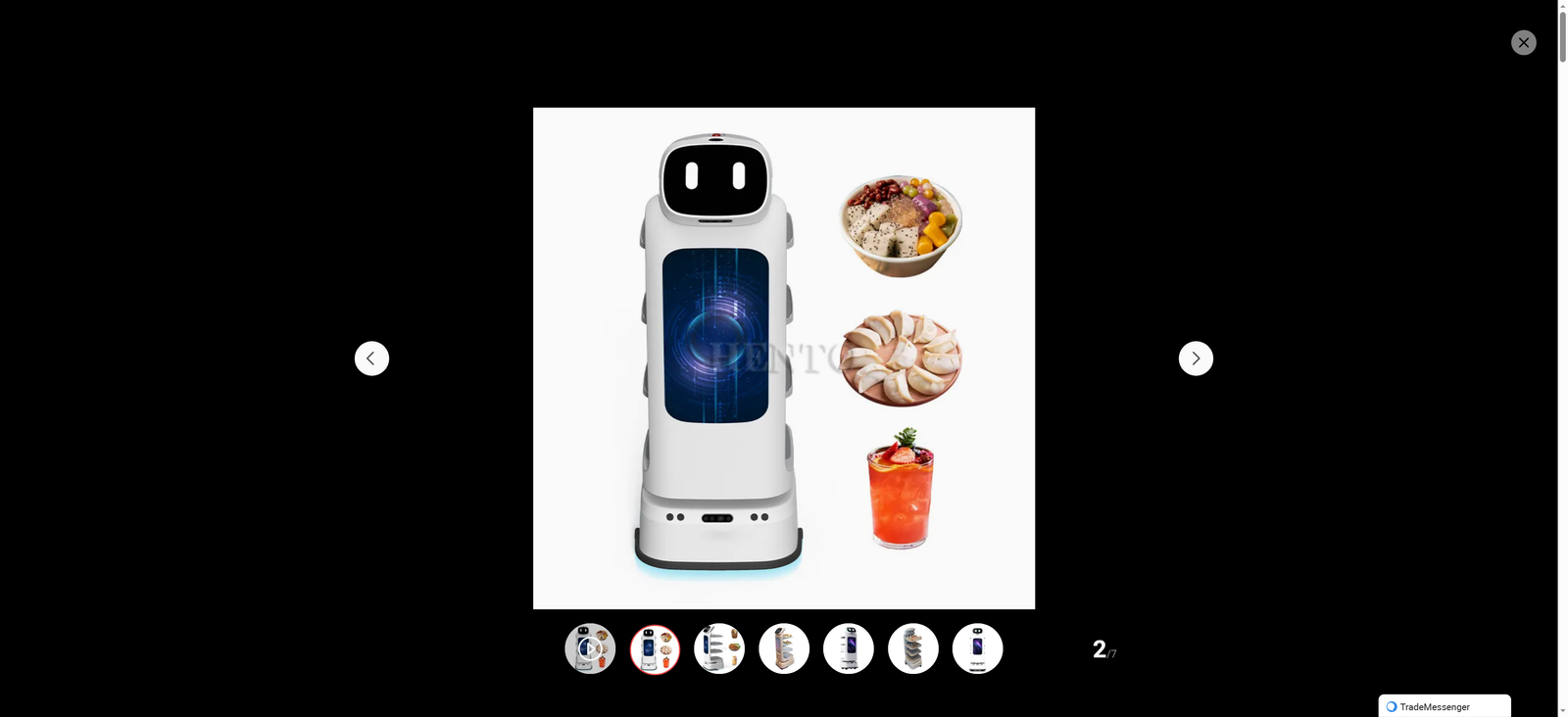
In the fast-paced world of modern catering, restaurant food delivery robots—also known as robot dish delivery systems—have emerged as transformative tools, reshaping efficiency, hygiene, and customer experience. These autonomous machines glide seamlessly between kitchens and dining tables, carrying dishes, beverages, and utensils with precision, reducing human labor costs, and minimizing the risk of cross-contamination associated with manual delivery. As their adoption grows—driven by a global restaurant market projected to reach $5.8 trillion by 2025 and a rapidly expanding food delivery robot market with a 35% annual growth rate—one safety feature stands out as non-negotiable: the emergency stop button. Far from a mere afterthought, this small yet powerful component is the cornerstone of safe robot operation, protecting customers, staff, and the robots themselves in dynamic restaurant environments.
Restaurant food delivery robots are engineered with advanced technologies to navigate complex spaces: lidar, ultrasonic radars, and cameras enable real-time obstacle detection, while intelligent scheduling systems coordinate multiple robots to optimize delivery efficiency. They operate in bustling settings—crowded dining halls, narrow aisles between tables, and busy kitchen entrances—where unexpected hazards are inevitable. A child might dart in front of a moving robot, a server could accidentally collide with it while carrying trays, or the robot might encounter a technical glitch that disrupts its navigation or braking system. In such scenarios, the emergency stop button serves as an immediate lifeline, allowing anyone nearby to halt the robot’s movement in an instant, preventing injuries, food spills, or equipment damage.
The design and placement of emergency stop buttons on restaurant food delivery robots are governed by strict safety standards and user-centric principles. According to industry guidelines and regulations like GB/T 35273-2017《Service Robot Safety Specification》, these buttons must be highly visible, easily accessible, and intuitive to use, requiring no special training to activate. Most robots feature a bright red, prominent emergency stop button on the top or front of their chassis—positions that are within easy reach for both adults and staff, even in urgent situations. Some advanced models also integrate dual emergency stop mechanisms: a physical button for immediate manual activation and a remote stop function that allows restaurant staff to halt the robot via a mobile terminal or control panel, adding an extra layer of safety for hard-to-reach scenarios or multiple robot operations.
Beyond accessibility, the functionality of the emergency stop button is engineered for reliability. When pressed, it overrides all other robot commands, cutting power to the movement system and bringing the robot to a complete, immediate stop—unlike the robot’s regular pause function, which may slow it down gradually or require screen interaction. After activation, most buttons require a twist or reset to restore the robot’s operation, ensuring that the stop is intentional and preventing accidental reactivation. This design aligns with the safety principle of “fail-safe,” a core requirement for food service robots, which mandates that any system failure or emergency action prioritizes human safety and equipment protection.
The importance of the emergency stop button extends beyond immediate hazard mitigation; it also supports compliance with industry regulations and operational best practices. As governments and regulatory bodies refine standards for autonomous service robots, the inclusion of a functional emergency stop button has become a mandatory requirement for restaurant robots to be legally operational. For example, the EU’s General Data Protection Regulation (GDPR) and China’s Artificial Intelligence Law both emphasize safety and risk mitigation for AI-powered devices like food delivery robots, with emergency stop mechanisms explicitly cited as a critical safety feature. Restaurants that deploy robots without compliant emergency stop buttons face not only legal penalties but also reputational risks, as customer trust in the safety of their dining experience is paramount.
In addition to regulatory compliance, proper training on the use of the emergency stop button is essential for restaurant staff and even customers. While the button is designed to be intuitive, staff should be trained to recognize potential emergencies—such as robot malfunctions, obstructions, or near-collisions—and to act quickly by pressing the button. Some restaurants also post simple instructions near robot operating areas, guiding customers on how to use the emergency stop button if needed, further enhancing safety. Regular maintenance checks are also critical to ensure that the button remains functional; dust, debris, or mechanical wear can impair its operation, so restaurants should include emergency stop button inspections in their routine robot maintenance schedules, alongside checks for navigation systems, battery safety, and hygiene.
As restaurant food delivery robots become more sophisticated—with features like automatic charging, multi-robot coordination, and integration with self-ordering systems—their role in streamlining restaurant operations will only grow. However, this advancement must never come at the cost of safety. The emergency stop button, though a simple component, embodies the balance between innovation and responsibility, ensuring that the benefits of robot dish delivery—efficiency, hygiene, and cost savings—are realized without compromising the well-being of those in the restaurant environment.
In conclusion, the emergency stop button is an indispensable feature of restaurant food delivery robots, serving as the first line of defense against accidents and emergencies in dynamic dining settings. Its design, functionality, and accessibility are critical to ensuring safe operation, regulatory compliance, and customer trust. As the food service industry continues to embrace autonomous technology, the emergency stop button will remain a non-negotiable element, reminding us that innovation in catering must always prioritize safety above all else. For restaurants, investing in robots with high-quality emergency stop mechanisms—and training staff to use them effectively—is not just a legal obligation but a commitment to providing a safe, enjoyable dining experience for every customer.