
Navigating Tight Spaces: The Evolution and Ingenuity of Food Delivery Robots in Narrow Aisles
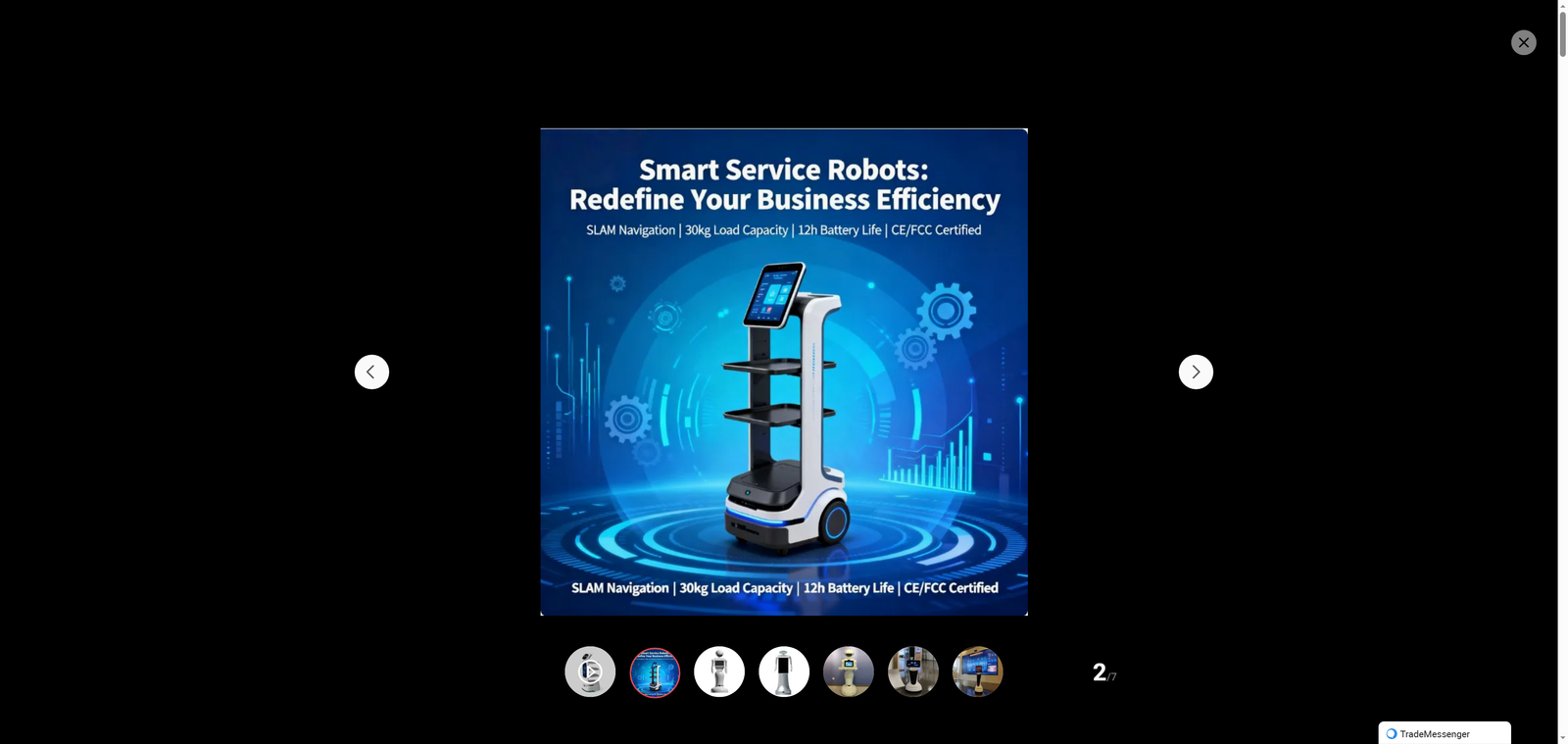
In the bustling landscape of modern catering and logistics, food delivery robots have emerged as transformative tools, streamlining operations, reducing human error, and enhancing efficiency. Among the many challenges these robots face, navigating through narrow aisles—whether in crowded restaurants, compact office buildings, or busy shopping malls—stands out as a critical test of their design, intelligence, and adaptability. A robot’s ability to pass through narrow aisles seamlessly is not merely a technical detail; it is a make-or-break factor in determining its practicality and value in real-world scenarios. This article delves into the innovations, technologies, and real-world applications that enable food delivery robots to conquer tight spaces, reshaping the future of on-site food service.
Narrow aisles present a unique set of obstacles for food delivery robots. Unlike wide open spaces, these environments are characterized by limited maneuvering room, unpredictable obstacles (such as pedestrians, chairs, or stacked boxes), and often inconsistent flooring. For traditional robots with rigid structures and basic navigation systems, such spaces can be impassable—leading to delivery delays, damaged goods, or even robot malfunctions. However, with advancements in robotics, artificial intelligence (AI), and sensor technology, modern food delivery robots have evolved to turn these challenges into opportunities, demonstrating remarkable agility and precision in tight quarters.
At the heart of a robot’s ability to navigate narrow aisles is its mechanical design. Engineers have reimagined robot architectures to prioritize compactness without compromising functionality. Unlike early delivery robots that featured boxy, wide frames, contemporary models often adopt slim, streamlined profiles—some even with foldable or retractable components. For instance, many food delivery robots designed for restaurant use have a width of less than 60 centimeters, allowing them to squeeze through aisles between tables that are barely a meter apart. Some robots also feature omni-directional wheels, which enable them to move forward, backward, and sideways without turning—eliminating the need for extra space to pivot. This design innovation is particularly valuable in narrow aisles where turning radius is severely limited, as it allows the robot to glide through tight spaces with minimal effort.
Complementing their mechanical design is the advanced navigation and perception system—the “brain” and “eyes” of the robot. To navigate narrow aisles safely and efficiently, robots must be able to perceive their surroundings in real time, identify obstacles, and adjust their path accordingly. Modern food delivery robots are equipped with a suite of sensors, including LiDAR (Light Detection and Ranging), cameras, ultrasonic sensors, and infrared sensors. LiDAR, in particular, plays a pivotal role: it emits laser beams to measure distances, creating a 3D map of the environment with centimeter-level accuracy. This map allows the robot to detect narrow aisles in advance, calculate the optimal path, and avoid even small obstacles (such as a dropped napkin or a customer’s bag) that could block its way.
AI algorithms further enhance the robot’s navigation capabilities. Machine learning models trained on thousands of hours of data from narrow aisle environments enable the robot to recognize patterns, predict pedestrian movements, and make split-second decisions. For example, if a customer suddenly steps into a narrow aisle, the robot can quickly slow down, stop, or adjust its path to the side—all while maintaining its balance and protecting the food it carries. Some robots even use collaborative navigation, where multiple robots communicate with each other to avoid collisions in tight spaces, ensuring smooth traffic flow during peak hours. This level of intelligence turns the robot from a simple automated vehicle into a proactive navigator, capable of adapting to the dynamic nature of narrow aisle environments.
The practical applications of food delivery robots in narrow aisles are widespread and diverse, revolutionizing industries where space is at a premium. In restaurants and cafes, for instance, narrow aisles between tables have long been a challenge for waitstaff, who must navigate carefully to avoid spilling food or bumping into customers. Food delivery robots eliminate this risk: they can move through tight spaces with precision, delivering meals from the kitchen to the table quickly and safely. This not only reduces the physical strain on waitstaff but also speeds up service, improving customer satisfaction. In busy fast-food restaurants, where aisles are often crowded with customers and order pickup stations, robots can navigate efficiently, ensuring that orders are delivered to the correct table without delay.
Beyond restaurants, food delivery robots are also making their mark in office buildings and co-working spaces. Many modern offices feature narrow hallways, compact break rooms, and tight corridors between workstations—spaces that are difficult for human delivery staff to navigate, especially when carrying multiple food orders. Robots designed for these environments can easily pass through narrow aisles, delivering meals to employees at their desks or to shared break areas. This not only saves time for employees (who no longer need to leave their workstations to pick up food) but also reduces congestion in hallways during lunch hours. Similarly, in shopping malls and airports—where narrow aisles between stores or terminals are common—food delivery robots can navigate through crowds, delivering snacks and meals to customers without disrupting foot traffic.
Despite their remarkable capabilities, food delivery robots navigating narrow aisles still face some challenges. For instance, extremely narrow aisles (less than 50 centimeters wide) or aisles with irregular shapes (such as curved or angled paths) can test the limits of even the most advanced robots. Additionally, in low-light environments (such as dimly lit restaurant dining rooms), some sensors may struggle to perceive obstacles accurately, requiring further advancements in sensor technology. Moreover, customer acceptance remains a factor: while many people embrace the convenience of robot delivery, others may feel uncomfortable sharing narrow aisles with robots, highlighting the need for robots to be designed with human-centric features (such as friendly appearances, clear warning signals, and gentle movements) to foster trust.
Looking ahead, the future of food delivery robots in narrow aisles is bright, with ongoing innovations poised to overcome these challenges. Engineers are exploring new materials to create even slimmer, more flexible robot frames—some inspired by nature, such as snake-like robots that can bend and twist through extremely tight spaces. Advancements in AI and computer vision will enable robots to perceive their surroundings more accurately in low-light or complex environments, while 5G technology will enhance real-time communication between robots and central systems, allowing for more efficient path planning in dynamic narrow aisles. Additionally, as robots become more integrated into daily life, customer acceptance is likely to grow, as people become accustomed to sharing spaces with these helpful machines.
In conclusion, the ability of food delivery robots to pass through narrow aisles is a testament to the ingenuity of robotics and AI innovation. By combining compact mechanical design, advanced perception systems, and intelligent navigation algorithms, these robots have transformed the way food is delivered in space-constrained environments, from restaurants to offices and beyond. While challenges remain, the ongoing evolution of these robots promises to further enhance efficiency, improve customer experiences, and reshape the future of on-site food service. As technology continues to advance, food delivery robots will not only navigate narrow aisles with greater ease but also become an indispensable part of our daily lives—proving that even in the tightest spaces, innovation can find a way forward.