
Dual Compatibility Empowers Intelligent Disinfection: The New Era of Mobile Atomizing Robots
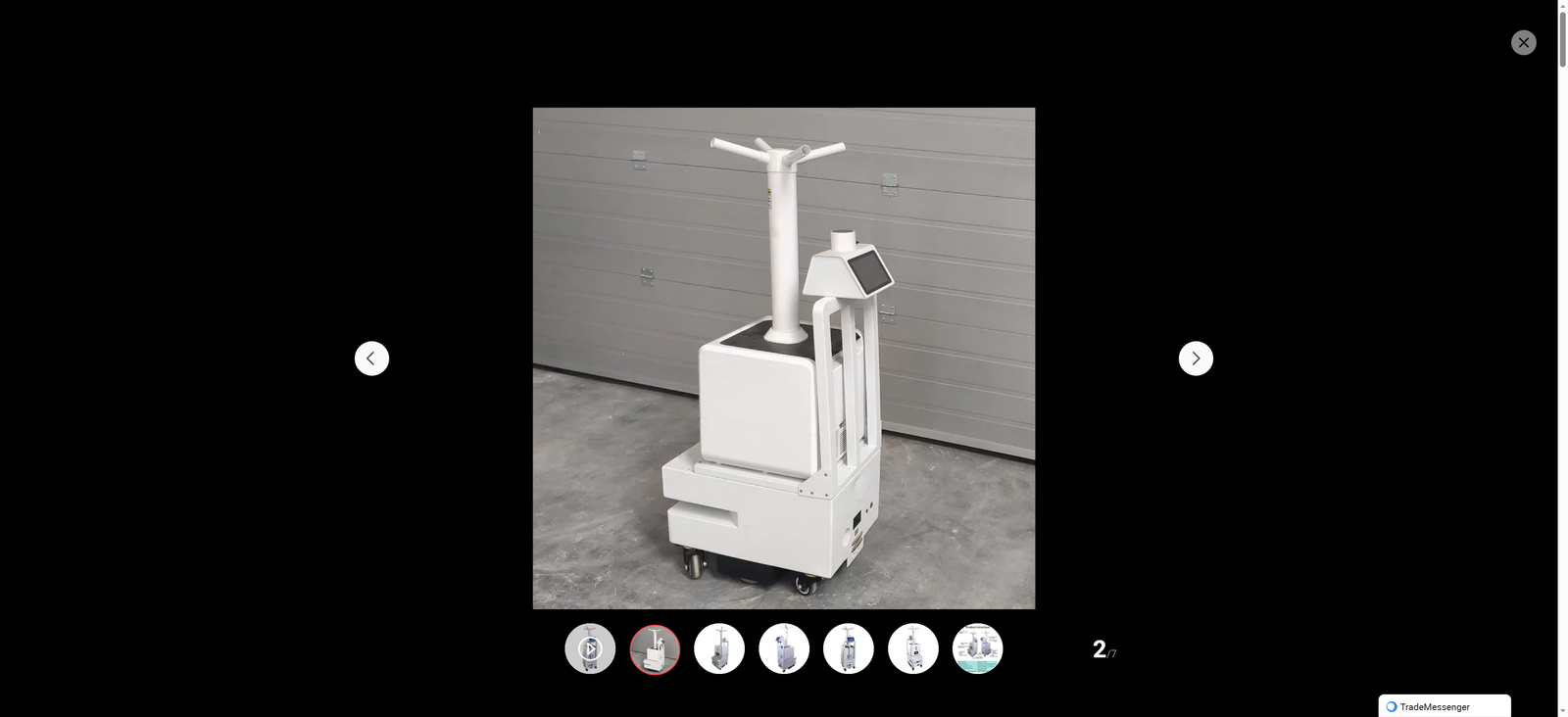
In the context of escalating public health demands and increasingly stringent disinfection standards across industries, traditional manual disinfection methods are struggling to meet the requirements of efficiency, comprehensiveness, and safety. Against this backdrop, mobile atomizing disinfection robots integrated with intelligent technologies have emerged as a pivotal force in modern sanitization. Among these innovations, the dual-compatible models supporting both hydrogen peroxide and hypochlorous acid stand out, redefining the boundaries of intelligent sterilization with flexible deployment capabilities and versatile applicability.
Dual Compatibility: Breaking the Limitations of Single Disinfectant
The core advantage of this new generation of mobile atomizing disinfection robots lies in their dual compatibility with hydrogen peroxide and hypochlorous acid, two of the most widely used and effective disinfectants in the market. This compatibility is not merely a simple functional addition but a result of sophisticated hardware optimization and fluid control technology, enabling the robot to adapt to different disinfectant properties while ensuring sterilization efficacy.
Hydrogen peroxide is renowned for its strong oxidizing properties, which can efficiently kill bacteria, viruses, spores, and other microorganisms by destroying their nucleic acid structures and cell membranes. It is particularly suitable for high-level disinfection scenarios such as hospitals, laboratories, and pharmaceutical factories, as it decomposes into water and oxygen after use, leaving no toxic residues and causing no damage to precision equipment . Hypochlorous acid, on the other hand, boasts broad-spectrum bactericidal effects, rapid action, and low irritation, making it ideal for daily disinfection in public areas, food processing plants, and kindergartens where human-machine coexistence is required . By supporting both disinfectants, the robot can switch flexibly according to scene needs—adopting hydrogen peroxide for terminal disinfection in isolation wards and hypochlorous acid for regular sanitization in shopping malls, achieving targeted and efficient disinfection.
Intelligent Sterilization: Technology-Driven Precision and Efficiency
Beyond dual compatibility, intelligent sterilization technologies are the backbone of the robot's performance, transforming traditional "blind spray" into "precision disinfection." Equipped with laser SLAM navigation and multi-sensor fusion systems, the robot can autonomously construct environmental maps, plan optimal disinfection paths, and achieve 360° dead-angle-free coverage . The integration of laser radar, depth cameras, and ultrasonic sensors enables it to respond to obstacles within 0.1 seconds, easily avoiding personnel, furniture, and narrow spaces such as cinema aisles and hospital corridors .
The robot's intelligent atomization system further enhances sterilization efficiency. By adopting high-pressure nozzles or ultrasonic atomizers, it can break disinfectants into 5-10μm ultra-fine particles that remain suspended in the air for a long time, penetrating into gaps, equipment crevices, and ceiling corners that manual disinfection cannot reach . The flow rate is intelligently adjusted based on travel speed to ensure uniform drug application per unit area, with a sterilization rate of over 99.99% for common pathogens such as Escherichia coli and Staphylococcus albus . Additionally, a human body induction system automatically pauses atomization when detecting personnel within 2 meters, eliminating the risk of disinfectant inhalation and ensuring operational safety .
Flexible Deployment: Adapting to Diversified Scene Demands
Flexible deployment capabilities allow the mobile atomizing disinfection robot to shine in a wide range of scenarios, from medical institutions to public spaces and industrial sites. Its modular design and compact structure—with a minimum turning radius of less than 40cm and all-directional wheel sets—enable it to navigate narrow passages and cross 5° ramps with ease . The large-capacity liquid tank (10-21L) supports continuous operation covering 1000-5000㎡ per charge, and the robot can automatically return to the charging pile when power is low, realizing 24-hour uninterrupted disinfection .
In medical scenarios, the robot can complete terminal disinfection of isolation wards, ICUs, and operating rooms independently, reducing cross-infection risks by 60% and easing the workload of medical staff . At transportation hubs such as airports and high-speed rail stations, it can perform scheduled disinfection during off-peak hours or at night, covering waiting halls, carriages, and restrooms efficiently . For food factories and cold-chain warehouses, it adapts to hypochlorous acid disinfection to meet GMP/HACCP standards, controlling microorganisms on surfaces of shelves and packages without polluting food . Moreover, the cloud management platform enables remote task assignment, real-time monitoring of operation status, and traceability of disinfection data—including time, path, and chemical consumption—generating compliant reports for scenario-specific management needs .
The Future of Disinfection: Integration and Upgrade of Intelligent Ecosystem
As the demand for smart sanitation continues to grow, mobile atomizing disinfection robots with dual compatibility are evolving toward multi-mode integration and ecological synergy. Future iterations may integrate ultraviolet, plasma, and atomization technologies to combat drug-resistant pathogens, while AI vision enhancement will enable targeted disinfection of high-frequency contact surfaces such as doorknobs and elevator buttons . Integration with smart building systems will allow linkage with ventilation and access control systems, optimizing disinfectant retention and overall sanitization efficiency .
From hospitals to communities, from factories to transportation hubs, dual-compatible mobile atomizing disinfection robots are no longer just "sanitation tools" but core infrastructure for public health security. By combining the versatility of dual disinfectants, the precision of intelligent technology, and the adaptability of flexible deployment, they are paving the way for a safer, more efficient, and smarter disinfection era, guarding public health with technological innovation.