
The Revolutionary Role of Disinfection Robots in Safeguarding Public and Professional Spaces
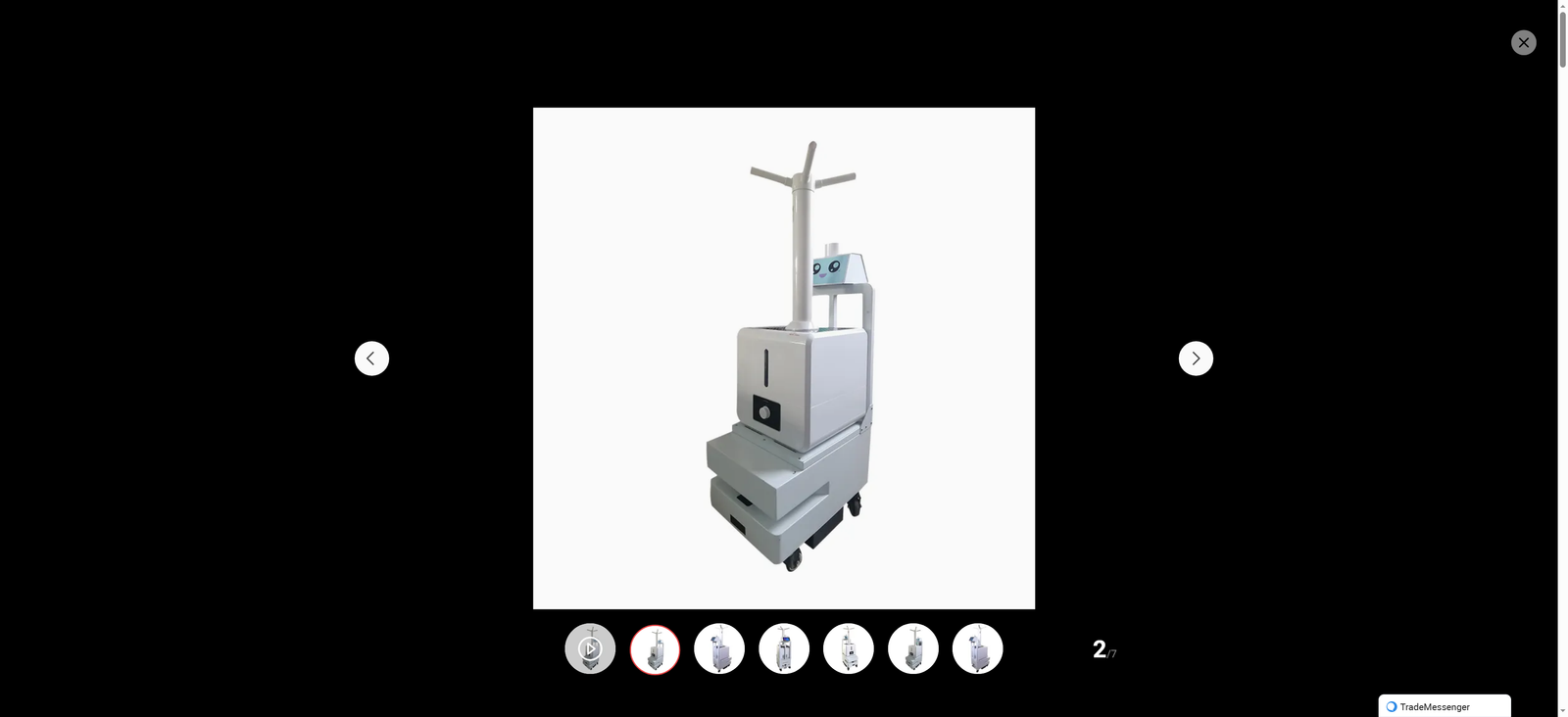
In an era where hygiene and safety have become paramount concerns across all sectors, Disinfection Robots—also widely known as Sanitizing Robots and Sterilizing Robots—have emerged as indispensable tools in combating pathogens, reducing infection risks, and maintaining consistent cleanliness standards. These intelligent autonomous systems are transforming how we approach disinfection in high-stakes environments, from healthcare facilities like hospitals to high-traffic public areas such as airports, and even large-scale storage spaces like warehouses. By leveraging cutting-edge technology to automate and enhance the disinfection process, they address the limitations of manual cleaning and set a new benchmark for hygiene management.
At the forefront of this transformation is the Hospital Disinfection Robot, a specialized variant designed to meet the rigorous hygiene requirements of healthcare settings. Hospitals are hotbeds for harmful bacteria, viruses, and fungi, with hospital-acquired infections (HAIs) posing a significant threat to patients and healthcare workers alike. Traditional manual disinfection is prone to human error, often missing hard-to-reach corners or high-touch surfaces, and exposes cleaning staff to potentially hazardous pathogens. Hospital Disinfection Robots eliminate these risks by integrating multiple advanced disinfection technologies—including UV-C light, ultra-dry atomized hydrogen peroxide, and air filtration—into a single autonomous platform. Equipped with intelligent navigation systems and SLAM technology, these robots can seamlessly navigate complex hospital layouts, from operating rooms and intensive care units (ICUs) to isolation wards and laboratories, ensuring 360° non-dead-angle disinfection. They can automatically calculate disinfection time based on space area, operate independently without human supervision, and even detect human presence to shut down UV-C modes when necessary, guaranteeing personnel safety during operation. By quantifying the disinfection process and providing traceable records, these robots not only reduce HAIs but also enhance medical quality and protect both patients and healthcare teams.
Beyond healthcare, Disinfection Robots play a critical role in securing high-traffic public spaces, particularly airports. Airports serve as global transit hubs, with thousands of passengers passing through daily, carrying a diverse range of pathogens on luggage, surfaces, and in the air. Manual disinfection in such vast, dynamic environments is inefficient and unable to keep pace with constant foot traffic. Sanitizing Robots and Sterilizing Robots are uniquely suited to this challenge, as they can operate 24/7, covering large areas such as terminal halls, security checkpoints, boarding gates, and restrooms with consistent efficiency. Many airport-deployed disinfection robots combine UV-C disinfection with spray technology, effectively inactivating a broad spectrum of microorganisms—including drug-resistant pathogens—in minutes, without leaving harmful residues. Their autonomous navigation allows them to avoid obstacles, including passengers and luggage carts, while their ability to automatically return to charging stations ensures uninterrupted operation. In an industry where public trust in safety is critical, these robots provide a visible, reliable solution to maintain hygiene standards and reassure travelers.
Warehouses, another key application area for Disinfection Robots, face unique disinfection challenges due to their large size, diverse storage items, and frequent movement of goods and personnel. Whether storing food, pharmaceuticals, electronics, or industrial materials, warehouses require consistent hygiene to prevent contamination, product damage, and health risks for workers. Manual disinfection in warehouses is time-consuming, labor-intensive, and often ineffective in reaching narrow aisles, high shelves, or hidden corners between stored goods. Sterilizing Robots address these issues by offering scalable, automated disinfection solutions tailored to warehouse environments. Equipped with powerful spray systems that produce nano-sized disinfection aerosol particles, these robots can penetrate tight spaces and cover both horizontal and vertical surfaces, ensuring comprehensive disinfection of goods, shelves, and flooring. They can be programmed to operate during off-peak hours, avoiding disruption to daily operations, and their low-cost, high-efficiency performance helps warehouse operators reduce labor costs while improving hygiene outcomes. For industries like food and pharmaceuticals, where compliance with strict hygiene regulations is mandatory, these robots provide a traceable, consistent method to meet industry standards and protect product integrity.
The global market for Disinfection Robots is rapidly expanding, driven by increasing awareness of infection control, ongoing labor shortages in the cleaning sector, and technological advancements in robotics and artificial intelligence. According to market research, the global disinfection robot market is projected to reach USD 16.46 billion by 2033, growing at a CAGR of 19.5% from 2025 to 2033, with UV-C disinfection robots holding the largest market share due to their chemical-free, fast-acting performance. As technology evolves, these robots are becoming more versatile, with features like real-time pathogen detection, remote monitoring, and multi-function integration (such as temperature monitoring) enhancing their value across industries. They are no longer just tools for disinfection but comprehensive hygiene management solutions that combine efficiency, safety, and sustainability.
In conclusion, Disinfection Robots—encompassing Sanitizing Robots and Sterilizing Robots—are revolutionizing hygiene management across critical sectors. From Hospital Disinfection Robots that protect patients and healthcare workers to robots securing airports and warehouses, these intelligent systems offer a superior alternative to manual cleaning. They eliminate human error, reduce labor costs, ensure consistent disinfection, and create safer environments for people and products alike. As the world continues to prioritize safety and hygiene, Disinfection Robots will play an increasingly vital role in shaping the future of public health and industrial operations, proving that automation is the key to a cleaner, safer world.