
Custom Design Interactive Teaching Factory: Empowering Education with High-Quality School Robots
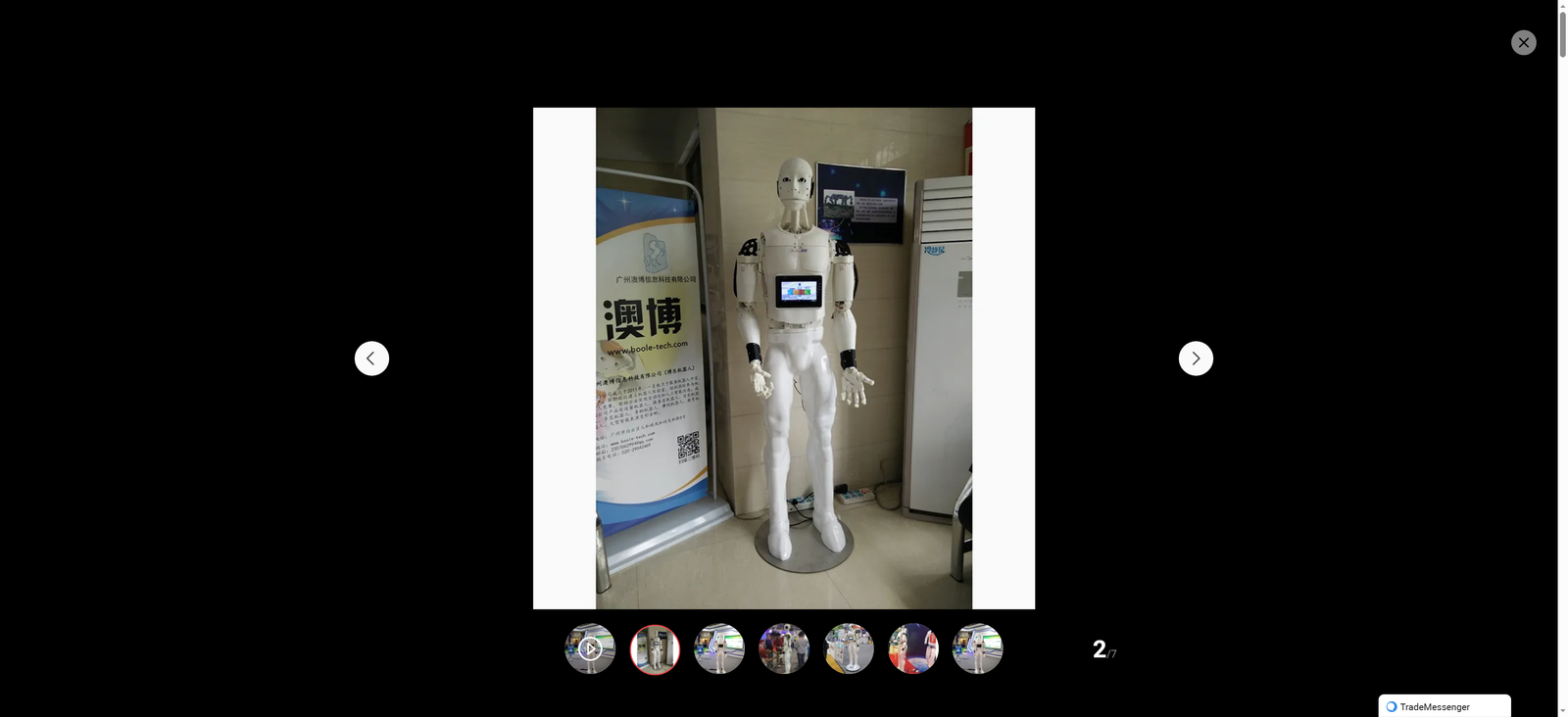
In the era of educational digitalization and intelligent transformation, the integration of technology and education has become an inevitable trend, reshaping the way knowledge is imparted and acquired. Among the various intelligent educational tools, high-quality school robots, backed by custom design interactive teaching factories, have emerged as a key force driving educational innovation. These robots are not just simple technical devices; they are customized educational partners tailored to the unique needs of schools, students, and teaching scenarios, bridging the gap between theoretical knowledge and practical operation, and injecting new vitality into modern education.
A custom design interactive teaching factory serves as the core foundation for creating high-quality school robots, distinguishing itself from traditional standardized production models by emphasizing personalization, interactivity, and educational adaptability. Unlike mass-produced robots that adopt a "one-size-fits-all" approach, custom design factories start with in-depth research into the actual needs of educational institutions—whether it is the teaching objectives of K12 schools, the professional training requirements of vocational colleges, or the experimental needs of AI and STEM courses. They integrate educational concepts, teaching methods, and technical capabilities to develop school robots that perfectly match the school’s curriculum system and teaching characteristics.
The core advantage of custom design lies in its ability to tailor solutions to diverse educational scenarios. For K12 education, interactive teaching factories can design small, easy-to-operate robots with cartoon-style interactive interfaces, integrating graphic programming, voice interaction, and emotional recognition functions. These robots can guide primary and secondary school students to learn programming logic, scientific principles, and language skills through games and hands-on operations, stimulating their interest in science and technology while cultivating their innovative thinking and practical abilities. For example, robots designed for primary school science courses can simulate natural phenomena such as plant growth and physical experiments, allowing students to observe and explore in an interactive way, making abstract knowledge more intuitive and understandable.
In vocational education scenarios, custom design interactive teaching factories focus on the professionalism and practicality of school robots, developing equipment that simulates industrial production, intelligent services, and other real working environments. These high-quality robots are equipped with advanced sensors, precision mechanical arms, and open operating systems, supporting secondary development by students and teachers. For instance, in智能制造 majors, custom robots can simulate industrial robot operation, programming, and maintenance processes, enabling students to conduct hands-on training in a safe classroom environment, mastering professional skills that are in line with enterprise needs. This not only improves the quality of vocational training but also helps to solve the problem of the disconnect between vocational education and industrial demand.
High quality is the lifeline of school robots from custom design interactive teaching factories, and it is reflected in every link from R&D, production to after-sales service. In terms of hardware, high-quality school robots adopt durable, non-toxic, and safe materials, complying with international educational equipment safety standards, to ensure the safety of students during use. Core components such as high-precision servo motors, sensors, and AI chips are carefully selected, and undergo strict quality testing to ensure stable operation and long service life. In terms of software, the interactive system is optimized for educational scenarios, with simple operation, smooth interaction, and rich educational resources. It can be seamlessly connected with the school’s smart campus platform, realizing the integration of teaching data, and facilitating teachers to track students’ learning status and adjust teaching strategies in a timely manner.
Moreover, custom design interactive teaching factories pay attention to the interactivity of school robots, breaking the traditional one-way teaching mode and realizing two-way interaction between teachers, students, and robots. These robots are equipped with advanced AI technologies such as natural language processing, computer vision, and machine learning, enabling them to understand students’ questions, recognize their emotional states, and provide personalized learning guidance. For example, when a student encounters difficulties in programming practice, the robot can give step-by-step guidance through voice prompts and graphic demonstrations; when it detects that a student is tired or anxious, it can adjust the teaching rhythm and use encouraging language to maintain the student’s learning motivation. This humanized interactive experience makes learning more interesting and efficient, and helps to cultivate students’ independent learning ability.
The development of custom design interactive teaching factories and high-quality school robots is strongly supported by national education policies. With the in-depth implementation of policies such as the Education Digitalization Strategic Action and the New Generation Artificial Intelligence Development Plan, governments at all levels have increased investment in intelligent educational equipment, encouraging educational institutions to introduce custom-made school robots to promote educational innovation. According to industry reports, the market scale of China’s teaching robots has grown from about 28 billion yuan in 2021 to 67 billion yuan in 2025, with an average annual compound growth rate of 24.3%, and the demand for custom-designed high-quality school robots is growing rapidly. More and more schools are realizing the value of custom school robots and cooperating with interactive teaching factories to develop solutions that suit their own needs.
Looking to the future, with the continuous advancement of AI, big data, and other technologies, custom design interactive teaching factories will usher in new development opportunities, and high-quality school robots will become more intelligent, personalized, and diversified. They will not only be widely used in classrooms, laboratories, and training rooms but also extend to after-school tutoring, special education, and other fields, providing more comprehensive and high-quality educational services. For example, robots designed for special education can help autistic students improve their social skills through emotional interaction; after-school tutoring robots can provide personalized learning plans according to students’ learning progress, helping them make up for their weaknesses.
In conclusion, custom design interactive teaching factories have opened up a new path for the development of high-quality school robots, integrating technology and education closely. These custom-made, high-quality, and interactive school robots are not only tools to promote educational modernization but also partners to help students grow and develop. They are transforming the traditional educational model, promoting the reform of educational methods, and laying a solid foundation for cultivating innovative talents in the new era. As educational digitalization continues to deepen, custom design interactive teaching factories and high-quality school robots will play an increasingly important role in the field of education, creating a better future for education.