
Compact, Agile, and User-Friendly: The New Era of Delivery Robots
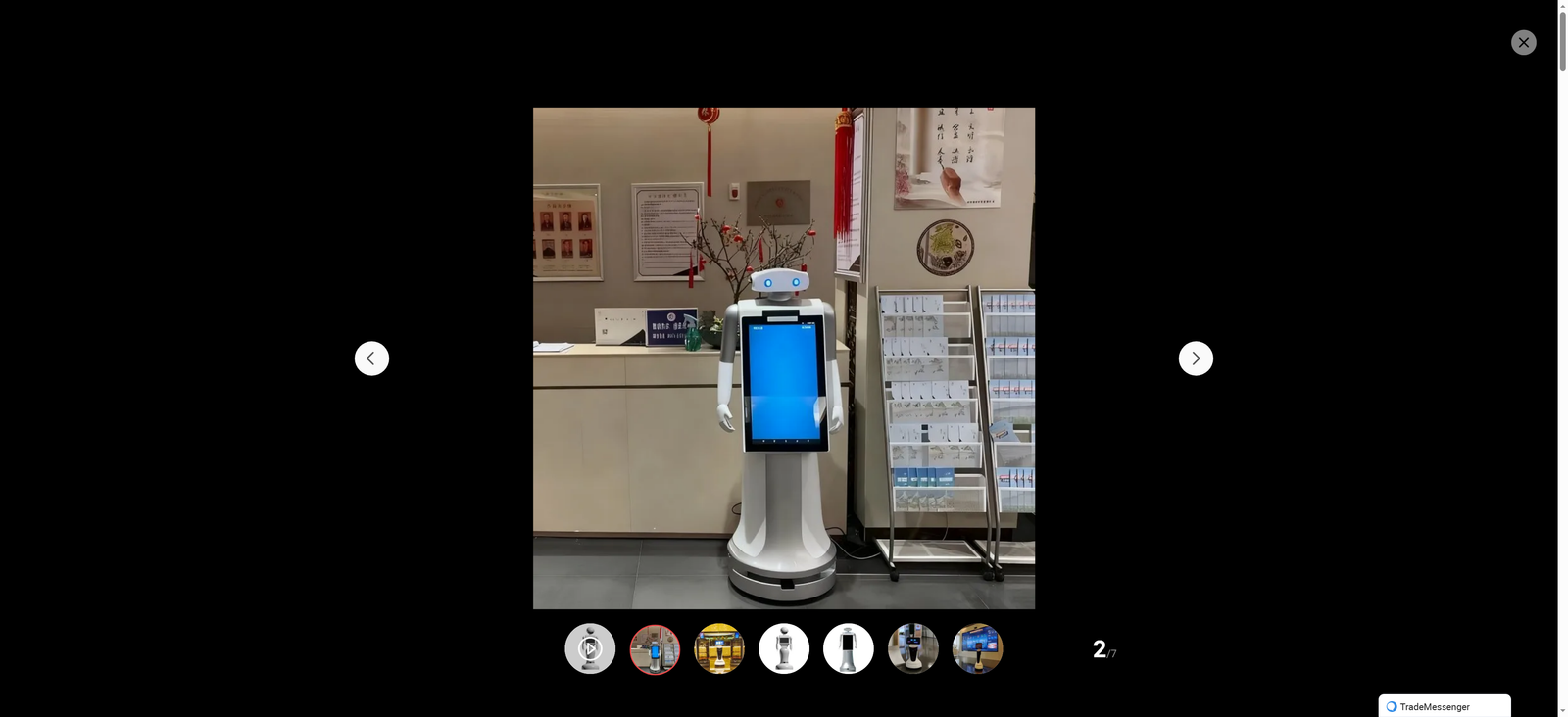
In the wave of intelligent logistics transformation, delivery robots have evolved from experimental prototypes to indispensable tools in daily life. Among the core competitiveness of modern delivery robots, three characteristics stand out prominently: compact design, agile mobility, and user-friendly experience. These attributes not only break through the limitations of traditional delivery models but also reshape the efficiency and quality of end-to-end logistics services, injecting new vitality into industries such as catering, retail, and community services.
Compact Design: Breaking Through Space Constraints
The compact form factor is the foundation for delivery robots to adapt to diverse scenarios. Unlike bulky traditional logistics equipment, modern delivery robots pursue a minimalist design concept that balances load capacity and space occupation. This design philosophy is fully reflected in products such as Pudu Robotics' KettyBot Pro, which adopts a forward-leaning C-shaped body structure. With its streamlined silhouette, it can easily pass through 52cm-wide aisles— a width that is common in crowded restaurants and shopping malls but was once a bottleneck for automated equipment . For indoor scenarios such as restaurants, hotels, and office buildings, where space is at a premium, the compact size allows robots to shuttle between tables, corridors, and elevators without disrupting human activities, seamlessly integrating into the existing environment.
Outdoor compact delivery robots have also made remarkable breakthroughs. Zhenji Robotics' "Little Yellow Horse" MINI, designed for last-mile delivery, features a six-wheel compact chassis that weighs lightly but can carry up to 30 kilograms of goods . Its small footprint enables it to navigate narrow sidewalks, community paths, and building lobbies with ease, solving the pain point of difficult access for large delivery vehicles in the "last 100 meters" of logistics. Moreover, the compact design reduces manufacturing and deployment costs, laying the foundation for large-scale commercial application of delivery robots.
Agile Mobility: Adapting to Complex Environments
Agility is the key to ensuring delivery efficiency, which relies on advanced navigation technology and optimized structural design. Modern delivery robots are equipped with multi-sensor fusion systems, including laser radar, visual cameras, and inertial measurement units, to achieve real-time environmental perception and precise positioning . KettyBot Pro, for example, uses laser and visual dual navigation to detect obstacles accurately, while its flexible chassis allows for 360° rotation and rapid direction adjustment, making it highly responsive in dynamic environments with frequent pedestrian movements . This agility enables robots to handle sudden situations such as pedestrian crossings and temporary obstacles smoothly, maintaining stable delivery speeds even in crowded spaces.
For outdoor scenarios with more complex terrain, delivery robots have further enhanced their adaptive capabilities. The "Little Yellow Horse" MINI can climb slopes with a 35° inclination and operate stably on various surfaces such as tiles, carpets, and uneven roads . Neolix's new X1 robot, unveiled at CES 2026, achieves seamless indoor-outdoor transition, autonomously shuttling between sidewalks, office lobbies, and elevators, with centimeter-level positioning accuracy even without high-precision maps . Such agility allows delivery robots to break free from the constraints of single-scene operation, realizing full-link delivery coverage from community entrances to user doors, and from restaurant kitchens to dining tables.
User-Friendly Experience: Bridging Technology and Humanity
A user-friendly design ensures that delivery robots can be widely accepted by both operators and end-users, which is crucial for their commercial popularization. In terms of human-machine interaction, modern delivery robots integrate multiple intuitive interaction methods. KettyBot Pro is equipped with an AI voice interaction module and a large-size display screen, which can intelligently greet customers, display delivery information, and even broadcast promotions, turning cold equipment into a "marketing expert on wheels" . The PUDU Open Platform also supports personalized customization of the robot's expressions, voice, and content, allowing businesses to create differentiated services according to their needs .
For operators, user-friendliness is reflected in simple deployment and easy management. The "Little Yellow Horse" MINI adopts SAAS-based deployment, enabling quick activation and operation without complex technical configuration . Neolix's global intelligent scheduling system supports collaborative operation of over 100,000 L4-level robots, realizing automatic order allocation and dynamic path planning, which greatly reduces the management cost of the fleet . Additionally, functions such as automatic recharging and fault warning ensure that robots can operate 24/7 with minimal human intervention—KettyBot Pro will actively return to the charging station and send notifications when the battery is low, ensuring uninterrupted service .
For end-users, the user-friendly experience lies in convenience and safety. Delivery robots with ultraviolet disinfection functions can ensure the hygiene of delivered items, especially suitable for scenarios such as hospitals and communities . The拟人化 (anthropomorphic) design, such as rounded lines and friendly screen expressions, reduces users' sense of unfamiliarity with robots, making the delivery process more pleasant . Emergency stop buttons and multiple anti-collision mechanisms further guarantee the safety of users and goods during the delivery process .
The Future of Delivery Robots: Integration and Evolution
With the continuous advancement of AI, 5G, and autonomous driving technologies, compact, agile, and user-friendly delivery robots are moving towards deeper integration with various industries. In the catering industry, they will replace more manual delivery work, reducing labor costs while improving service efficiency; in the logistics field, they will form a full-process unmanned delivery chain with large logistics vehicles, solving the "last mile" bottleneck ; in smart communities and campuses, they will become multi-functional service terminals, providing services such as meal delivery, document transfer, and patrol notification.
The core competitiveness of delivery robots no longer lies in a single technical indicator but in the balanced integration of compactness, agility, and user-friendliness. Only by focusing on real-scene needs and continuously optimizing the product experience can delivery robots truly integrate into human life, becoming a powerful driving force for the intelligent transformation of the logistics industry. As technology matures and application scenarios expand, we can expect these smart delivery partners to bring more convenience and surprises to our lives.