
City Garden Smart Property Management Solution with AI Autonomous Driving Cleaning Robot
In the era of digital transformation, the property management industry is undergoing a profound revolution—shifting from traditional manual-driven operations to intelligent, data-driven services. For city gardens, which serve as important public spaces and residential supporting facilities, maintaining a clean, orderly, and comfortable environment is the core of property management, yet it has long been plagued by pain points such as high labor costs, uneven cleaning quality, and inefficient management. Against this backdrop, the integration of AI autonomous driving cleaning robots into city garden smart property management has emerged as a game-changing solution, redefining the standards of garden maintenance and creating a more intelligent and livable space for residents and visitors.
City gardens, with their complex layouts including green belts, stone paths, squares, and leisure areas, pose unique challenges to traditional cleaning work. Manual cleaning often struggles to cover narrow corners, sloped lawns, and other hard-to-reach "sanitary dead ends," while issues like labor fatigue, high turnover rates, and inconsistent work standards further affect the quality and efficiency of cleaning services. Moreover, manual cleaning in outdoor environments is susceptible to weather conditions, and nighttime operations carry potential safety risks, making it difficult to achieve 24-hour all-round cleaning coverage. These pain points not only increase the operational costs of property management companies but also fail to meet the growing demand for a high-quality living environment from modern residents.
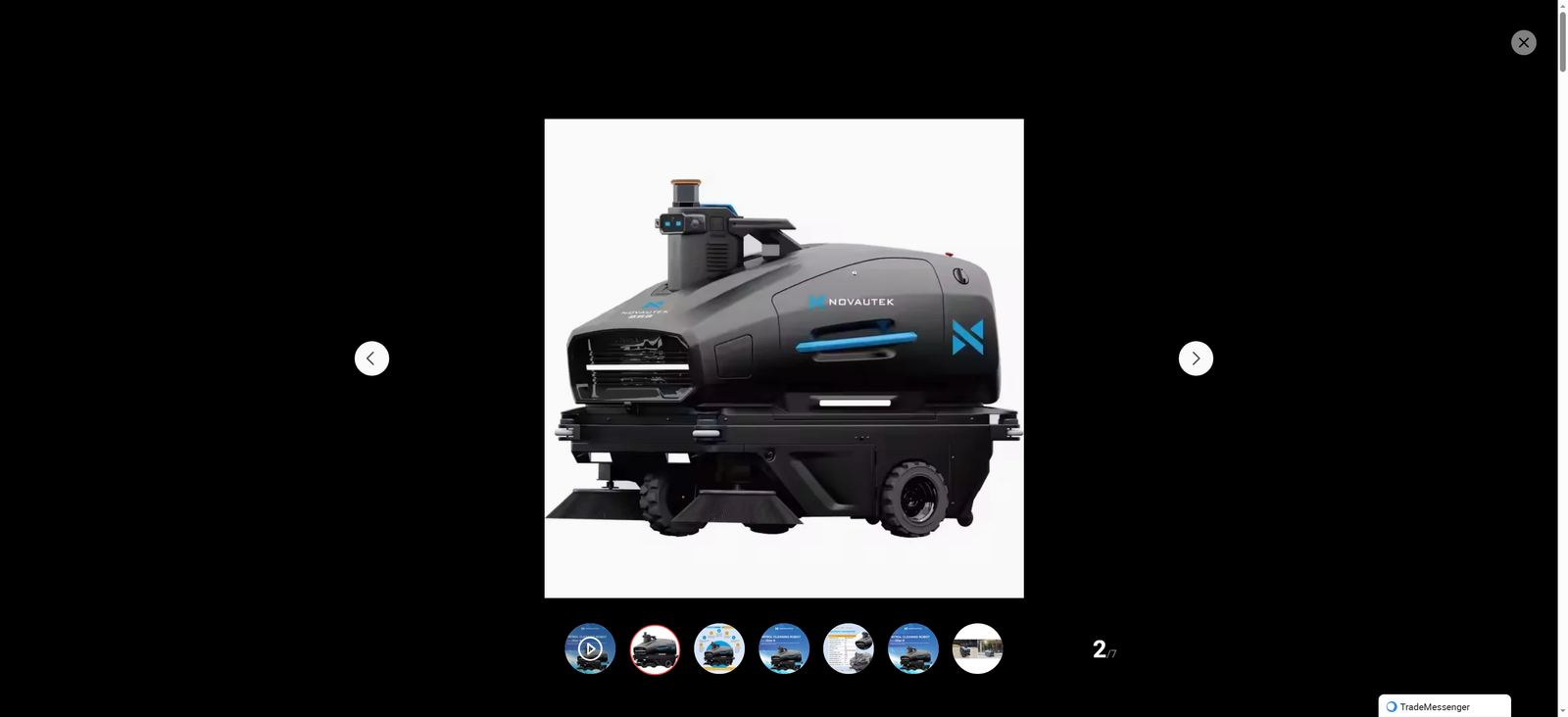
The AI autonomous driving cleaning robot, as the core hardware of the city garden smart property management solution, effectively addresses these pain points through cutting-edge technology integration, realizing a leap from "manual cleaning" to "intelligent cleaning." Equipped with AI vision and laser radar dual navigation systems, the robot can accurately identify small garbage such as cigarette butts, paper scraps, and fallen leaves, while real-time mapping of the garden environment to autonomously plan the optimal cleaning path, avoiding repeated operations and greatly improving cleaning efficiency . Its compact and flexible body design, usually controlled within 50cm in length, 30cm in width, and 30cm in height, allows it to easily shuttle between green belt edges, under park benches, and in narrow paths that large cleaning equipment cannot reach, ensuring full coverage without dead ends .
The intelligent core of the robot lies in its "thinking" cleaning logic and comprehensive adaptability. With infrared sensors and ultrasonic radar, it can not only flexibly avoid pedestrians, pets, flower bed edges, and other dynamic and static obstacles but also issue voice prompts or display reminder messages through the body LED screen to achieve friendly interaction with the surrounding environment . In terms of terrain adaptation, the four-wheel drive and shock-absorbing chassis, combined with a liftable cleaning module, enable the robot to adjust its body posture and cleaning height according to complex outdoor terrains such as grass slopes and gravel roads, avoiding jams or missed cleaning . Additionally, the modular function switching design allows it to quickly replace accessories to meet customized needs—such as installing high-pressure water nozzles for oil-stained ground cleaning, leaf crushing devices for composting, or spray modules for disinfection operations .
Beyond its excellent cleaning performance, the AI autonomous driving cleaning robot also serves as a data carrier, empowering refined property management through digital means. During long-term operation, the robot accumulates a large amount of garden garbage distribution data, such as areas with high garbage density and peak garbage generation times, and transmits this data to the smart property management cloud platform in real time . Property managers can use this data to optimize cleaning plans, such as adjusting key cleaning periods and adding trash cans in high-demand areas, realizing "precision environmental sanitation" and reducing unnecessary resource waste . At the same time, the robot is equipped with an intelligent garbage bin monitoring function—when the garbage bin is about to be full, it automatically sends a "cleanup reminder" to the background and plans a route to the nearest garbage collection point, reducing the frequency of manual dumping .
The integration of AI autonomous driving cleaning robots into city garden property management also reflects the concept of green and sustainable development. Adopting large-capacity lithium batteries, the robot can be equipped with foldable solar panels for auxiliary charging, extending battery life by 20% on sunny days, achieving zero emissions and low noise . This environmentally friendly design is particularly suitable for city gardens, which pursue ecological harmony, avoiding the environmental pollution caused by traditional fuel-powered cleaning equipment. In terms of cost control, the robot’s 24-hour continuous operation capability replaces 4-6 manual workers, significantly reducing labor costs, while its low failure rate and easy maintenance further lower the long-term operational costs of property management companies . For example, after the introduction of cleaning robots in a Shanghai community, the number of cleaning complaints dropped from 32 in six months to zero within one month, and the satisfaction of residents increased significantly .
The city garden smart property management solution based on AI autonomous driving cleaning robots is not just a simple replacement of manual labor, but a comprehensive upgrade of the entire property management system. It integrates the robot with the smart property cloud platform, realizing unified scheduling, real-time monitoring, and data analysis of multiple robots . Property managers can remotely view the operation status, cleaning progress, and fault information of each robot through a mobile APP or computer terminal, and issue scheduling commands in real time to achieve efficient management of the entire garden cleaning work . When the robot encounters special garbage that cannot be handled or missed cleaning areas, it automatically triggers a work order system to notify manual intervention, forming a "human-machine collaboration" mode that combines the efficiency of technology with the flexibility of manual work .
In practice, this solution has achieved remarkable results in many city garden projects. In Hong Kong, the first L4-level autonomous driving cleaning robot has been put into use in a property project, marking a key step in the intelligent transformation of local property management . In Guangdong, more than 1,000 cleaning robots have been deployed in 244 community projects, serving hundreds of thousands of households and realizing large-scale intelligent cleaning . These cases fully demonstrate that the combination of AI autonomous driving cleaning robots and smart property management can effectively improve cleaning quality, reduce operational costs, and enhance the competitiveness of property management companies, while bringing residents a cleaner, more comfortable, and safer garden environment.
Looking to the future, with the continuous advancement of AI, Internet of Things, and autonomous driving technology, AI autonomous driving cleaning robots will be more intelligent, diversified, and integrated. They will not only further optimize cleaning efficiency and quality but also achieve in-depth linkage with other smart property systems, such as AI gatekeeper robots and environmental monitoring systems . For example, when the access control system detects a large number of people entering and exiting, it will automatically dispatch robots to strengthen cleaning in relevant areas; when the environmental monitoring system finds an increase in air pollution index, the robot will start the dust suppression mode . This integrated smart management model will further promote the transformation and upgrading of the city garden property management industry, creating a more livable, environmentally friendly, and intelligent urban public space.