
Autonomous Navigation Food Delivery Service Robot and Automatic Restaurant Waiter Robot: Transforming the Catering Industry
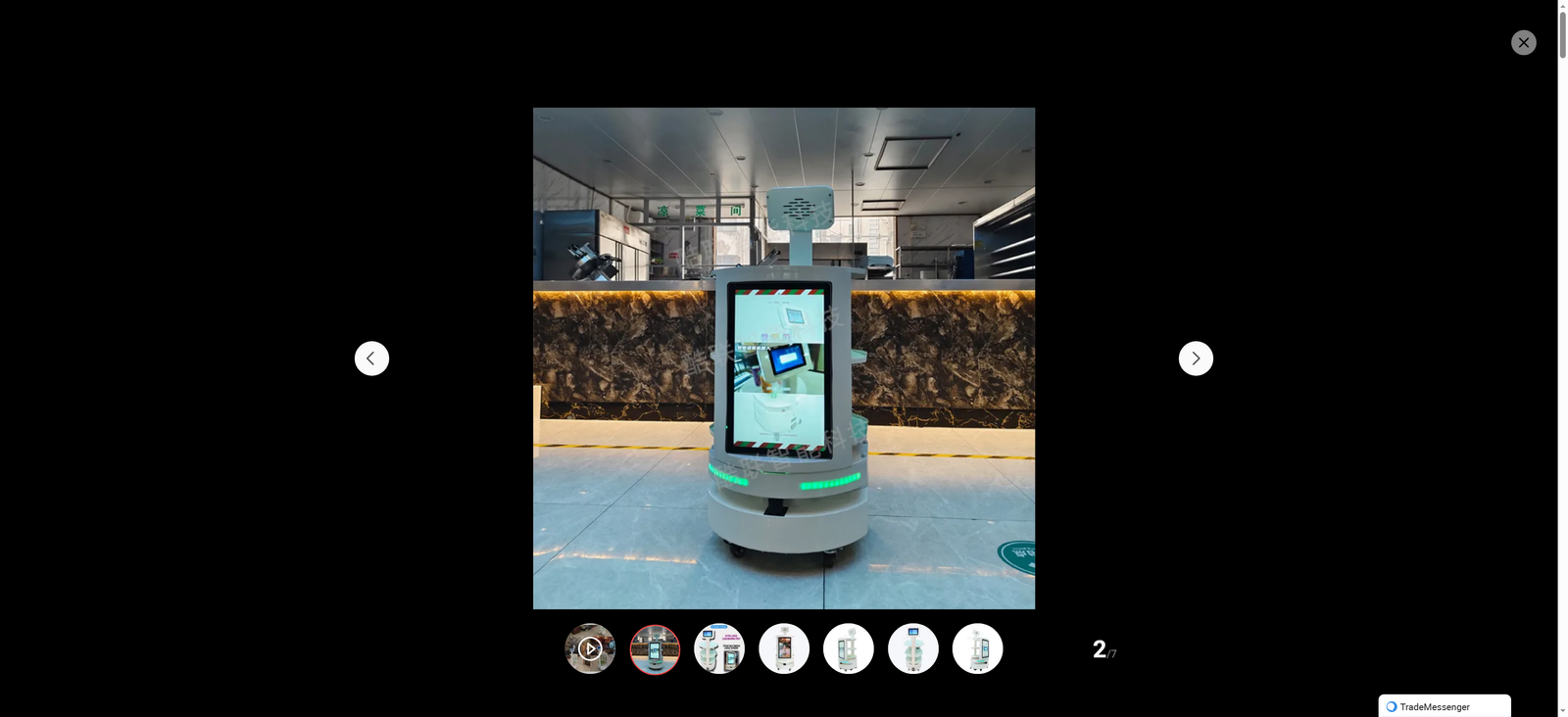
In the era of rapid technological advancement, the catering industry is undergoing a profound transformation driven by automation and artificial intelligence. Among the most revolutionary innovations are the Autonomous Navigation Food Delivery Service Robot and the Automatic Restaurant Waiter Robot. These intelligent machines are no longer science-fiction fantasies but practical tools that are reshaping service models, improving operational efficiency, and enhancing customer experiences in restaurants, cafes, hotels, and various food service venues worldwide.
At the core of both types of robots lies advanced autonomous navigation technology, which enables them to move freely and safely in dynamic, complex restaurant environments. Unlike traditional machines that rely on fixed tracks or manual control, modern food service and waiter robots utilize a combination of cutting-edge technologies to achieve precise positioning and obstacle avoidance. Most notably, SLAM (Simultaneous Localization and Mapping) laser radar navigation, paired with ultrasonic sensors and infrared detectors, allows the robots to create real-time maps of their surroundings, identify obstacles such as diners, chairs, and other robots, and adjust their routes instantly to avoid collisions . For instance, robots like the Amy Food Delivery Robot adopt laser radar navigation with a positioning accuracy of ±50mm, ensuring they can deliver dishes to designated tables with remarkable precision even in crowded dining halls . This autonomous capability eliminates the need for human intervention in basic movement, freeing up staff to focus on more complex and personalized customer service tasks.
The Autonomous Navigation Food Delivery Service Robot is specifically designed to streamline the food delivery process, addressing one of the most labor-intensive and time-consuming tasks in catering operations. Equipped with stable, shock-absorbing chassis and high-capacity trays—some with double layers capable of carrying up to 5kg of food—these robots can transport multiple dishes, beverages, or even hot pot ingredients from the kitchen to diners’ tables efficiently . Many models feature thermal insulation functions to keep food at optimal temperatures during delivery, ensuring that meals remain fresh and delicious when they reach customers. Additionally, these robots integrate seamlessly with restaurant order management systems: once a dish is prepared, kitchen staff can input the table number into the robot’s system, and the robot will automatically navigate to the target table, send a voice prompt to notify diners, and return to the kitchen independently after delivery . In high-traffic restaurants, a single delivery robot can complete up to 150 deliveries per day, handling 400-600 dishes—equivalent to the workload of 2-3 human servers , significantly reducing wait times during peak hours and minimizing the risk of human error such as incorrect deliveries.
Complementing the delivery robots, the Automatic Restaurant Waiter Robot takes on a more comprehensive service role, replicating many of the functions of a human waiter while adding unique technological advantages. These robots are equipped with AI-driven voice recognition systems, high-definition touchscreens, and even LED facial expressions to enhance interaction with customers . Upon detecting a customer’s arrival via human sensors, they can deliver personalized welcome messages, guide diners to available tables, and provide detailed menu introductions—including recommendations for signature dishes, daily specials, and meal combinations . Some advanced models, such as the OrionStar SMART Waiter Robot, can even take orders directly through voice commands or touchscreen interfaces, transmit the orders to the kitchen in real time, and process payments, creating an end-to-end automated service experience . Notably, these robots support multi-language communication (up to 50 languages in some cases), making them ideal for international restaurants or tourist areas .
Beyond improving service efficiency, these intelligent robots bring significant economic and operational benefits to restaurant owners. One of the most prominent advantages is labor cost reduction: with the rising cost of human resources in the catering industry, robots offer a one-time investment that can replace multiple full-time staff, as they require no salaries, benefits, or breaks and can operate continuously for up to 12 hours on a single 2-3 hour charge . For example, the cost of a single waiter robot, though initially higher, can be recouped within a reasonable period due to reduced labor expenses, especially for large-chain restaurants or high-traffic venues . Additionally, robots help attract customers through their novelty factor—many diners are drawn to restaurants with robot services, leading to increased foot traffic and revenue . They also ensure consistent service quality: unlike human staff who may experience fatigue or mood swings, robots maintain the same level of efficiency and politeness throughout their operation, enhancing customer satisfaction and loyalty .
Of course, the widespread adoption of Autonomous Navigation Food Delivery Service Robots and Automatic Restaurant Waiter Robots is not without challenges. Early models faced issues such as limited obstacle detection capabilities, rigid movement paths, and difficulty handling complex customer requests (such as recognizing dialects or accommodating special dietary needs) . However, continuous technological advancements have addressed many of these shortcomings: modern robots feature improved sensor sensitivity to detect low-lying obstacles, modular designs for easier maintenance, and upgraded AI algorithms to handle more complex interactions . For instance, the LUNA Restaurant Waiter Robot uses dual HD cameras and depth sensors to navigate 3D environments, while iterative upgrades to models like the千玺 Group’s火锅配餐机器人 have significantly improved their efficiency and flexibility . There are also concerns about job displacement, but industry experts argue that robots are not replacing human staff but rather complementing them—freeing up waiters to focus on more personalized tasks such as customer care, order customization, and problem-solving, thereby creating a more harmonious human-robot collaboration model .
Looking to the future, the development potential of these intelligent restaurant robots is enormous. With the integration of more advanced AI, machine learning, and Internet of Things (IoT) technologies, robots will become even more intelligent and versatile . They may be able to predict customer needs based on dining history, collaborate more seamlessly with other robots (such as cooking robots or cleaning robots) to create fully automated restaurants, and even adapt to different restaurant themes through customizable appearances . For example, the千玺 Group’s FOODOM Robot Restaurant already integrates 20 types of catering robots, including delivery and waiter robots, to create a fully automated dining experience with秒级出餐 speeds . As technology continues to mature and costs decrease, these robots will no longer be limited to high-end or chain restaurants but will become a common sight in small and medium-sized catering venues, transforming the entire catering industry into a more efficient, intelligent, and customer-centric sector.
In conclusion, Autonomous Navigation Food Delivery Service Robots and Automatic Restaurant Waiter Robots represent a new era of innovation in the catering industry. By leveraging advanced autonomous navigation, AI interaction, and efficient service capabilities, they are addressing the industry’s pain points of high labor costs, inconsistent service quality, and inefficient operations. While challenges remain, the benefits they bring—including cost savings, improved efficiency, enhanced customer experiences, and increased revenue—make them an indispensable part of the future of catering. As technology continues to evolve, these intelligent robots will not only change how restaurants operate but also redefine the way people dine, bringing a more convenient, efficient, and enjoyable experience to diners around the world.