
Autonomous Food Delivery Robot with SLAM Navigation: Redefining Commercial Service Efficiency
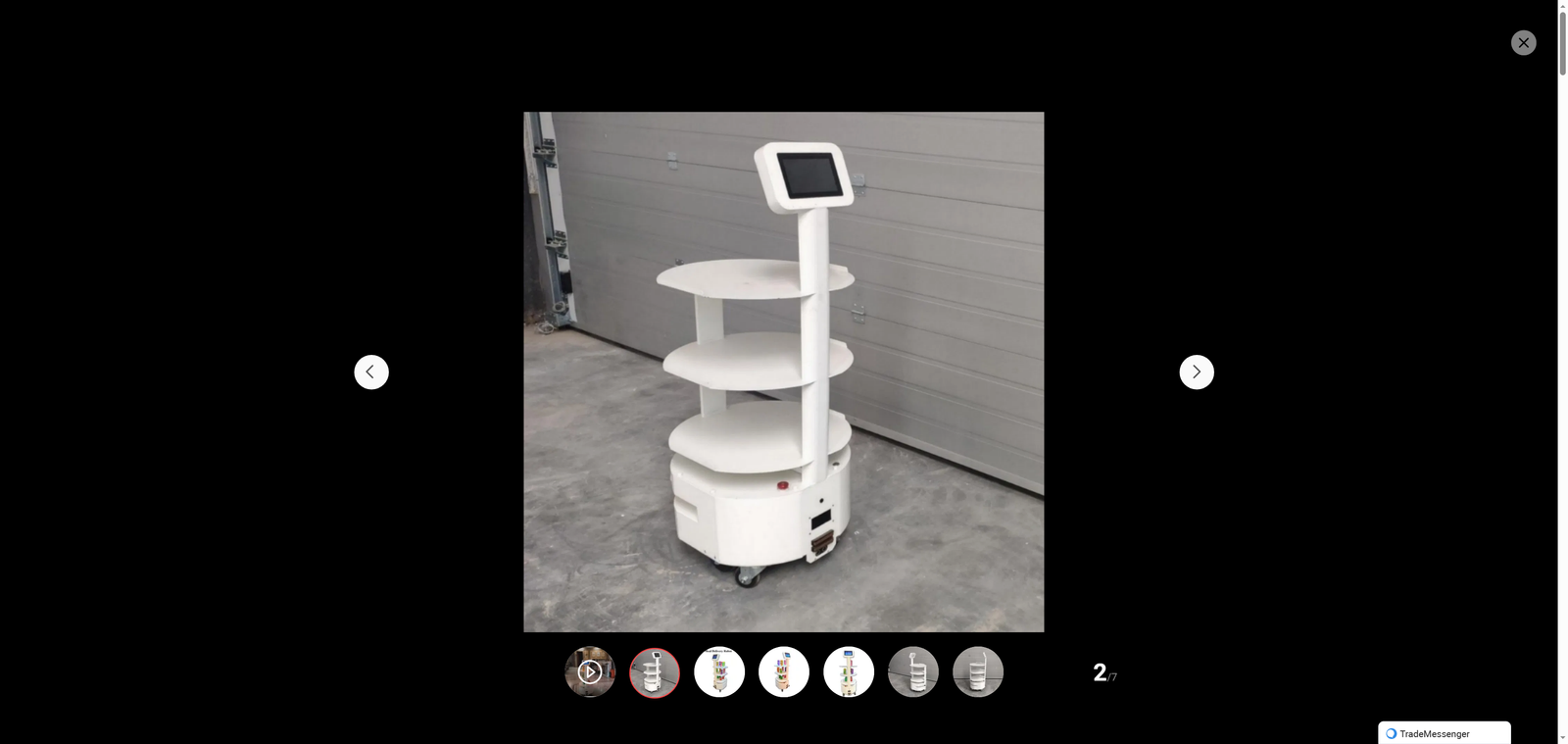
With the rapid development of artificial intelligence, robotics and smart city construction, the commercial service industry is undergoing a profound transformation towards automation and intelligence. Among them, autonomous food delivery robots equipped with SLAM (Simultaneous Localization and Mapping) navigation technology have emerged as a key force, breaking through the limitations of traditional manual delivery and injecting new vitality into scenarios such as restaurants, shopping malls, office buildings and campuses. As a professional carrying and serving robot for commercial use, it integrates advanced navigation, environmental perception and intelligent control technologies, realizing a leap from "manual transportation" to "intelligent delivery" and redefining the efficiency and quality of commercial food service.
SLAM navigation technology is the core "brain" and "eyes" of autonomous food delivery robots, which is the fundamental guarantee for their stable and reliable operation in complex commercial environments. Unlike traditional fixed-path navigation, SLAM technology enables robots to simultaneously construct environmental maps and determine their own positions in unknown or dynamic environments—this is the core advantage that makes autonomous food delivery robots adaptable to diverse commercial scenarios. When the robot is put into use in a restaurant, for example, it can quickly scan the layout of dining tables, aisles, walls and other structures through built-in sensors (such as lidar, visual cameras and ultrasonic sensors), and generate a high-precision 3D environmental map in real time. During the delivery process, it can dynamically update the map according to changes in the environment, such as the movement of diners, the placement of temporary items and the opening and closing of doors, and adjust its own path in real time to avoid obstacles accurately. This kind of real-time perception and dynamic adaptation ability ensures that the robot can move freely in crowded and complex commercial spaces without relying on pre-laid tracks or markers, greatly improving its flexibility and applicability.
As a commercial-grade carrying and serving robot, the autonomous food delivery robot with SLAM navigation has been comprehensively optimized in terms of load capacity, stability and user experience to meet the actual needs of commercial scenarios. In terms of carrying capacity, according to different application scenarios, the robot can be designed with multi-layer storage compartments with different load specifications, which can stably carry multiple food boxes, drinks or tableware at one time, with a load capacity ranging from a few kilograms to more than 20 kilograms, fully meeting the needs of batch delivery in restaurants or canteens. In terms of movement stability, the robot adopts a high-precision motion control system and a stable chassis structure, which can move smoothly on different ground materials such as marble, wood and carpet, and can easily cope with small slopes and ground gaps in commercial spaces, ensuring that the food in the storage compartment will not spill during transportation. At the same time, the robot is equipped with a human-computer interaction interface, and users can complete operations such as taking meals and calling the robot through touch screens, voice commands or QR codes. For example, after the robot arrives at the designated dining table, it will automatically remind diners to take meals through voice broadcast, and automatically lock the storage compartment after taking meals to ensure food safety. These humanized design details greatly improve the user experience and reduce the learning cost for diners and staff.
In commercial applications, autonomous food delivery robots with SLAM navigation have shown broad application prospects and obvious practical value, bringing multiple benefits to merchants, users and the industry. For restaurants and canteens, the most direct value is the reduction of labor costs. In the context of the increasing difficulty of recruiting and the rising labor costs in the catering industry, the use of autonomous food delivery robots can replace a large number of manual delivery staff, reducing the labor input in the links of ordering, delivering meals and recycling tableware. According to statistics, a single autonomous food delivery robot can complete 30-50 delivery tasks per hour, which is 2-3 times the efficiency of manual delivery, and can work 24 hours a day without rest, greatly improving the overall service efficiency of the restaurant. At the same time, the robot can accurately record delivery data, such as delivery time, order quantity and path information, which provides data support for merchants to optimize the layout of dining areas, adjust staffing and improve service processes. For users, autonomous food delivery robots can avoid the problems of slow manual delivery, wrong delivery and food spillage, ensuring that users can get food quickly and hygienically. Especially in the post-epidemic era, contactless delivery has become a new demand for users. Autonomous food delivery robots can minimize human contact in the delivery process, reducing the risk of cross-infection and meeting users' needs for food safety and health.
With the continuous progress of SLAM navigation technology and the continuous maturity of the robot industry, autonomous food delivery robots for commercial use are also moving towards a more intelligent, integrated and personalized development direction. In terms of technology, the combination of SLAM technology with 5G, edge computing and big data will further improve the robot's environmental perception accuracy, navigation response speed and multi-robot collaboration ability. In the future, multiple food delivery robots can realize information sharing and task scheduling through 5G networks, and complete large-scale and efficient delivery tasks in large commercial complexes or scenic spots. In terms of function integration, autonomous food delivery robots will no longer be limited to food delivery, but will integrate multiple functions such as ordering, payment, table cleaning and customer reception, becoming a multi-functional intelligent service terminal in commercial spaces. For example, the robot can take the initiative to greet customers at the entrance of the restaurant, guide customers to take seats, help customers order meals through voice interaction, and then deliver the food to the table, forming a full-link intelligent service closed loop. In terms of personalization, the robot can be customized according to the brand style and business needs of merchants, such as customized appearance design, voice broadcast and functional modules, making the robot not only a service tool, but also a part of the brand image display.
Of course, the large-scale promotion and application of autonomous food delivery robots with SLAM navigation still face some challenges, such as the high cost of core components, the imperfect relevant regulatory policies and the need to further optimize the adaptability to extreme environments. However, with the continuous reduction of the cost of intelligent hardware, the gradual improvement of relevant policies and the continuous breakthrough of technological research and development, these challenges will be gradually solved. It is foreseeable that autonomous food delivery robots with SLAM navigation will become an indispensable part of the commercial service industry, and will profoundly change the way of commercial service, promote the transformation and upgrading of the industry, and bring a more intelligent, efficient and convenient service experience to people's lives.
In conclusion, as a new type of intelligent equipment integrating SLAM navigation, autonomous control and commercial service functions, the autonomous food delivery robot has opened up a new path for the intelligent transformation of the commercial service industry. Its core advantage lies in the flexible and reliable SLAM navigation technology, which enables it to adapt to diverse and complex commercial scenarios; its practical value is reflected in reducing labor costs, improving service efficiency and ensuring food safety for merchants and users; its development prospect is to move towards multi-functional integration and intelligent collaboration, and become a key support for the smart commercial service system. With the joint promotion of technology, market and policy, the autonomous food delivery robot will surely usher in a broader development space, and contribute more power to the construction of a smart society.