
Autonomous Obstacle Avoidance Robot Waiter: Transforming Restaurant Food Delivery with Intelligence
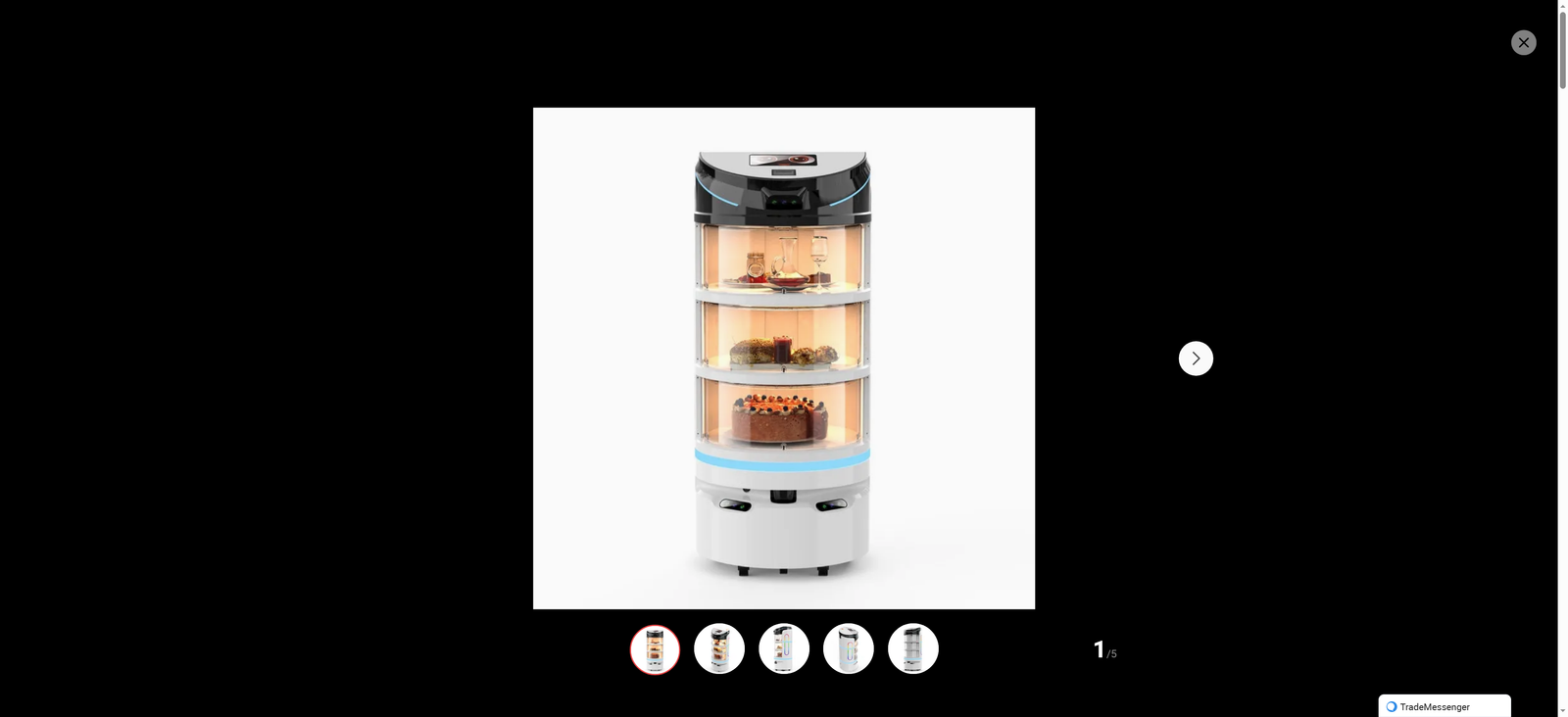
In an era of rapid technological advancement, the restaurant industry is undergoing a profound transformation driven by the integration of intelligent devices. Among these innovations, the autonomous obstacle avoidance robot waiter has emerged as a game-changer in food delivery, addressing long-standing pain points such as labor shortages, inefficient service, and inconsistent customer experiences. Combining cutting-edge navigation technology with user-friendly design, these robot waiters are no longer just a novelty—they have become essential tools for restaurants striving to enhance operational efficiency, reduce costs, and stand out in a competitive market.
The core value of an autonomous obstacle avoidance robot waiter lies in its ability to navigate complex restaurant environments safely and independently, eliminating the need for human intervention in basic delivery tasks. Unlike traditional service robots that rely on pre-installed tracks or fixed routes, modern food delivery robots leverage multi-sensor fusion SLAM (Simultaneous Localization and Mapping) technology, integrating laser radar, depth cameras, inertial measurement units (IMUs), and odometers to perceive their surroundings in real time. This advanced perception system allows the robot to build a high-precision map of the restaurant, identify dynamic and static obstacles—including wandering customers, other staff, table edges, and even small items on the floor—and adjust its path proactively.
What sets these robot waiters apart is their predictive obstacle avoidance capability, which goes beyond simple "stop-and-wait" logic. Equipped with intelligent algorithms, the robot can analyze the movement trajectory of pedestrians and predict their future positions within seconds, enabling it to slow down, detour, or pause strategically to avoid collisions. For example, when a child suddenly runs across a corridor or a waiter carries a tray of dishes past, the robot will respond promptly, ensuring the safety of both the food and the people around it. Additionally, in large restaurants with multiple robot waiters, a decentralized scheduling system allows them to communicate with each other, negotiate right-of-way, and avoid congestion at intersections—significantly improving delivery efficiency during peak hours.
For restaurant operators, the adoption of autonomous obstacle avoidance robot waiters brings substantial practical benefits, starting with labor cost reduction. The restaurant industry has long struggled with a "high-cost, low-margin" dilemma, with labor costs accounting for 25% to 35% of total sales. A single robot waiter can replace 2 to 3 human servers in terms of delivery tasks, operating 24 hours a day without fatigue, breaks, or emotional fluctuations. This not only reduces monthly payroll expenses but also alleviates the pressure of staffing shortages—a persistent challenge in the post-pandemic era, where finding and retaining experienced staff has become increasingly difficult. Moreover, robot waiters minimize human errors such as wrong orders or delayed deliveries, ensuring consistent service quality and reducing food waste caused by mishandling.
From the customer’s perspective, these robot waiters enhance the dining experience by combining efficiency with interactivity. Most models are equipped with 7-inch HD displays, intelligent voice broadcast systems, and LED indicator lights—when the robot arrives at the table, it will announce the order via voice, display pickup reminders on the screen, and use lights to indicate which tray contains the customer’s food. Some advanced robots even integrate large language models (LLMs), allowing them to engage in multi-round conversations with customers, answer questions about menu items, ingredients, or promotions, and even provide personalized dining recommendations. This interactive feature not only adds a fun, tech-savvy element to the dining experience but also frees up human servers to focus on more high-value tasks, such as providing emotional support, handling special requests, and resolving customer complaints—tasks that require human empathy and flexibility.
Despite their numerous advantages, autonomous obstacle avoidance robot waiters still face certain challenges that limit their widespread adoption. The initial investment cost remains relatively high, making it difficult for small and medium-sized restaurants to afford multiple units. Additionally, while the robots excel at basic delivery tasks, they lack the dexterity to handle complex tasks such as serving food onto plates, clearing tables, or carrying soups and drinks without spilling—though advanced models with car-grade chassis and suspension systems are improving stability, reducing the risk of food spillage significantly. There is also a concern about the loss of "human touch" in dining, as some customers prefer the warmth of face-to-face interaction with human servers over the efficiency of robots.
Looking ahead, the future of autonomous obstacle avoidance robot waiters in restaurants is promising, with continuous technological advancements poised to address current limitations. As AI and sensor technology evolve, robot waiters will become more intelligent, with enhanced obstacle avoidance capabilities, better dexterity, and more natural interactive abilities. The cost of production is also expected to decrease as the market expands, making these robots more accessible to small and medium-sized establishments. Furthermore, the integration of robot waiters with restaurant management systems will enable data-driven operations—tracking delivery times, order accuracy, and customer interactions to help operators optimize their services and make informed business decisions.
In conclusion, the autonomous obstacle avoidance robot waiter is reshaping the future of restaurant food delivery, offering a win-win solution for both operators and customers. By automating repetitive delivery tasks, reducing labor costs, and enhancing service consistency, these robots help restaurants improve operational efficiency and competitiveness. For customers, they provide a faster, safer, and more engaging dining experience, combining technology with convenience. While challenges remain, the ongoing advancement of intelligent technology will undoubtedly drive the widespread adoption of robot waiters, ushering in a new era of smart dining where humans and robots work together to deliver the best possible service.